Scan to Download
CBI vs CBI: What Angered CJI Gogoi During Alok Verma’s Hearing
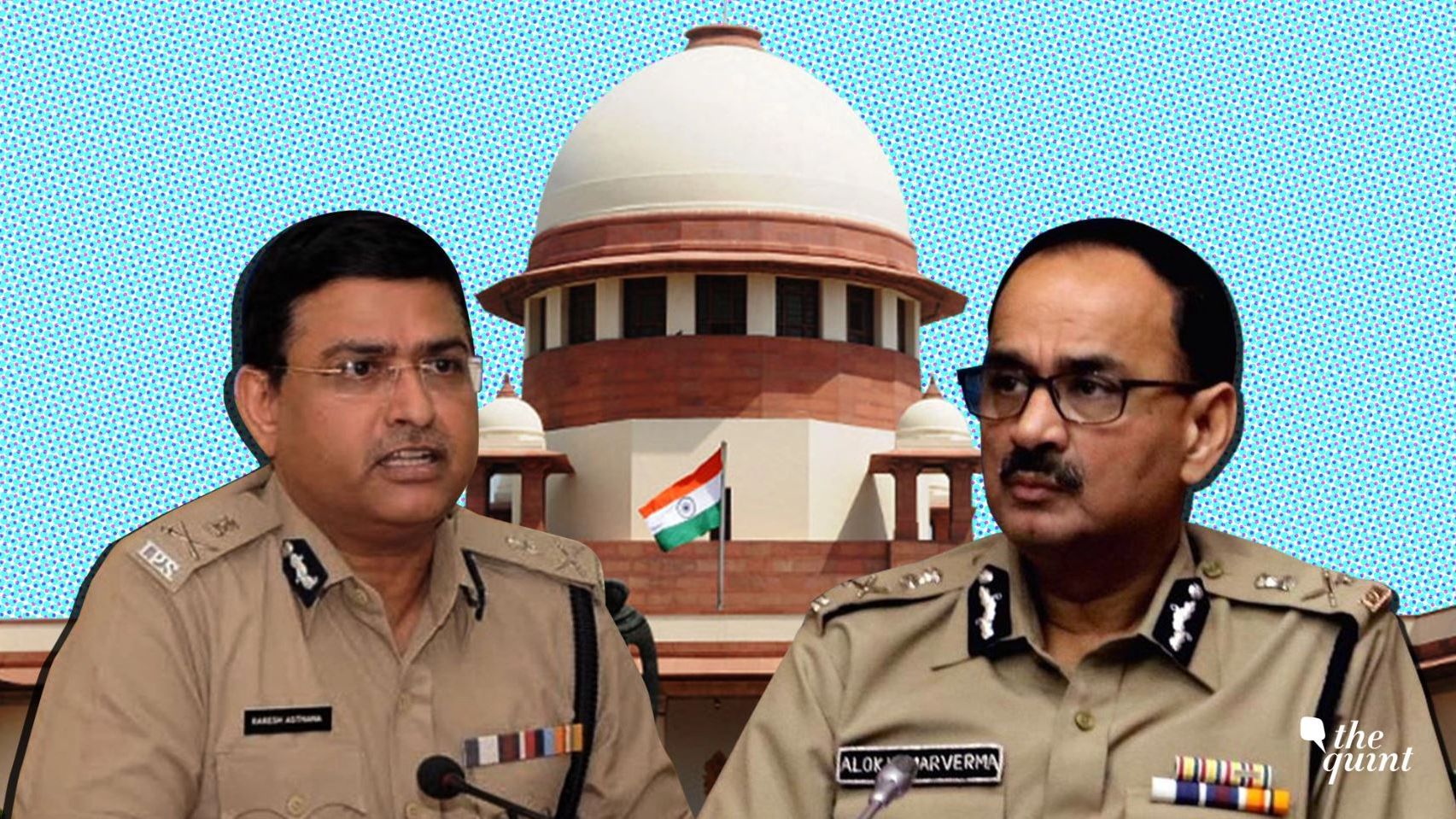
Following the temporary leave issued to CBI Director Alok Verma and Special Director Rakesh Asthana over infighting stemming from bribery allegations, IPS officer M Nageswara Rao was appointed the interim director of the investigative agency.
On Friday, the bench was also expected to consider the report of acting CBI director M Nageswara Rao also filed in a sealed cover in the court with regard to the decisions taken by him from 23-26 October.
Meanwhile, Congress leader Mallikarjun Kharge, on November 3, moved the Supreme Court against the removal of Verma, terming it “completely illegal, arbitrary, punitive, and without jurisdiction.”
The Supreme Court on 16 November took no decision on the Alok Verma case, handing over the report filed by the CVC in the matter to Verma’s lawyer. Verma is expected to filed a counter-report on Monday, and the matter has now been posted to Tuesday.
The CJI, while hearing the case, commented that the CVC’s report was “mixed”, adding that a further probe would be required with respect to some of the allegations against Verma.
Meanwhile, Advocate Mukul Rohatgi, appearing for CBI Special Director Rakesh Asthana, appealed for the CVC report to be made public. The CJI declined Rohatgi’s request, reported LiveLaw.
A bench headed by Chief Justice Ranjan Gogoi said the Central Vigilance Commission report should also be given to Attorney General K K Venugopal and Solicitor General Tushar Mehta.
The SC ordered, “We have perused the report of the CVC. We are of the view that, at this stage, and before taking any decision thereon a copy of the report of the CVC should be furnished by the Registry of this Court, in sealed cover, to the learned counsel appearing for the petitioner Alok Kumar Verma.”
“We order accordingly. It will be open for the petitioner in writ petition to file his response to the said report of the CVC again in sealed cover,” the apex court added.
Manish Kumar Sinha, IPS officer and head of the team investigating CBI Special Director Rakesh Asthana, moved the Supreme Court against his transfer to Nagpur and seeking SIT probe in Asthana case, on Monday, 19 November.
Sinha mentioned his plea before a bench headed by Chief Justice Ranjan Gogoi for urgent hearing on Tuesday, 20 November. Sinha asked that his plea be heard along with the one on CBI Director, Alok Verma, who has been accused of bribery charges.
(Source: PTI)
CBI Director Alok Verma on Monday, 19 November, sought more time to file a reply on CVC report. While he was initially supposed to file his reply at 1 pm, the Supreme Court has now given him time till 4 pm to file it.
(Source: ANI)
The Supreme Court on Monday, 19 November, said that it will not adjourn the hearing in the case, which is fixed for Tuesday, 20 November, based on CBI Director Alok Verma’s plea against the government’s decision to divest him of duties.
A bench headed by Chief Justice Ranjan Gogoi further urged Verma to file his reply to the CVC report, as “quickly as possible”, so that it could be read within the day.
"We are not shifting the date. You file as quickly as possible. We will have to read the response," the bench said.
To this, the lawyer said the response will be filed during the day itself.
(Source: PTI)
Law Secy Assured ‘Govt Protection’ to Sathish Sana: CBI DIG To SC
CBI Director Alok Verma, who was initially given time till 1 pm to file his reply to the CVC report against him, that was later extended by the court to 4 pm, filed his reply in a sealed cover, in the Supreme Court.
The matter will now be heard in court on Tuesday, 20 November.
Chief Justice Ranjan Gogoi on Monday, 19 November, declined giving an early hearing to a petition by CBI Joint Director Manish Kumar Sinha, the investigator in the probe against Rakesh Asthana, who had moved the court challenging his sudden transfer to Nagpur.
Sinha’s lawyer had told the CJI that he wished to bring some “shocking facts” to the top court.
Dismissing the call for an urgent hearing, CJI Gogoi retorted saying: “Nothing shocks us.”
CBI Director Alok Kumar Verma filed his response Monday to the findings of the CVC's preliminary probe report on corruption charges against him in a sealed cover in the Supreme Court after he was told to do so "as quickly as possible" as the scheduled Tuesday hearing on his plea would not be deferred.
Verma, who was asked to file his response to the Central Vigilance Commission's (CVC) report in a sealed cover by Monday 1 pm, sought some more time from the bench headed by Chief Justice Ranjan Gogoi for filing his reply with the secretary general of the apex court around 12.40 pm.
"We are not shifting the date (of hearing). You file it as quickly as possible as we will have to read it," the bench, also comprising justices S K Kaul and K M Joseph, told Verma's lawyer Gopal Sankaranarayanan.
CBI Officer Manish Kumar Sinha told the Supreme Court on Monday, 19 November, that a Union minister had taken "a few crores" as bribe to intervene on the behalf of a Hyderabad-based businessman who is under the agency’s radar.
In a petition to the top court, Sinha said that businessman Sathish Sana had claimed to have paid the bribe to Haribhai Parthibhai Chaudhary, presently the Minister of State for Coal and Mines.
Read more here.
CBI Deputy Inspector General (Nagpur) MK Sinha, on Monday, 19 November, filed a fresh petition in the Supreme Court, demanding an urgent hearing on his application challenging his transfer.
The petition brought to light a conversation between Sinha and Sathish Sana – the Hyderabad-based businessman who levelled bribery allegations against CBI Special Director Rakesh Asthana – that indicates the government was trying to influence the key complainant in the bribery case during the CVC probe against CBI Director Alok Verma.
Read more here.
CBI Joint Director MK Sinha on Monday, 19 November, submitted a petition challenging his transfer to Nagpur before the Supreme Court, in which he has claimed that National Security Advisor (NSA) Ajit Doval had interfered in the bribery probe against CBI Special Director Rakesh Asthana, and even stalled a search to be conducted at Asthana’s residence .
Read more here.
Supreme Court today will decide on whether to reinstate or indict CBI Director Alok Verma, who was told by Chief Justice of India Ranjan Gogoi to file a reply as quickly as possible.
CJI Gogoi-led bench with Justice SK Kaul and Justice KM Joseph will deliver the decision, which is expected shortly.
The top court has already started analysing Verma’s reply as the matter is the primary one to be listed, reported News18.
Minutes after the hearing began, CJI Ranjan Gogoi is reportedly agitated with Fali Nariman over the mentioning yesterday seeking additional time to file reply. Nariman says mentioning by Gopal Sankaranarayanan yesterday was "unauthorised" and he was not even informed. He got to know from media.
The hearing took an even worse turn, when the CJI then handed Nariman a copy of a report in The Wire that allegedly quoted Alok Verma's response to the CVC.
"The reply was supposed to be in a sealed cover" the CJI said, referring to last Friday's order which had directed Verma to respond to the CVC report in a sealed cover. Nariman responded that he was deeply disturbed by the leakage of information, which was obviously unauthorised.
It is unclear which report the CJI is referring to - as the only current report which The Wire has on Verma's report - refers to his responses to the CVC's questions during their inquiry, not his reply to the inquiry report.
Nonetheless, the CJI was sufficiently angry with the proceedings to say that "We are not hearing today. We don't think any of you deserve a hearing." He also singled out Nariman for his disapproval, noting he was such a senior member of the bar. The reasons for the deferral of the hearing have not been provided.
After a fractious hearing, the Supreme Court on Tuesday deferred its hearing on the petition filed by CBI Director Alok Verma to 29 November.
CJI Ranjan Gogoi, presiding over the bench, was already displeased with Verma's lawyers because of a request made by them yesterday for an extension of time to file a reply to the CVC report against him.
When asked senior advocate Fali Nariman about this request, Nariman answered that the request hadn't been authorised by him, blaming one of Verma's other lawyers Gopal Sankarnarayan instead.
But the hearing took an even worse turn, when the CJI then handed Nariman a copy of a report in The Wire that allegedly quoted Alok Verma's response to the CVC.
When asked senior advocate Fali Nariman about this request, Nariman answered that the request hadn't been authorised by him, blaming one of Verma's other lawyers Gopal Sankarnarayan instead.
The Supreme Court has agreed to hear Verma’s counsel Fali Nariman later today again. Nariman approached the top court again and sought another chance from the court to clarify media leaks which agitated the CJI Gogoi.
“Nariman mentioned to the CJI to have the matter taken up once the list is over, for which the CJI has agreed,” reported Live Law.
This is to clarify that @thewire_in stories were on Alok Verma’s responses to questions the CVC put to him. These were not in a sealed cover and were not meant for the SC. As for his response to CVC’s final report, handed over to SC in sealed cover, we haven’t seen/reported that. https://t.co/ej7htVwBRJ
— The Wire (@thewire_in) November 20, 2018
In a fresh round of hearing, Fali Nariman clarified that the Supreme Court order has not been violated, reported Live Law.
Nariman further told the court that the article handed over to him by the CJI is about response to CVC and it was published before the Supreme Court order.
"We did not give the article to you as a counsel for Alok Verma", says CJI Gogoi.
“Regardless of who you are representing, we are sure you won't let this get in the way of your responsibility as officer of the court"
CJI hands over another article to them, says this is also a problem and specifies that "we don't want to hear anyone except Mr Nariman regarding what we have raised."
In the fresh round of hearings, CJI Gogoi and Justice Sanjay Kishan Kaul discuss with Nariman and the other lawyers that the idea was to keep things confidential, and not have them released in the media.
Following this, a reportedly angry Nariman said, "I belong to a time when nobody would say anything about what was happening in court, I don't need anyone to tell me what to do."
"We want to know what is going on. This court is not a platform, it's a place where rights are upheld" Gogoi said.
After stating that the court is not a platform but a place for adjudication, CJI refused to hear the matter and adjourned the hearing for 29 November, as previously stated.
CJI Gogoi refused to hear any arguments, including Verma’s counsel Nariman's attempt to show that The Wire's article dealt with responses to the CVC's questions, not the inquiry report. The CJI had raised strict objection to the articles published by The Wire.
The CJI had allowed Nariman to appear before him, but only to provide him with two more articles which he felt indicated problematic leaks of information to the media.
“This court is not a platform. This is a place for adjudication. We intend to set it right. No hearing today,” CJI said.
“We expressed that highest degree of confidentiality should be maintained and this litigant takes the papers and shares it with everyone. Our respect for this institution is not shared by anyone for some strange reason,” Bar and Bench reported, quoting the CJI.
Days after CJI Rajan Gogoi expressed disappointment at purported leaks breaching efforts to maintain confidentiality in the CBI vs CBI case, Advocate Gopal Shankaranarayanan withdrew himself as the junior counsel for ousted CBI director Alok Verma, The Times of India reported on Thursday, 22 November.
Shankaranarayanan cited 'communication gap' between him and the senior counsel’s office for his resignation.
"I want to make it clear that I withdrew from the case on Monday evening itself and wasn’t there for Tuesday’s hearing. I remain on cordial terms with Mr Verma and it is only the professional engagement that has ceased," he told TOI.
The Delhi High Court has permitted CBI Director Alok Verma and Joint Director A K Sharma to inspect files in the CVC's office relating to FIR against the agency's Special Director Rakesh Asthana. The direction from Delhi High Court on Wednesday, 28 November.
Justice Najmi Waziri asked Verma to go to Central Vigilance Commission's office on Thursday after his counsel said there are allegations of mala fide against him in Asthana's petition.
CBI Director Alok Verma had sought permission for accessing files as he feared tampering of evidences.
The court has extended its order directing the CBI to maintain status quo till 7 December regarding proceedings against Asthana.
SC Hearing on CBI Dir Alok Verma’s Plea Tomorrow: What to Expect?
The junior lawyers representing Alok Verma have been replaced, according to reports. Fali Nariman will continue to represent Verma.
The Supreme Court on Thursday, 29 November, began hearing CBI director Alok Verma's plea against his interim leave imposed by the government, in the backdrop of corruption allegations against Special Director Rakesh Asthana.
Alok Verma’s counsel Fali Nariman refers to Sahara judgment in the context of publication by media of materials which have been filed in court before the matter is heard, Live Law reported.
He said that the view in Sahara judgment is that media cannot be prohibited from publishing material which has been filed in court.
The hearing finally begins. Alok Verma's lawyer Fali Nariman arguing that his client cannot be held responsible for the articles CJI Gogoi took exception to at the last hearing. Says publication of articles cannot be restricted unless court issues a specific order. @TheQuint
— Vakasha Sachdev (@VakashaS) November 29, 2018
Alok Verma distances himself from CBI DIG MK Sinha's application containing allegations against several people.
#CBIVsCBI : CJI Gogoi says everyone will be heard today. Asks Nariman to move on to the main issues. @TheQuint
— Vakasha Sachdev (@VakashaS) November 29, 2018
The Supreme Court, waving aside the issue of media leaks, begins hearing the case of Alok Verma’s plea.
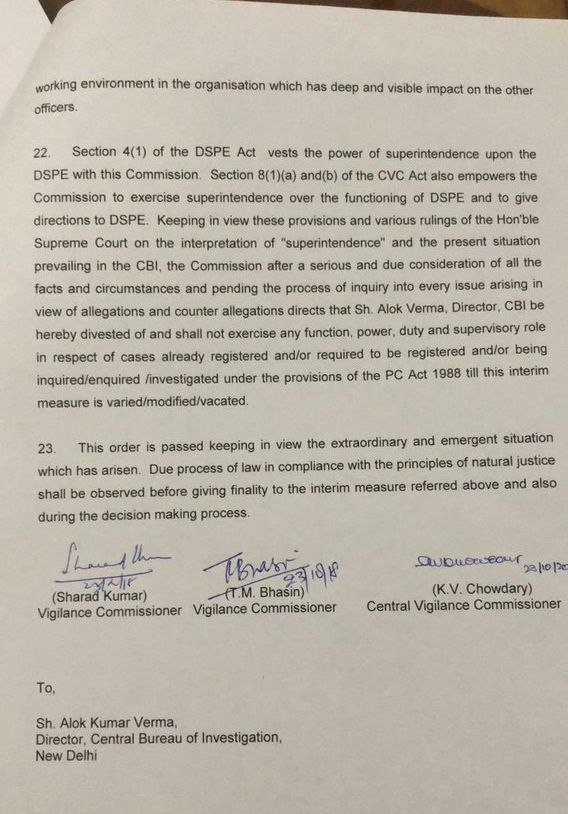
#CBIVsCBI : "I am on a question of law right now, not a question of fact", Nariman says. He reads out the CVC order divesting Verma of his powers, says the CVC had no authority to do this without approaching the special committee. @TheQuint
— Vakasha Sachdev (@VakashaS) November 29, 2018
Justice KM Joseph asked Fali Nariman representing Alok Verma as to what should be done if a CBI director is caught red handed taking bribe, Live Law reported.
"Suppose a CBI chief is caught red-handed taking a bribe, what should be the course of action? You say the Committee has to be approached but should the person continue even for a minute?" he said.
According to Live Law, Nariman replied that the Committee has to be approached in such cases as well.
#CBIVsCBI : CJI Gogoi says they will at present only be considering the argument by Nariman that the action against Verma could only have been taken with approval of the selection committee. Dushyant Dave, arguing for Common Cause, now making arguments to this. @TheQuint
— Vakasha Sachdev (@VakashaS) November 29, 2018
Dushyant Dave begins arguing for NGO Common Cause. The court said that it will hear the arguments limiting to the powers of the appointing committee.
After hearing Fali Nariman and Dushyant Dave’s arguments in the case, SC will resume hearing at 2 pm after lunch break.
#CBIVsCBI : Hearing in SC resumes. Dushyant Dave resumes arguing for NGO Common Cause, which has asked the court to quash both the orders divesting Alok Verma of his powers, as well as the order appointing Nageshwar Rao as interim director. @TheQuint
— Vakasha Sachdev (@VakashaS) November 29, 2018
Advocate Dushyant Dave argued that like public service commissioners and judges of the higher judiciary, the CBI director can only be removed by the established mechanism. Since the selection committee is the only authority which could transfer Verma, this could not be done indirectly by the government, he said.
The actions recommended by the CVC are "outside the ambit of its powers of superintendence". Similarly, the Centre's power of superintendence over the CBI under Section 4(2) if the DSPE Act also doesn't allow the divestment of the CBI Director's power, says @KapilSibal @TheQuint
— Vakasha Sachdev (@VakashaS) November 29, 2018
Referring to Justice KM Joseph's earlier question, Kapil Sibal said that even if the CBI Director is caught red-handed, action must be taken against him through the selection committee only. Even the SC can't order the transfer, since there is a statutory process, he added.
Sibal also tried to argue that the CVC cannot have the power to order the action against Verma since, because of all the counter-allegations, this would amount to "being a judge in their own case." CJI Gogoi said the allegations against CVC weren't relevant.
CJI Gogoi asks @KapilSibal : "Are you advancing a proposition that reference to the selection committee is an absolute condition, with no exceptions? The Director of the CBI cannot be touched without approaching the committee?" Sibal says yes. @TheQuint
— Vakasha Sachdev (@VakashaS) November 29, 2018
Rajeev Dhavan argues for AK Bassi, who was investigating Rakesh Asthana, before being transferred by interim director Nageshwar Rao to Port Blair.
Dhavan argues that the CVC's power of superintendence over the CBI is very limited. According to him, superintendence is a "term of art" and can't be used for anything the government feels like.
Dhavan says that even the Centre's power of superintendence is a general provision, that is subordinate to the specific provisions in the DSPE Act.
"If there is some lacunae, then it cannot be filled by the Centre or the CVC. It can only be filled by the Supreme Court," said Dhavan. He talks about the consequences of the action against Verma - the "Night of the Long Knives" - which saw Bassi transferred to Port Blair.
[Lots of murmuring in the court over what this argument means. This would mean the govt can remove a CBI director whenever it felt like]
— Vakasha Sachdev (@VakashaS) November 29, 2018
Attorney General KK Venugopal reportedly stated in the court that the CVC has complete superintendence over the CBI which is not restricted to just corruption cases. Instead the CVC Act includes “all other matters”.
Notably, Kapil Sibal had earlier said that the powers of superintendence for the CVC are limited and the actions recommended by the CVC are “outside the ambit of its powers of superintendence”.
The Supreme Court hearing on CBI Director Alok Verma’s plea against his interim leave has been adjourned to Wednesday, 5 December.
CJI Ranjan Gogoi also reportedly said that the court is yet to take judicial note of the CVC inquiry report, and if it does so, then the various parties will be given a chance to file their replies.
“The government intervention was to protect the public confidence in CBI, which was getting negative in view of the serious fight between two of its top officials. The government intervention was in public interest.”Attorney General KK Venugopal, as quoted by Live Law
The SC is likely to conclude the hearing in CBI Director Alok Verma's petition against his removal from duties.
(Source: LiveLaw)
Hearing commences in Supreme Court. Attorney General KK Venugopal resumes his submissions in the Supreme Court.
Attorney General KK Venugopal, representing the Central Government, explaining why they had to divest Verma of his powers.
A-G says the turf war between Alok Verma and Rakesh Asthana had begun to compromise the institution. Action had to be taken against both of them to stop this from going too far.
A-G KK Venugopal says the turf war between Alok Verma and Rakesh Asthana had begun to “compromise the institution.” He called for action to be taken against both of them.
When Justice KM Joseph asked Venugopal on what basis he claims that the spat had gone public. The A-G responded saying he will submit articles to support his claim.
A-G Venugopal quoted service roles for government servants to say that whoever has the “power to appoint a government servant also has the per to suspend or remove them.”
He argued that the Centre appointed the CBI Director, they also have the power to divest him of his powers.
Venugopal added that the Centre's general power of superintendence over the CBI under the DSPE Act includes all forms of administrative control.
“Government of India was watching with amazement as to what these two officers were doing, they were fighting like cats.”A-G to SC
Justice KM Joseph asked whether the Centre can divest Verma of his powers to investigate cases of corruption, since it is the CVC which has powers of superintendence over the CBI.
Attorney General KK Venugopal concludes arguments. Solicitor General Tushar Mehta starts arguments for CVC.
Tushar Mehta read out paragraphs from the Supreme Court's old Vineet Narain case, which first introduced the safeguards for the position of CBI Director, and the powers of superintendence of the CVC over the CBI.
Tushar Mehta argued that there was only one restriction on the CVC's power of superintendence – they cannot say an investigation has to lead to a particular result.
“The CVC has been given power of superintendence and power to give directions. The only limitation is that in individual cases, it cannot give directions on how a probe should be conducted,” Solicitor General Tushar Mehta argued at the court.
He added that the central government can make a reference to the CVC for inquiry against CBI officials.
#CBIVsCBI | The Centre told the SC that the fight between two top officers of the CBI in public exposed the agency to ridicule and forced the govt to intervene, reports @VakashaS. https://t.co/WIZjellyC0 pic.twitter.com/S8Hxb5a8co
— The Quint (@TheQuint) December 5, 2018
#CBI case resumes in Supreme Court. Solicitor General Tushar Mehta arguing for Central Vigilance Commission. @TheQuint
— Vakasha Sachdev (@VakashaS) December 6, 2018
CJI Gogoi further asked the Solicitor General as to what prompted the government to take an overnight decision on 23 October to divest CBI Director Alok Verma of his powers?
Mehta tries to explain why the situation was so extraordinary. Mentions that Verma hadn't responded to CVC inquiries, on allegations of corruption against him - which falls within the CVC's superintendence of the CBI. @TheQuint
— Vakasha Sachdev (@VakashaS) December 6, 2018
Curative petition against the verdict which upheld the appointment of Rakesh Asthana as the CBI Special Director will be considered on 11 December.
Mehta contests Justice KM Jospeh's observation that the action against CBI director Verma was disproportionate to the complaint again him. He requests for further assessment of the facts of the case.
Attorney General KK Venugopal said that if the Centre had approached the selection committee to ask if they could divest Verma of his powers and functions, the committee would have asked why the Centre had approached them, since there was no transfer taking place here.
Venugopal concluded his argument while ASG Narasimha appearing for the CBI tried to explain what the term transfer means in the context of Section 4B(2) of the DSPE Act, which says only the selection committee for the CBI Director can transfer them.
Senior advocate Mukul Rohatgi, who is representing Rakesh Asthana, asks to be allowed to make some arguments. The judges are letting him address them briefly on the legal issues, whether the Centre and CVC had power to take action against Verma @TheQuint
— Vakasha Sachdev (@VakashaS) December 6, 2018
Nariman says that this Section 4B has to be read together to understand this. Here's what the provision says: @TheQuint pic.twitter.com/YajHqqktUE
— Vakasha Sachdev (@VakashaS) December 6, 2018
Nariman also says that it was wrong for an interim director to be appointed by the Centre after divesting Verma of his powers.
Hearing to resume after 2 pm.
Nariman just raised one quick point to counter what Centre said about how Verma and Asthana were "fighting like Kilkenny cats". Centre and CVC used this to justify action against Verma, but Nariman says it is part of Verma's role to investigate even his own officers. @TheQuint
— Vakasha Sachdev (@VakashaS) December 6, 2018
Dave points out that Parliament actually made the selection committee for the CBI Director even more important than the Supreme Court had initially recommended in the Vineet Narain case, by specifying it needed to include CJI, PM and Leader of Opposition. @TheQuint
— Vakasha Sachdev (@VakashaS) December 6, 2018
Supreme Court has started hearing arguments by intervenors in the case, CBI officers AK Bassi and MK Sinha, who were investigating Rakesh Asthana and were transferred by interim Director Nageshwar Rao to Port Blair and Nagpur respectively.
Supreme Court reserves its order on a plea filed by CBI Director Alok Verma and NGO Common Cause challenging the Center’s decision to divest Verma of his charges.
Delhi High Court will hear the plea of Rakesh Asthana and others seeking the quashing of FIR lodged against them on Firday, 7 December, reported ANI. The hearing will take place at 2:15 pm.
He has insisted that the allegations of corruption against Asthana must be investigated thoroughtly so that the public faith in CBI is maintained.
Satish Sana, a businessman who raised corruption charges against CBI Special Director Rakesh Asthana, has approached the Delhi High Court seeking protection from arrest. The high court has listed the matter for Tuesday, 11 December.
(ANI)
The Delhi High Court Tuesday, 11 December, sought the CBI's response on a plea by Hyderabad-based businessman Satish Babu Sana seeking to be heard in a matter relating to the quashing of an FIR registered against Special Director Rakesh Asthana on bribery allegations.
Justice Najmi Waziri also sought reply of Asthana, CBI Director Alok Verma and Joint Director A K Sharma on the plea of Sana requesting him to be impleaded as a party in Asthana's petition seeking quashing of the FIR.
Senior advocate Salman Khurshid, appearing for Sana, said the FIR was filed on the basis of his complaint. He was helping the agency in the investigation and should also be heard.
Additional Solicitor General Vikramjit Banerjee and advocate Rajdipa Behura, representing the CBI, said there was no need to implead Sana.
CBI Deputy Superintendent of Police Devender Kumar, earlier the investigating officer in a case involving meat exporter Moin Qureshi, was arrested on the allegations of forgery in recording the statement of Sana, who had alleged to have paid bribe to get relief in the case.
Kumar was granted bail by a Delhi court on 31 October.
#Exclusive | CNN-News18 speaks to Manoj Prasad, who was arrested by CBI for allegedly asking Rs 5 crore from Hyderabad-based businessman Satish Babu Sana. Prasad said he never met Rakesh Asthana, & all charges are false. | Input: @manojkumargupta @nitisha_kashyap | #CBIvsCBI pic.twitter.com/hMgF6zQ7qn
— News18 (@CNNnews18) December 13, 2018
The Supreme Court on Friday, 13 December, approved Rakesh Asthana’s appointment as the Special Director.
An NGO Common Cause had challenged Asthana’s appointment as the CBI Special Director.
The Delhi High Court on Friday, 14 December, deferred the hearing to Thursday, 20 December on the plea of Rakesh Asthana and Devender Kumar who were seeking the quashing of the FIR against them.
On October 31, the court had granted bail to co-accused and CBI DSP Devender Kumar after the agency did not oppose his bail petition.
The agency had registered an FIR against Asthana and others on a written complaint of businessman Sathish Sana on 15 October.
Besides Asthana, Prasad and Kumar, another alleged middleman Somesh Prasad has also been named as an accused in the case.
The FIR had alleged that Kumar, then Investigating Officer (IO) in the case against meat exporter Moin Qureshi, repeatedly called the complainant to the CBI office to harass and compel him to pay a bribe of Rs 5 crore for getting a clean chit in the case.
The complaint had also alleged that a part of the bribe was paid by Sana.
The CBI on Tuesday, 18 December, examined Hyderabad-based businessman Sathish Babu Sana to verify and corroborate his statement that had formed the basis of its case of bribery against its Special Director Rakesh Asthana, reported PTI.
Sana was called before a new team constituted by interim director M Nageswara Rao immediately after the government sent both CBI Director Alok Verma and Asthana on forced leave in the midnight of 23 October.
Rao had reconstituted the team probing allegations against Asthana and transferred the members of the erstwhile team.
The new team on Tuesday, 18 December called Sana to verify his complaint and asked him to clarify "discrepancies" in his complaint, PTI reported, citing sources.
M Nageswara Rao, who is holding post of interim CBI Director, was on Tuesday, 18 December, promoted to the rank of an additional director by the government.
A 1986-batch IPS officer from the Odisha cadre, Rao's name was cleared by the Appointments Committee of the Cabinet.
Rao was not considered for the rank of additional director in November 2016 as well as when a review of this batch took place in April 2018, reported PTI.
He had joined the CBI as a joint director in 2016.
Essential Business Intelligence, Continuous LIVE TV, Sharp Market Insights, Practical Personal Finance Advice and Latest Stories — On NDTV Profit.