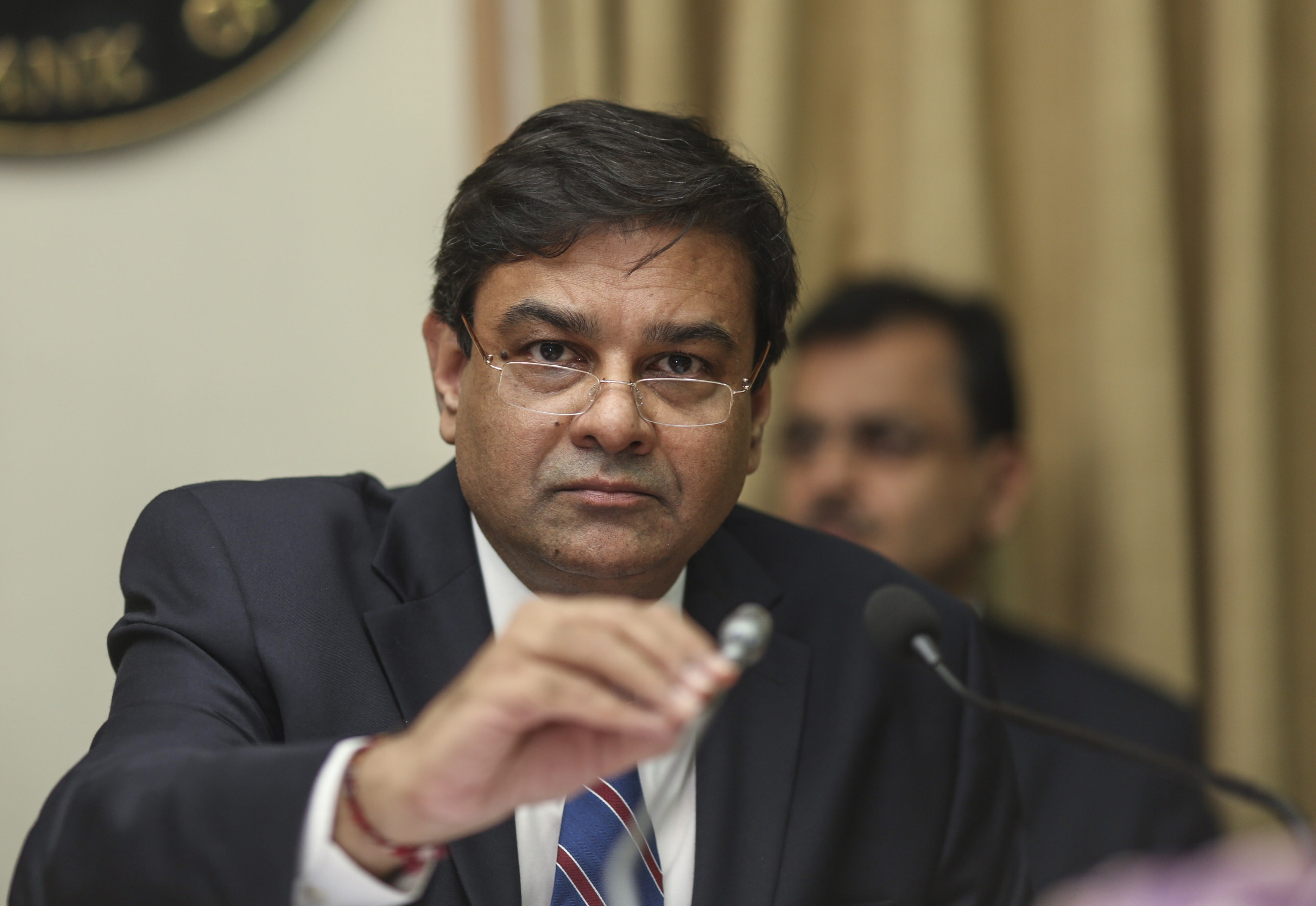
On February 8, Urjit Patel hosted the third press conference of his so far short-but-eventful tenure as Governor of the Reserve Bank of India (RBI). He took over exactly six months ago on September 5.
Much angst within the press corps had preceded the February conference. In a departure from the communication policy followed under at least the last three governors (YV Reddy, D Subbarao and Raghuram Rajan), the Patel-led RBI has decided to pick and choose the journalists and publications that are allowed to attend these routine briefings. The reason given was the lack of space, which allows the central bank to invite and seat just about thirty journalists. Never mind the fact that the same space was used to accommodate a far larger number until six months ago or that the central bank has a bigger auditorium on the 25th floor of the central office building.
Still, invites are at the discretion of the central bank and its decision is final.
As the press conference began, a fellow journalist asked about recent reports that fake versions of the newly introduced Rs 500 and Rs 2,000 notes were already available in the market. Did this mean that demonetisation had failed to achieve one of its key objectives (as stated by Patel) of ridding the system of fake currency?
The question was passed on to R Gandhi, the deputy governor in charge, who said that the recent fake notes that had been found were mere photocopies and, hence, easy to detect. As the journalist tried to cite an example where this may not have been the case, Patel, who directed the press conference himself, interrupted sternly to say “only one question, one question only.”
The journalist's question hadn't really been answered but the press conference moved on.
That incident, in many ways, sums up the first six months of Patel's governorship. A period over which much has changed: little has been explained, and many questions remain unanswered.
A Tough Situation Made Tougher
Patel has arguably had among the toughest starts to a governorship (Ironically, when he took over, we called it a dream start but that changed with demonetisation).
Raghuram Rajan had taken charge in the midst of a currency crisis and D. Subbarao had barely stepped into office when Lehman Brothers collapsed. But managing a note exchange programme, which required 86 percent of the economy's currency in circulation to be withdrawn and replaced, is probably a far more complex challenge. Patel's predecessor Rajan had cautioned against demonetisation but Patel went through with it.
What followed was a period of inevitable chaos. Lines at banks and ATMs. Uncertainty about the pace at which currency would be replaced. Frequent changes in currency withdrawal rules. So much so that Amul, known for its snarky ads, termed the RBI as the ‘Reverse Bank of India.'
#Amul Topical : Flip- flops on policies. pic.twitter.com/RWolbt3BSy
Through all of this, the RBI maintained a stoic silence.
In a rare rebuke from a former RBI official, Usha Thorat, an ex-deputy governor, called on the central bank to be more transparent and communicative. “The RBI top management must communicate more through the media and speaking opportunities. This is necessary in the interest of transparency and credibility. It generates confidence that the RBI believes in honest communication,” Thorat wrote in an editorial in the Indian Express on December 28.
The advice didn't hit home. If anything, the RBI became even more opaque.
In the early weeks after demonetisation, periodic data on deposits of old currency was being released. These updates, however, stopped abruptly. Till date, (more than two months after the domestic exchange window closed) the RBI has not released final data on the amount of old currency deposited in banks. It is still being tallied, said Deputy Governor Gandhi at the February press conference, drawing much censure and sarcasm.
Most Right To Information (RTI) queries filed seeking information on demonetisation also drew a blank. One that was answered showed that the demonetisation exercise was launched with under Rs 5 lakh crore in new currency printed to replace more than Rs 15 lakh in old currency.
Could Patel have made the process easier on the system, on himself and on the RBI if he had chosen to communicate more willingly and openly? It would be tough to argue to the contrary.
To be fair, Patel's assessment that demonetisation will not have a significant impact on economic activity has proved true going by the third quarter GDP data, which pegs growth in the October-December quarter at 7 percent. If the demonetisation bet pays off in the medium term, history may be far kinder to Patel than the present has been. He may just be dubbed as the governor who oversaw one of India's biggest economic experiments.
Life Beyond Demonetisation
Demonetisation has not been the only noteworthy event of Patel's tenure. He has also led a shift in the monetary policy framework where decisions are taken by a monetary policy committee (MPC) and not by the governor's office alone. The decision is communicated through a statement and followed up by the ‘minutes' of the MPC meet.
Unlike in the case of, say, the U.S. Federal Reserve, the MPC minutes are prepared statements from each of the MPC members justifying their position. They don't reflect the debate within the committee. Take for instance, the minutes of the February meet. Two of the six members did not share any view on the change in the RBI's stance from accommodative to neutral. It seemed apparent that they didn't support the move (although they didn't explicitly say that). Nothing in the minutes told us why. Equally, nothing in the minutes told us why the opposing view prevailed.
Markets, too, have been in a grumble about confusing signals from the RBI.
In the first policy meeting, for instance, the focus was on growth and the lack of reference to the RBI's 4 percent inflation goal led most analysts to believe that Patel would lead a dovish MPC. Yields fell. This changed quickly in the subsequent two policies where the focus was largely on inflation. In the February policy, the accommodative stance was abandoned without much warning. Yields soared. The minutes then tried to calm the market by reiterating that a neutral stance allowed a move on rates in either direction. Yields flattened.
Patel or someone in his team would do well to iron out any early wrinkles in the MPC's communication strategy.
Finally, Patel needs to speak up on the situation in the banking sector. Most accounts suggest that any pick-up in bad loan resolution has slowed and the arrest of former bankers (IDBI officials) has paralysed decision making. Deputy governor Viral Acharya has thrown out new ideas for resolution. Since Acharya is not the deputy governor in charge of banking regulation or supervision, it is unclear whether these are his ideas or the regulator's.
Yet another question Patel could help answer.
If he chooses to.
Disclosure: This publication has attended three press conference held by the RBI in Mumbai. It was not invited to a fourth press conference held in New Delhi after the RBI board meet on February 11.
Essential Business Intelligence, Continuous LIVE TV, Sharp Market Insights, Practical Personal Finance Advice and Latest Stories — On NDTV Profit.