Prime Minister NarendraModi's fourth visit to the United States, scheduled from June 7-8, begins on theday when his host President Barack Obama will officially become lame duck.
With Donald Trumpbecoming the official Republican nominee for the US presidential elections thatwill take place in November, on June 7 the voters in California will probablyseal the candidacy of Hillary Clinton as the Democratic nominee, whether or notshe wins the primary.
So the first questionthat comes to mind is why is Modi undertaking an official working visit tomeet a President who will begin packing up to leave on that date?
Had Modi some pressingissue, say an emerging Kargil-like crisis, or the need to give the last push tosome key Indo-American issue or project, his visit would have been beenunderstandable. But there is nothing on the Indo-US agenda that can't waitfor a new US President who will take office eight months from now in January2017.
Pretext of PM Modi's Visit to US
The governmentexplanations are simple, if a trifle ingenuous: At their meeting on thesidelines of the Nuclear Security Summit, this April, President Obama asked acouple of world leaders to drop in on him later this year. Prime Minister Modiaccepted the invite and so he's going.
The second, and somewhatlamer, pretext is that the PM has been invited to address the joint session ofthe US Congress. But as the timing of the US Speaker's invitation shows, theinvite followed the decision on the visit. It is not as though there issome crucial legislation pending for which Modi needs to lobby the US Congresswhose entire House of Representatives and one–third of the Senate will be upfor elections in November as well. This is a ceremonial event, a sign of closeIndia-US relations and all Indian PMs who served out a term or two have beeninvited to do so since Rajiv Gandhi did in June 1985, Narasimha Rao inMay 1994, Atal Bihari Vajpayee in September 2000, and Manmohan Singh in July2005.
So the only conclusion that one can arrive at is that it is the Obama Administration which has sought the visit because there are some issues it would like to clear with Modi before it demits office. Since US presidents don't usually lobby for private businesses, so you can be sure it is not about selling American weapons and diluting Indian IPR or taxation rules.
Neither does the Administration now havetime to discuss and deliver on its promises to get India into the NuclearSuppliers Group or the Asia Pacific Economic Cooperation forum.
The more likely item isan issue related to regional politics.
Agenda Behind the US Trip
- A probablereason behind Modi's US trip – Obama administration wantsclarity on certain issues like defence cooperation.
- After the two countriesagreed on signing the logistics support pact in April, nitty-gritty of themilitarily-sensitive agreement needs to finalised.
- Despite India pushing for NSG membership, there is very little thatthe US can deliver at the moment.
- With South China Sea emergingas the latest flashpoint, the US may want allies like India to counter china'sinfluence.
- AshtonCarter has already warned China of ‘consequences' in case there are attempts toreclaim land in the disputed sea.
- While Delhi would avoidlocking horns with its neighbour, it won't mind keeping a check on Beijing'sambitions via Uncle Sam.
Deepening Military Ties
India has been kept awayfrom the quadrilateral dealing with Afghanistan, so that issue is probably thespecifics that Modi agreed to when he signed up on a Joint Strategic Vision forthe Asia Pacific and the Indian Ocean with Obama in January 2015. As part ofthis the two sides affirmed the importance of “safeguarding maritime securityand ensuring freedom of navigation and overflight throughout the region, especiallyin the South China Sea.” Further, they said they would “develop aroadmap… to better respond to diplomatic, economic and security challenges inthe region.”
That roadmap has seendiscussions between the two sides on joint patrols and calls by the US to Indiato sign on to three “foundational agreements” that would deepen their militaryties. In February, credible reports appeared in the media suggesting thatIndia and the US could launch joint naval patrols within the year in the IndianOcean and the South China Sea.
In early March, speaking at the Raisina Dialogue in New Delhi, US Pacific Command chief Admiral Harris made a passionate plea for the Indian and American navies to move beyond joint exercises to operational patrols together in the Indian Ocean and the Pacific Ocean.
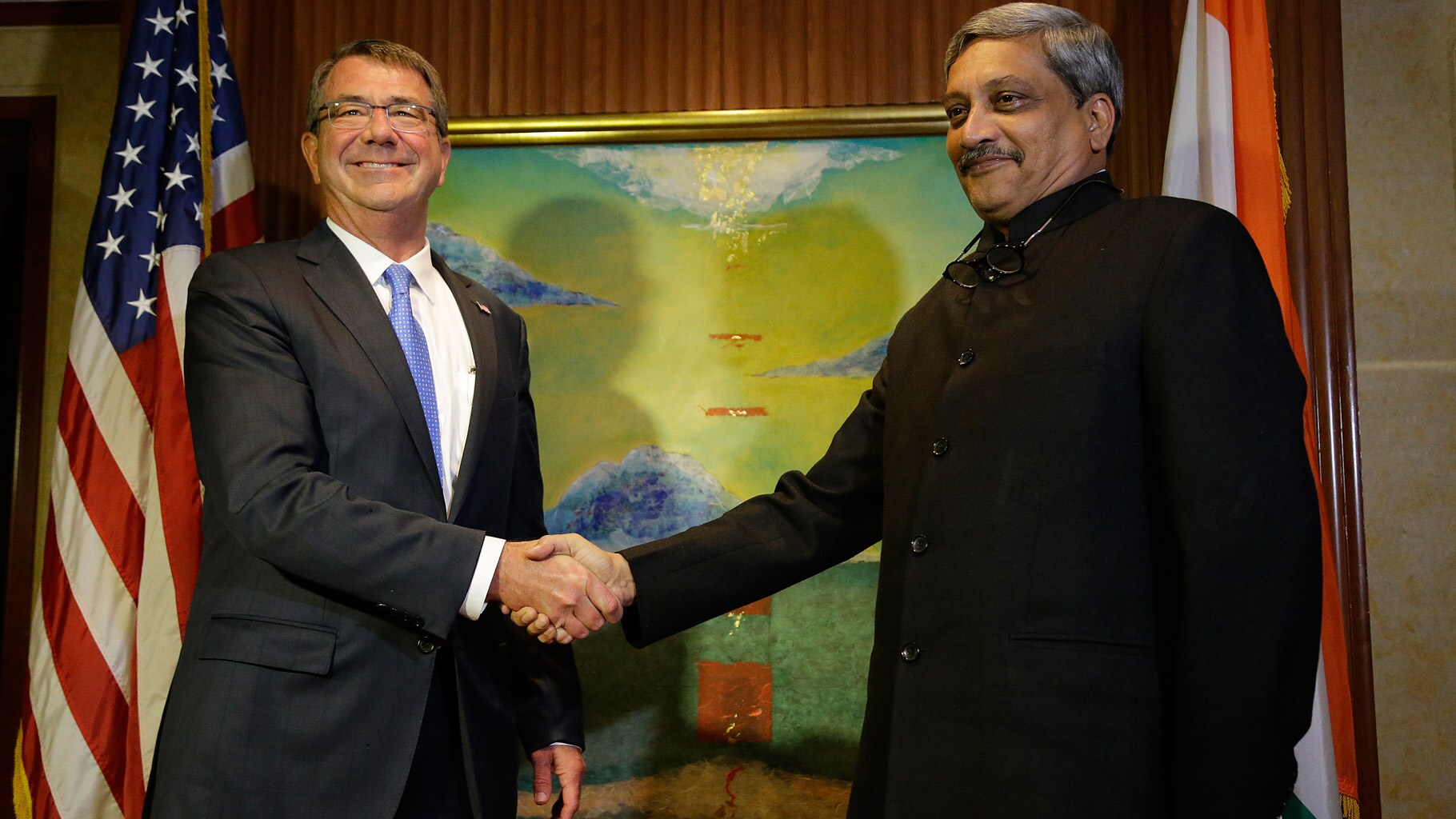
A couple of dayslater, though, Defence Minister Manohar Parrikar clarified that there would beno joint patrols “for now”, but the following month he did agree with his UScounterpart Ashton Carter on an “in-principle agreement” to conclude aLogistics Exchange Memorandum of Agreement. This would enable the two sides toaccess each other's bases for logistics support, including refuelling ofaircraft and warships.
Countering China's Influence
The importance of theModi visit could stem from the sense of urgency the US has on the rapidly deterioratingsituation in the South China Sea. Sometime in June, the arbitral court willread out its verdict on the Philippines complaint disputing Chinese claims onsome South China Sea islands. Most observers say that this could go againstChina which has already adopted a tough posture and rejected the verdict inadvance and denounced the court.
Such a situation can haveserious consequences. It would torpedo the prevailing international law of theseas, more important, it could take the US on a direct collision course withChina in the region.
Essentially what Obama is likely to tell Modi is that it is high time that India came on board to live up to its commitments or, at least, seem to be living up to them in one way or the other.
None of this is to arguethat Modi will do what the US wants, but you can't blame Uncle Sam for trying.As the Indian Prime Minister he will undoubtedly keep India's interests to thefore. There is nothing to indicate that the government wants to get involved inthe quagmire of competing claims in the South China Sea. New Delhi's game issubtle – it is aimed at keeping Beijing off balance, much the same way thatChina keeps India misbalanced in South Asia. Neither side wants to tip the otherover because that could have unforeseen consequences.
(The writer is aDistinguished Fellow, Observer Research Foundation, New Delhi)
Also read:
Modi@2: Govt's Foreign Policy Successful but Plenty Left to Do
Can the Shangri-La Dialogue Fill India's Defence Diplomacy Void?
Essential Business Intelligence, Continuous LIVE TV, Sharp Market Insights, Practical Personal Finance Advice and Latest Stories — On NDTV Profit.