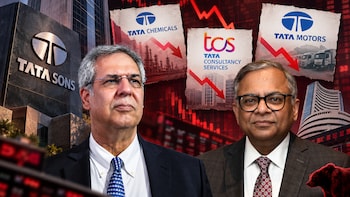
The 2026 Union Budget has not been a rosy one for India's retail derivative traders. On a historic budget announced on Sunday, Nirmala Sitharaman woke up investors with a Securities Transaction Tax (STT) on derivatives trade, which rocked the futures and options (F&O) traders' community and sent stocks such as BSE and Angel One on a downward spiral.
The impact is most visible when looking at the additional friction added to standard order sizes. Under the new proposal, STT on futures has jumped from 0.02% to 0.05%, while the tax on option premiums has risen from 0.1% to 0.15%.
NDTV Profit takes a look at how these changes will impact the tax burden for a retail F&O investor across multiple order values.
Also Read | Layoffs Are Rising In Tech, But These Skills Are Helping People Unlock Better Pay
Breaking Down the Costs
Let's take a closer look at how these costs will add up.
For an order value of Rs 10,000 rupees, the tax on futures contracts rises from Rs 2 rupees to Rs 5. In the options segment for the same amount, the STT climbs from Rs 10 to Rs 15. While these single-digit increases may seem nominal, they represent a 150% and 50% jump in tax liability, respectively.
The impact becomes more pronounced as order sizes scale. At the 50,000-rupee mark, a futures position now attracts Rs 25 in tax, up from Rs 10 previously. For options traders dealing with the same premium value, the cost increases from Rs 50 to Rs 75.
For a Rs 1 lakh order, the tax bite is most significant. The STT on futures rises by Rs 30 to a total of Rs 50. Meanwhile, the tax on an equivalent amount in option premiums moves from Rs 100 to Rs 150 per trade.
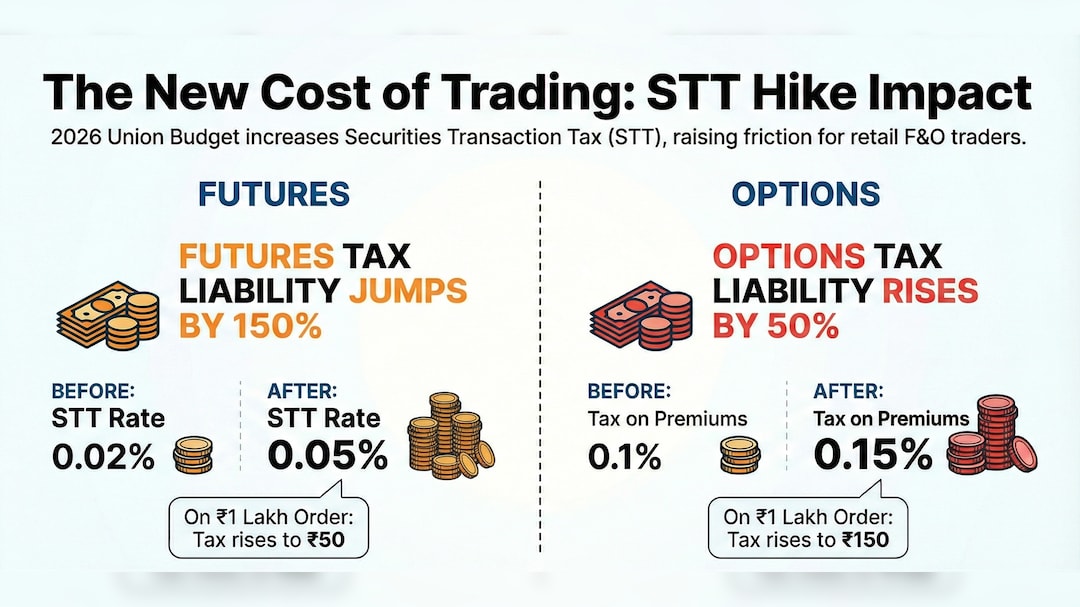
Impact of STT hike for retail investors.
The Cumulative Effect
This effectively means that for active traders who "churn" their capital multiple times a day, these costs are not isolated. A trader moving Rs 1 lakh in option premiums daily will now pay roughly Rs 1,100 more in taxes over a 22-session trading month than they did under the old regime.
Market analysts suggest this change targets the high-frequency "scalping" style of trading, where participants profit from razor-thin margins.
Essential Business Intelligence, Sharp Market Insights, Practical Personal Finance Advice, Daily Fuel, Gold and Silver Prices and Latest Stories — On NDTV Profit.