Talking Point This Week — Surprises Galore
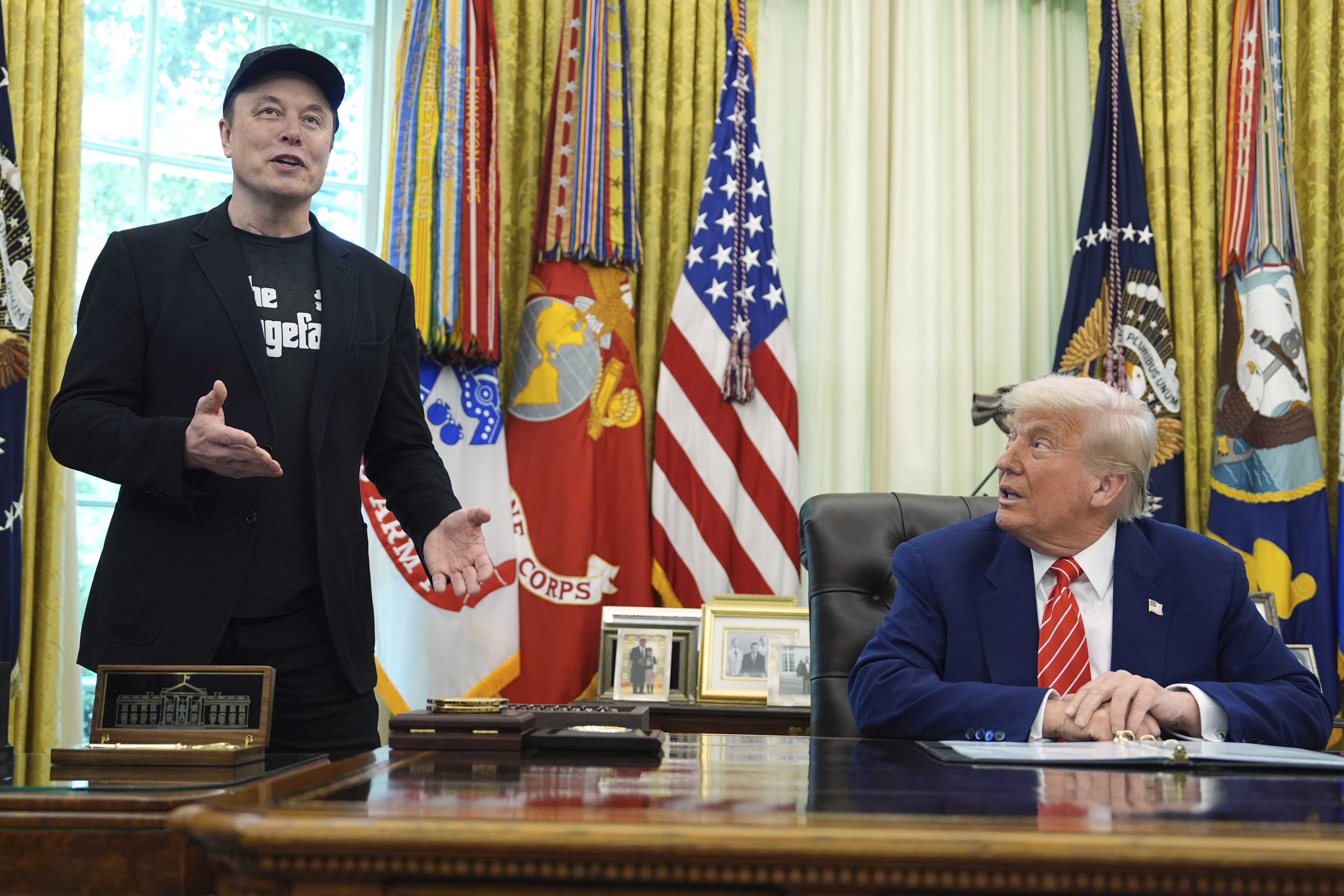
For a global investor, the ending of the Xi-Trump impasse would have been the biggest news normally. Xi Jinping agreed to further trade talks with Trump, invited Trump to visit China and Trump posted on social media he “reciprocated” with an invitation for Xi to visit the US. However, the surprise breakup of the bromance between Trump and Elon Musk took centerstage, with sharp barbs exchanged by both sides.
In other things, Ray Dalio, in his latest book, How Countries Go Broke: The Big Cycle, argues about the indebtedness of US, saying it poses significant risks to the US economy, potentially precipitating a crisis characterised by substantial debt service costs and curtailed essential expenditures. He does point out that the reserve currency status of the US dollar may mitigate some of these risks, affording the country greater flexibility in managing its debt obligations. For an Indian investor, the RBI policy decision was the biggest one, especially as the MPC not only cut rates, but also altered stance. Coupled with the RCB IPL victory, it was the biggest news. Condolences to the fans who lost their lives, and hope that such an incident does not happen again. Here are the key talking points this week.
Bromance ends!
-Cracks in the Musk-Trump bromance open in full public view. Trump says Musk went "crazy" after he favoured oil & gas over EV and threatens to cut $38 billion in government contracts for Musk's companies. Musk responded on X saying he will start decommissioning the DragonX spacecraft immediately, a key tool of the US space program. Musk also claimed that Trump would never have won without him and went on to suggest that Trump should be impeached for a third time. Tesla lost $152 billion in market cap as the stock tumbled post the spat. Trump's former White House Chief Strategist Steve Bannon calls for Elon Musk to be deported, per NY Times.
US job openings continue to trend lower - No surprise though
-The US job market is exhibiting clear signs of weakening. According to Bureau of Labor Statistics (BLS) data, the 3-month moving average of job openings declined to 7.36 million in April, marking the lowest level since 2021. This figure is also below the pre-pandemic peak observed in Q4 2018. Furthermore, the ratio of job openings to unemployed workers reached 1.03, representing the second-lowest level since April 2021.
RBI Policy - Some key surprises
-The Reserve Bank of India's Monetary Policy Committee (MPC), chaired by Governor Sanjay Malhotra, reduced the repo rate by 25 basis points to 5.75% from 6%, marking the third consecutive cut following reductions in February and April 2025. RBI reduced the Cash Reserve Ratio (CRR) by 100 basis points to 3%, to be implemented in four equal tranches, injecting approximately Rs 2.5 lakh crore into the banking system to boost liquidity. The MPC also shifted its policy stance from "accommodative" to "neutral," signaling a cautious approach to future rate cuts. Additionally, the RBI lowered its full-year inflation forecast for FY26 to 3.7% from 4.0%, reflecting confidence in a benign inflation outlook. The MPC projected FY26 GDP growth at 6.7% while hinting at proactively managing liquidity to ensure financial stability. While the signals may seem confusing, the decision should get a high rating in an environment when growth is scarce globally, and there are various forms of uncertainty.
Hoping for no negative surprises here
-China's restrictions on rare earth exports may disrupt global supply chains, especially for industries like electric vehicles and wind turbines that depend on rare earth magnets. This could spur efforts to create independent supply chains outside China and intensify technological competition. Simply put, the curbs may cause production delays, higher costs, and a push toward alternative sources or recycling methods, affecting sectors such as electronics, renewable energy, and defense, potentially reshaping global trade and technological progress. For India, there are mixed views of the ban. Some believe the ban is unlikely to cause immediate disruptions in India, which largely relies on finished products like semiconductor chips from the US, Europe, and China. But the auto industry has rung out alarm bells, and NDTV Profit learns there is substantial concern in the auto industry, with many a corporate coming on air and talking about how there could be serious issues if the situation is not resolved. NDTV Profit also learns that the government is stepping in to help the industry reach out to the right corners in China.
Final frontier of luxury in autos is - sound!
-No wonder carmakers are competing to optimise cabin sound by doing far more than just throwing extra speakers in the back. This is the era of the car as sound studio. Rives, the Grammy-nominated director of audio engineering for Universal Music Group NV, uses technology that Cadillac proudly puts in its newest vehicles, among them the $360,000 Celestiq. He deftly adjusts the settings of Atmos, Dolby's spatial audio system that layers sound in three dimensions, allowing tones to move as if the musicians are interacting live; now SZA's vocals glide from the front to the back of the space as if she's walking between us! This is the current fad. Apparently, more than 90% of music-streaming subscribers say enhanced audio quality is a must-have feature in their car, according to Dolby data, and they're willing to pay for it. Frankly, you don't have to be a car person to understand that listening to music while you drive is one of life's purest joys. It just is between you and the world - with no interruptions or intrusions - except for your damned phone!

-
Blue Wave Will Derail the AI Trade but Won't Dismantle the AI Era | Unhedged Position

The Democrats' sweep of the US Congress will see politics collide with economic forces both over the long and short term.
-
It's Time To Take The GST Council's Bet On Trust Global
Payment records can prove India's services exports, and clear, proportionate rules can bring foreign digital sellers into the tax net.
-
Opinion | India at 38: From Innovation Overperformer to Innovation Powerhouse
India now has 453 VC-backed deep science startups, 18 of them late-stage, after 117 percent growth since 2020. Laurus Labs, at USD 9.3 billion, is the most valuable deep science company in any middle-income economy outside China.
-
Navigating Energy Crossroads: S Jaishankar's Call For Diversified Supply Chains At G20 Ministerial Meeting
As geopolitical fault lines continue to test maritime trade routes and commodity flows, Jaishankar's message remains pertinent: true economic resilience requires open markets, protected transit lines, and a genuine commitment to multilateral cooperation rather than coercion.
-
Indians Are Travelling, But Not Every Journey Is A Holiday | The Week In Whys
Pilgrims, patients and working women are the real travellers, and the system hasn't quite caught up with them.
-
Getting To Work Costs Women More | The Reason Why
It is not just about women paying more than men. It is about women paying much more in cities than in villages.
-
AI Bias In Investing Cannot Be Eliminated, But It Can Be Governed
Framing is a particularly important example as identical financial information presented in terms of gains rather than losses can lead an LLM to reach a different assessment.
-
Joining The Dots | Dark Skies, Steady Diya: Why Hope Holds This Diwali
With war, a weak rupee and foreign outflows weighing on sentiment, policymakers at the NDTV World Summit and market veterans at NDTV Profit Ignite: Diwali Edition offered the same advice: stay invested and filter out the noise.
-
The Curious Case of Equitas Small Finance Bank And A CEO Who Quit For Stock
PN Vasudevan believes persistent investor concerns over a perceived conflict of interest had become a governance overhang on Equitas Small Finance Bank's stock, even as the lender improved profitability and asset quality.










