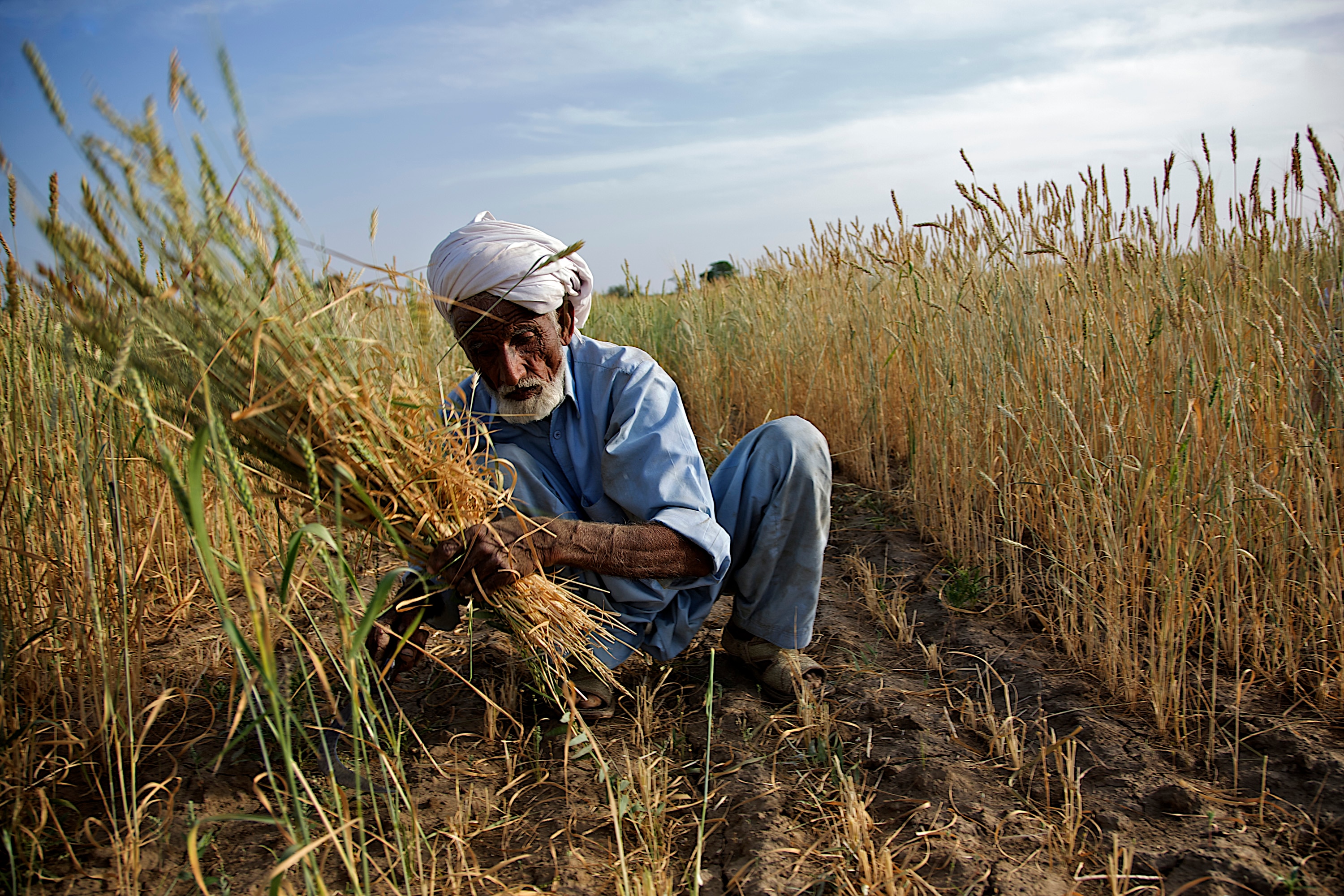
Higher support prices will mostly benefit larger farmers, according to a latest study, and small and marginal growers of fruits to vegetables will still need the government's help in coming days.
“‘Grow rice, get fat!' is the mantra the Indian farmer seems to be following,” JM Financial said citing its eighth Rural Safari survey conducted in 15 districts in a dozen states. That's because farmers have moved away from “riskier” crops such as pulses and coarse cereals to “safer” ones like paddy and sugarcane. The so-called “safe” crops, which adjust to support prices faster, are generally grown by larger farmers with a holding of more than 10 acres, it said.
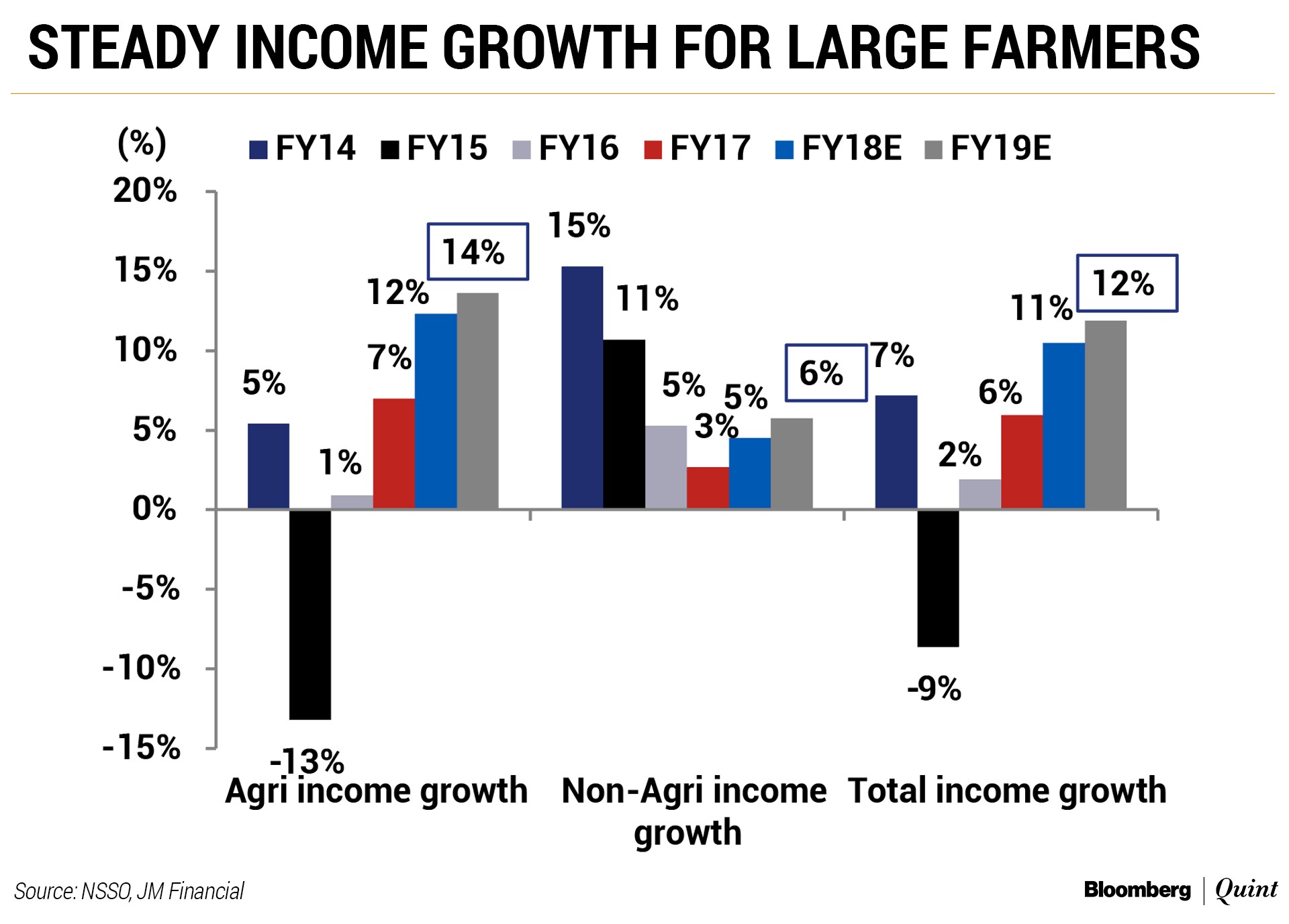
“Market prices for rice and wheat adjust to the new minimum support prices very quickly due to its better procurement than other crops,” Suhas Harinarayanan, managing director and head of research, institutional equities, at JM Financial Ltd., told BloombergQuint in an interview. “Thus, we have seen a higher sowing for rice, sugarcane and wheat.”
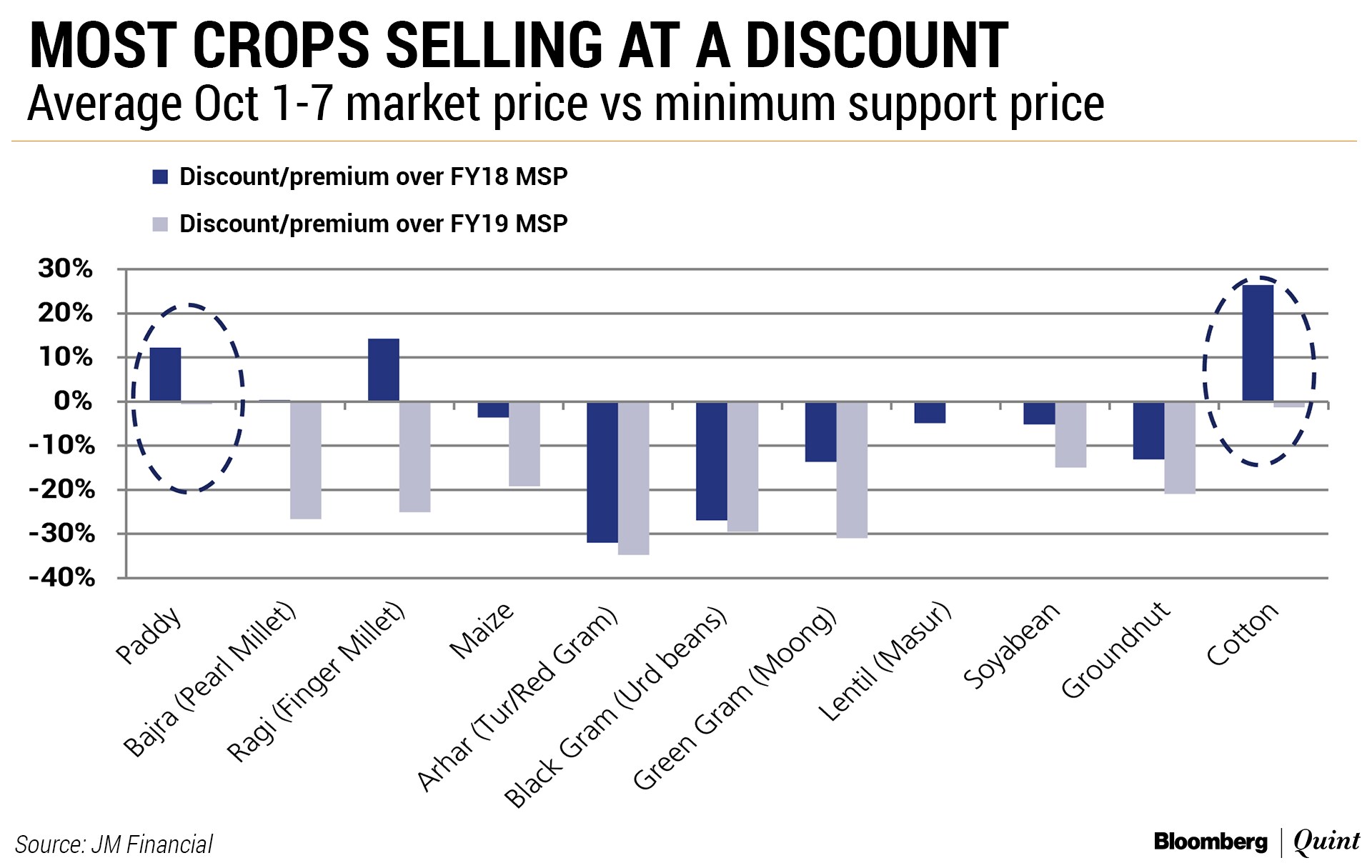
Prime Minister Narendra Modi's government, which targets to double farm income by 2022, has promised farmers 1.5 times the cost of production as a minimum price. But the government buys most crops in small quantities and that doesn't help market prices much, except in case of rice and wheat that it procures in bulk for welfare programmes.
Farmers' support is crucial for Modi to return to power in the next general election next year. And the government is working to ensure the benefits of its new policies start flowing to beneficiaries.
The impact of the government's new procurement policies is more visible in the electorally important states in north and central India, according to the JM Financial survey. In states where procurement has been thin, especially the electorally must-win Uttar Pradesh and Madhya Pradesh—accounting for 20 percent Lok Sabha seats—the machinery is now becoming more proactive. Other states, it said, are only seeing patchy efforts at this point in time.
More Needed To Help Small Farmers
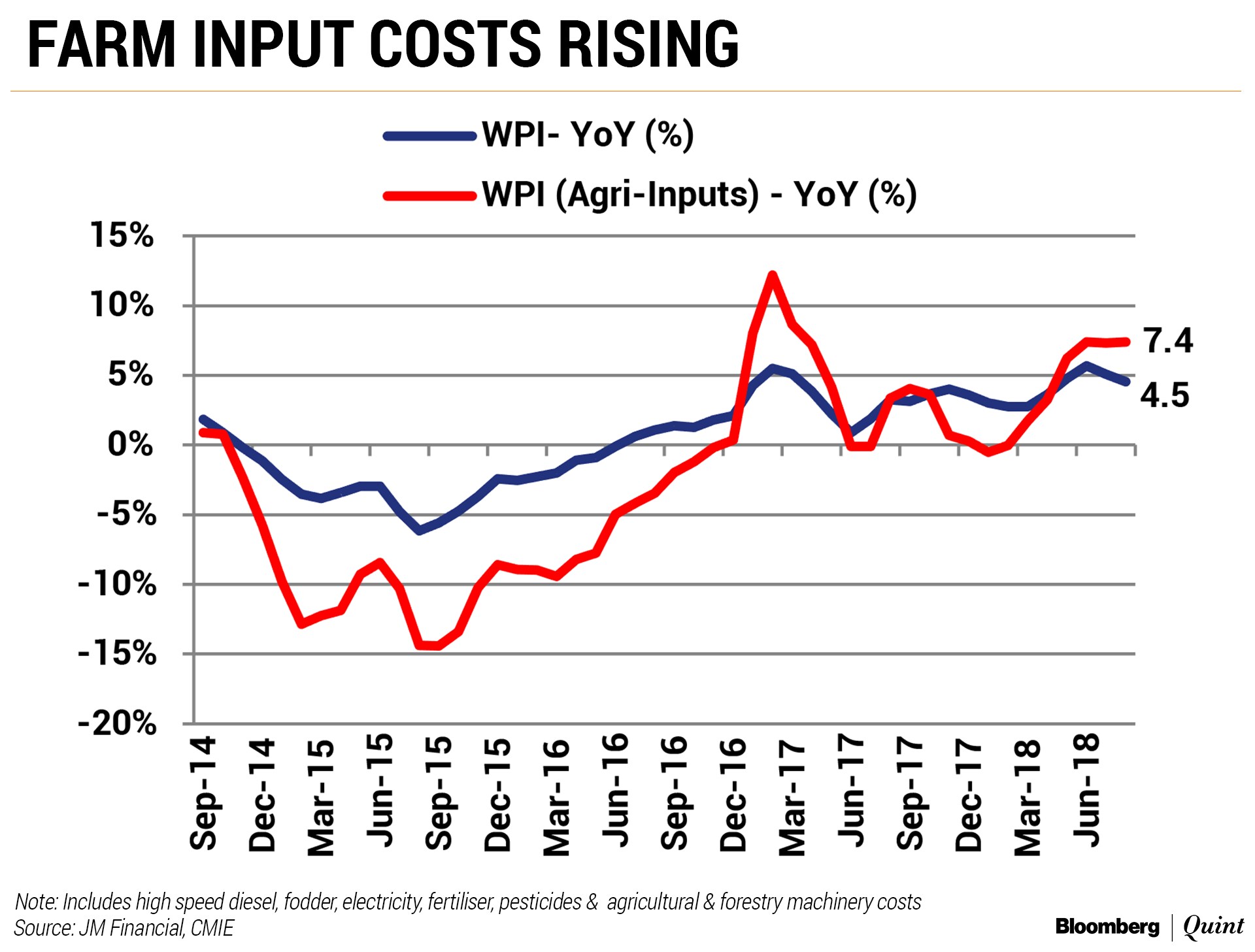
Smaller and marginal farmers, with holdings of less than 5 acres, are not expected to benefit much from higher support prices. These farmers—30 percent dependent on fruits, vegetables and dairy and 45 percent on wages—have seen a faster increase in input costs than in the prices for their main produce, according to the report. “Hence, would need more government support in coming days as wage increases are also only fleetingly higher.”
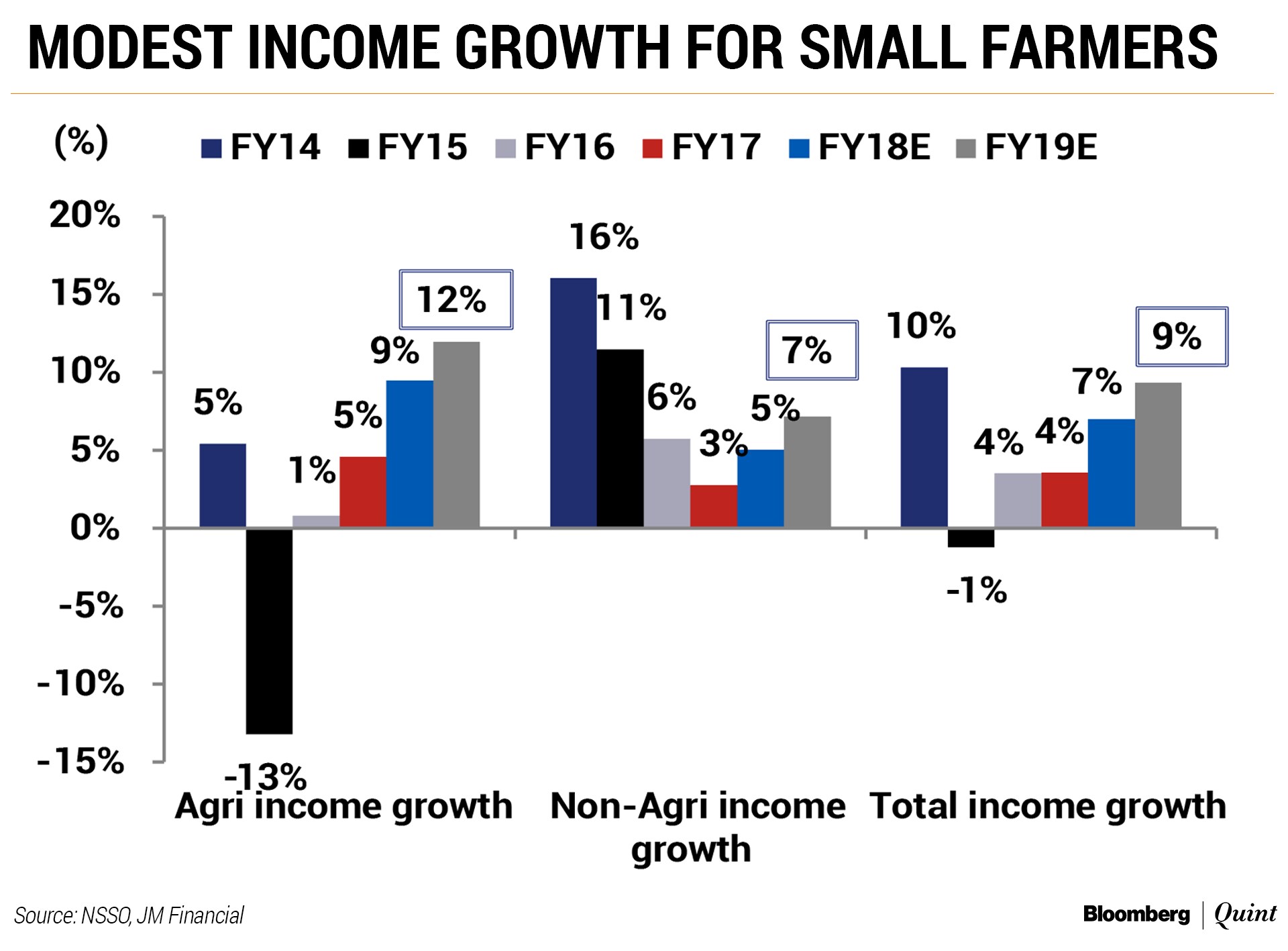
Agri-inputs like seeds, fertilisers and pesticides form a 40-60 percent of costs for vegetables against 20-35 percent for most cereals. JM Financial expects additional government intervention like the partial waiver of electricity bills in Rajasthan even as so far this year its rural spending is already up 29 percent.
Harinarayanan said yields and returns have been declining, largely due to global prices. But large farm loan waivers led to increase in rural consumption over last 18 months, he said, adding that the government's intervention is a very important factor aiding rural demand.
Watch the interview here
Essential Business Intelligence, Continuous LIVE TV, Sharp Market Insights, Practical Personal Finance Advice and Latest Stories — On NDTV Profit.