India's benchmark 10-year government bond yield rose to its highest since Nov. 7, reacting to the repricing of the U.S. Federal Reserve's terminal rates.
The introduction of a new 10-year bond has also put some pressure on the old 10-year bond yield.
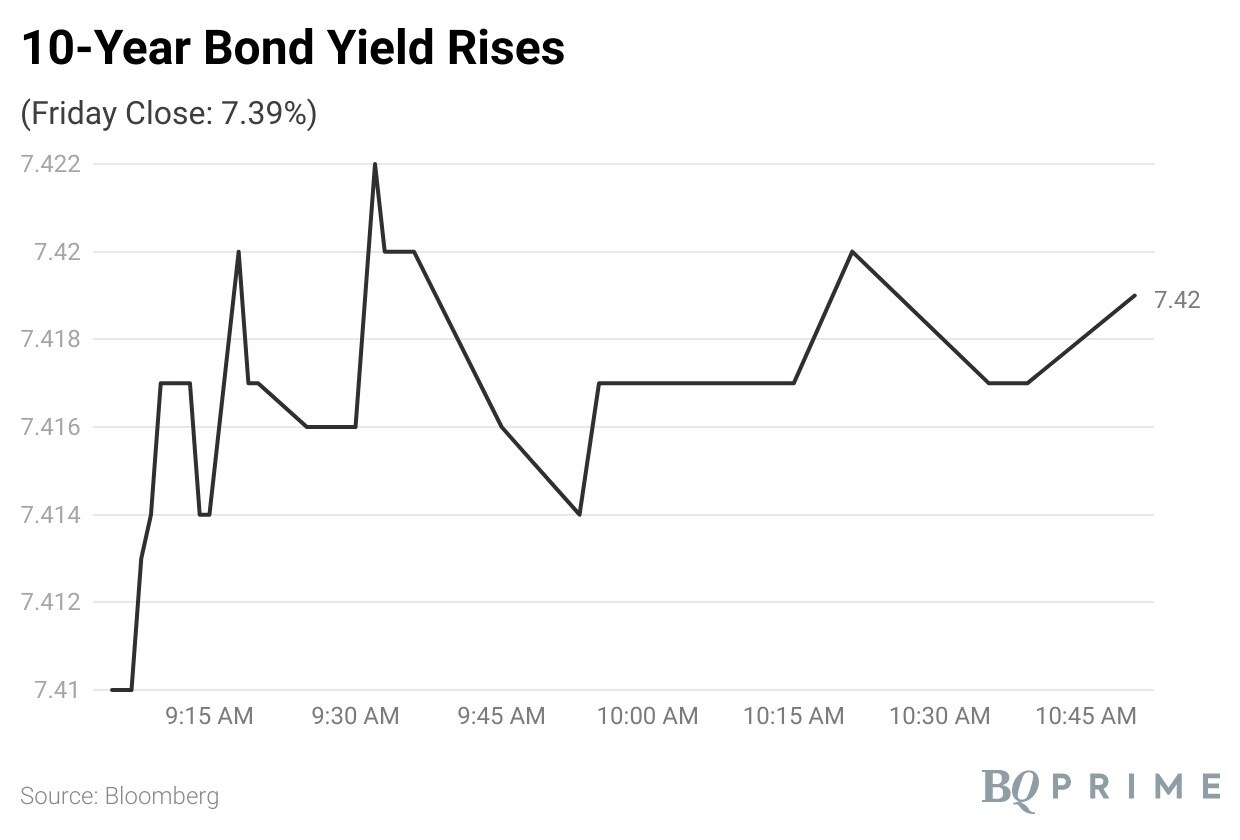
The yield on the 10-year government bond rose over three basis points to an intraday high of 7.42% during the trading session on Monday. The yield closed at 7.39% on Friday.
"The world order has again evolved dramatically, with higher global and Indian inflation prints and uncertainty around developing markets and the Fed terminal rate posing risks to emerging market reaction functions, including those of the RBI," said Madhavi Arora, lead economist at Emkay Global Financial Services.
"The bond market back home is thus reacting to this consistent repricing of the Fed's terminal rates amid resilient demand, which has lent renewed pressure on U.S. yields across the curve, with the shorter end bearing the maximum brunt," she said.
"The pressure pattern is similar back home too, with shorter-tenure yields shooting up more than the 10-year yield, as markets fear a more hawkish RBI ahead," Arora said. "This has been further amplified by a higher supply of T-bills, pressuring shorter tenure papers even further."
"Liquidity is also expected to remain tight on the back of RBI action, higher T- bill borrowing by the government, and seasonal tightness going into March," said Teresa John, economist at Nirmal Bang.
The yield on the domestic 10-year bond will likely remain range bound in the near term, according to John. However, moderating to stable crude oil prices provide some relief in a market facing other headwinds, she said.
Essential Business Intelligence, Continuous LIVE TV, Sharp Market Insights, Practical Personal Finance Advice and Latest Stories — On NDTV Profit.