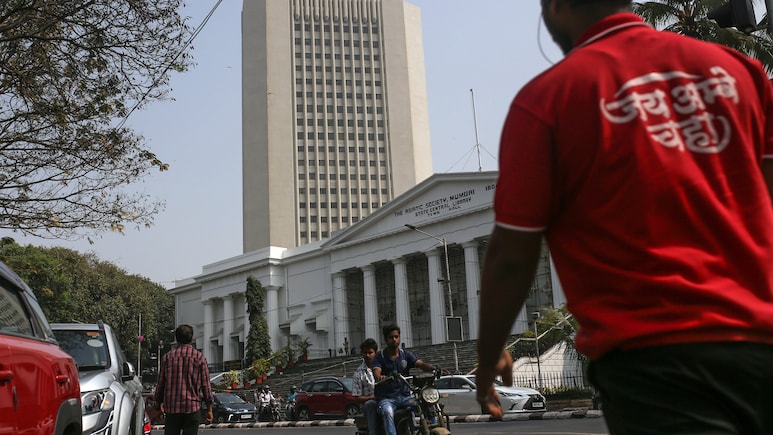
- Indian bonds fell as RBI made no fresh liquidity announcements in its policy decision
- The 10-year bond yield rose to 6.72%, nearing a one-year high reached earlier this week
- The rupee declined 0.6% to 90.8550, its weakest level in over two weeks
Indian bonds fell as an absence of any fresh liquidity measures in the central bank's policy decision on Friday disappointed traders, even as the government's record borrowing weighs on the market. The rupee also fell.
The 10-year bond yield rose as much as eight basis points to 6.72%, near the one-year high reached early this week. The local currency declined 0.6% to 90.8550, the most in more than two weeks.
Some traders were expecting the RBI to announce bond purchases of up to 1 trillion rupees ($11 billion) for the current fiscal year, according to V.R.C. Reddy, head of treasury at Karur Vysya Bank Ltd.
Also Read | Layoffs Are Rising In Tech, But These Skills Are Helping People Unlock Better Pay
While no new liquidity steps were unveiled, Governor Sanjay Malhotra said the central bank would remain proactive in managing liquidity and ensure adequate funds for the banking system. Such measures may be announced outside scheduled policy statements too, he said.
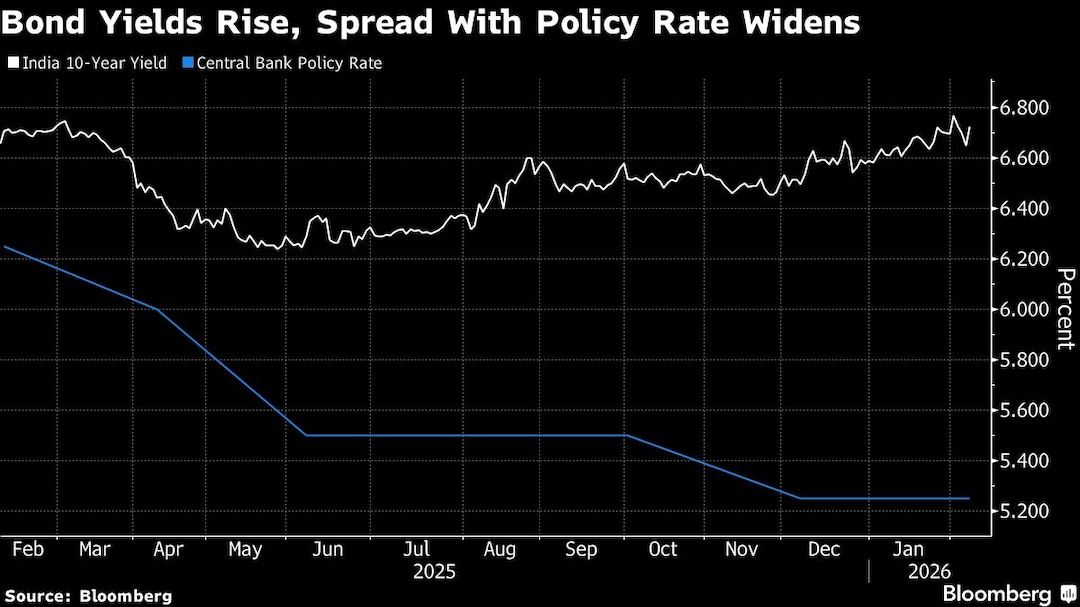
The central bank has already bought nearly 7 trillion rupees of bonds in the current financial year. Lack of RBI buying may pile further pressure on bonds to extend losses as it has been a key source of demand in recent months, analysts said.
Record bond purchases by the RBI in the financial year that ends in March have helped cap the rise in bond yields, weighed by weak investor demand and increased issuance of state government debt.
Adding to the pressure on bonds, the RBI's policy statement signaled a mildly hawkish tilt with its slight increase in growth and inflation projections, according to Sneha Pandey, fund manager for fixed income at Quantum Asset Management Co. The message for markets is one of caution rather than comfort on near-term easing, she said.
Banking system liquidity, as measured by a Bloomberg Economics index, has swung back into a surplus of more than 2 trillion rupees after slipping into a deficit two weeks ago.
Earlier this week, yields climbed to their highest level in more than a year after India unveiled its largest-ever gross borrowing plan of 17.2 trillion rupees for the next fiscal year. The governor said one should look at net borrowing of 11.7 trillion rupees, which is on the lower side and the government should be able to raise debt at “reasonable prices.”
Stocks and the rupee had reacted positively earlier in response to the India-US trade deal announcement, but both have seen reversal in gains as the details are still not out, said Gopal Tripathi, head of treasury at Jana Small Finance Bank.
Dollar demand for import payments, and stop losses on bets against the greenback added to the rupee's fall, according to Mecklai Financial Services Pvt.
ALSO READ: Alphabet-Backed Aye Finance IPO GMP Today: What Does The Grey Market Signal Ahead Of Feb. 9 Opening
Essential Business Intelligence, Sharp Market Insights, Practical Personal Finance Advice, Daily Fuel, Gold and Silver Prices and Latest Stories — On NDTV Profit.