A new nationwide survey released on the occasion of Safer Internet Day reveals alarming levels of online risk faced by Indian children aged 9 to 17. Conducted by LocalCircles and based on over 89,000 responses from urban parents across 302 districts, the study throws light on the widespread exposure to inappropriate content, bullying, harassment and other forms of digital harm. Here are the key findings from the Safer Internet Day Report:
1. High Exposure to Online Risks
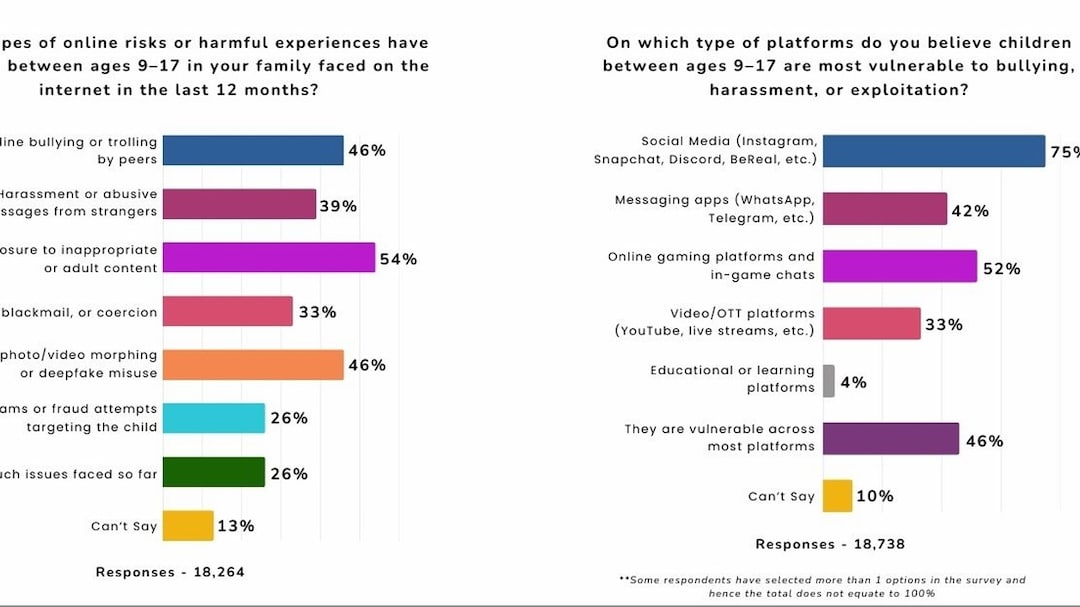
According to the report, 54% of parents said their children encountered inappropriate or adult content online in the past year. Nearly an equal proportion, 46%, reported that their children had faced online bullying or trolling. The risks extended further, with AI‑driven deepfake misuse, harassment from strangers, threats, blackmail and online fraud attempts also featuring prominently.
Other major risks:
Also Read | Layoffs Are Rising In Tech, But These Skills Are Helping People Unlock Better Pay
- 46%: AI-based photo/video morphing or deepfake misuse.
- 39%: Harassment or abusive messages from strangers.
- 33%: Threats, blackmail, coercion.
- 26%: Online scams or fraud attempts.
Platforms Where Children Are Most Vulnerable
Photo Credit: Photo: LocalCircles Survey
Parents overwhelmingly pointed to social media platforms including Instagram, Snapchat, Discord and others, as the most unsafe digital spaces. Three out of four parents (75%) believe children are most vulnerable to bullying, harassment or exploitation on these platforms. Online gaming environments (52%), messaging apps (42%) and video/OTT (33%) platforms were also identified as significant risk zones.
3. Impact on Children's Mental & Emotional Health
The consequences of these online experiences appear to be deeply affecting young users. Among parents whose children faced online harm, 61% reported increased anger or aggressive behaviour, while 54% observed mood swings or emotional withdrawal. Other impact reported include:
- 46%: Fear or anxiety.
- 41%: Sleep issues / reduced concentration.
- 34%: Lower confidence or self-esteem.
To sum it up: One in two affected children developed emotional withdrawal, aggression, or anxiety.
4. Reporting Online Harms Is Extremely Difficult
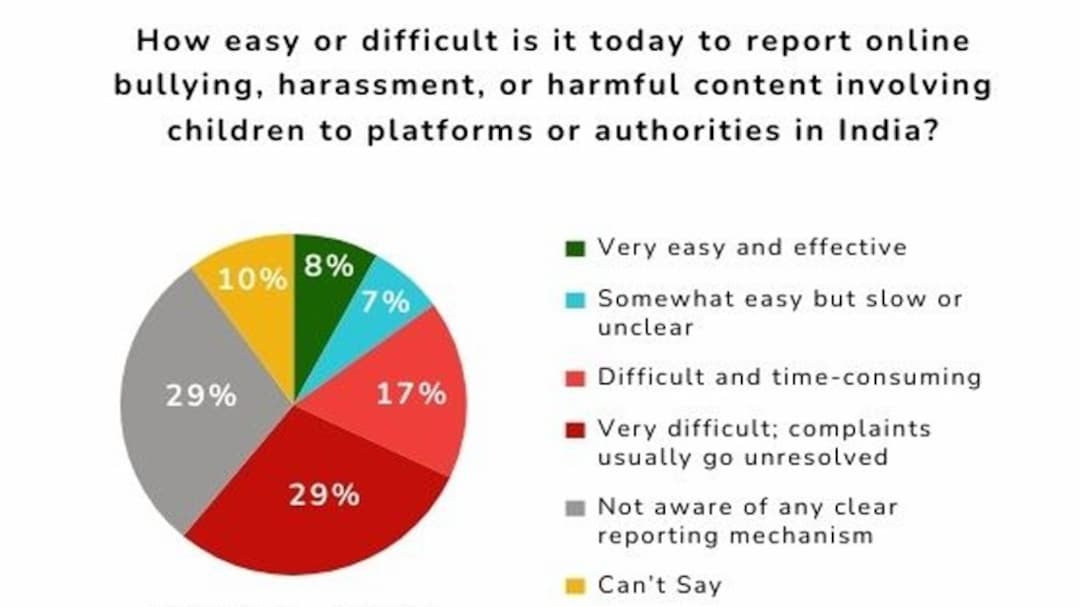
The report pointed at India's digital safety infrastructure. A striking 82% of parents described the process of reporting online bullying or harmful content involving minors as difficult, slow, unclear, or entirely unfamiliar. Only 8% found the system effective. Over 75% of respondents said the Government must mandate time‑bound responses from platforms on child‑safety complaints.
Safer Internet Survey
Photo Credit: Photo: LocalCircles Survey
5. Strong Demand for Government and Platform Action
Parents called for stricter penalties for non‑compliant platforms, a single national helpline, dedicated child‑safety units in cyber police, and mandatory human review and not just automated systems for complaints involving minors. According to the report, the parents demands include stronger enforcement, coordinated monitoring and parent‑focused tools, the risks to young internet users continue to escalate.
78%: Stronger penalties for platforms ignoring child safety complaints
76%: Time-bound mandatory responses from platforms
63%: Single national helpline/portal
61%: Dedicated child-safety units in cyber police
57%: Mandatory human, not AI-only review of complaints
52%: Simplified reporting tools for children & parents
The survey by LocalCircles received over 89,000 responses from urban Indian parents of children between ages 9-17 & located across 302 districts of India. 61% respondents were men while 39% respondents were women. 44% respondents were from tier 1, 33% from tier 2 and 23% respondents were from tier 3 and 4 districts.
ALSO READ: Amazon Found High Volume Of Child Sex Abuse Material In AI Training Data
Essential Business Intelligence, Sharp Market Insights, Practical Personal Finance Advice, Daily Fuel, Gold and Silver Prices and Latest Stories — On NDTV Profit.