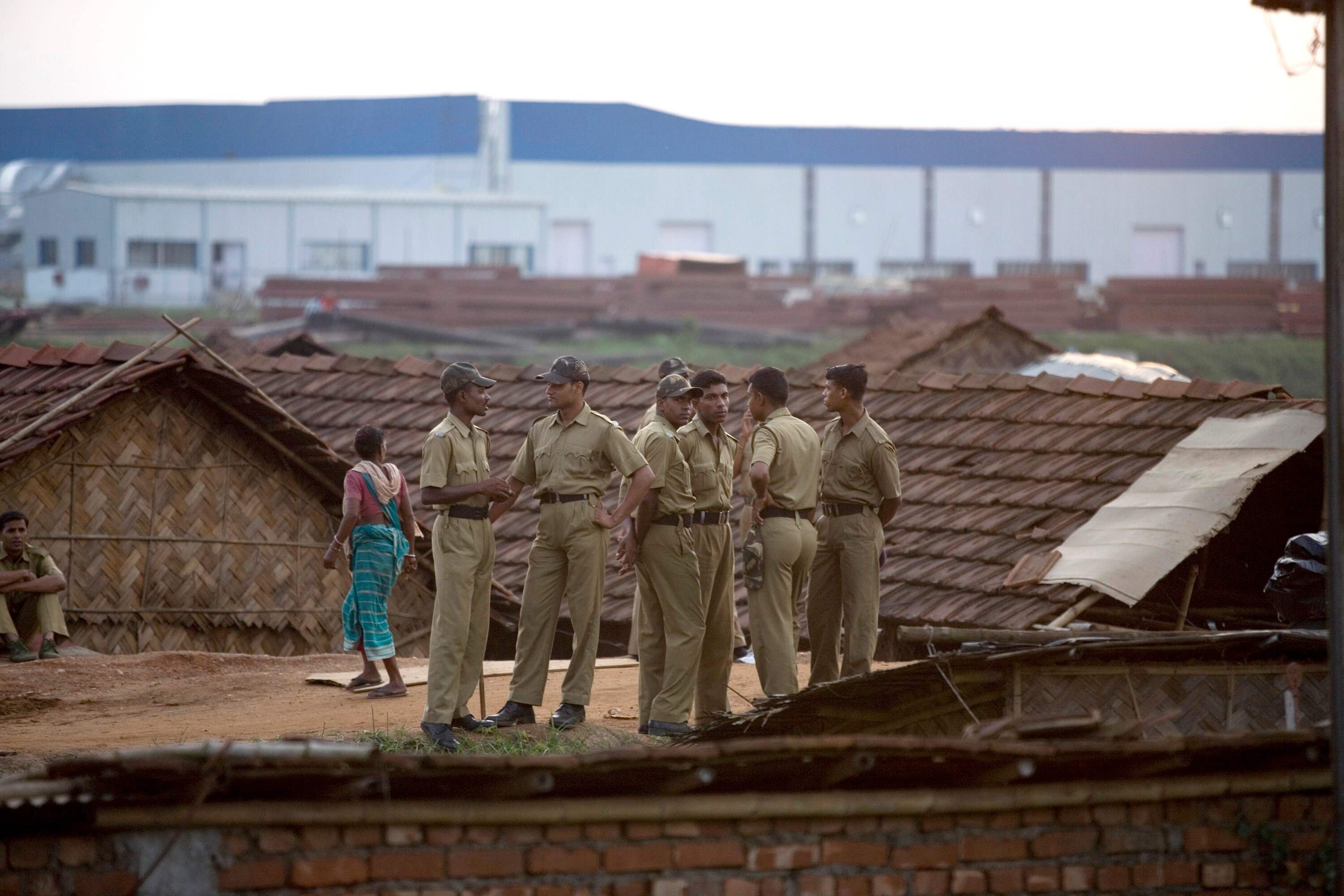
Attempts to reform the way the police function in India have been going on since 1973. And states are yet to implement what the Supreme Court ordered in 2006.
The top court, in a July 3 judgment, again sought to curtail the power state governments exert over police officers. It ordered that the tenure of a director general of police be fixed at two years, and the selection be made from a shortlist by the Union Public Service Commission that is responsible for the recruitment of police officers. The judgment adds that any extension if at all, needs to be for a reasonable tenure.
“I have very little hope the political system will accept the recommendations (made by various Police Reform Commissions),” former Mumbai Police Commissioner MN Singh, best known for leading the investigations in the 1993 Mumbai blasts case, told BloombergQuint. And they, according to him, are not relevant anymore.
The recommendations (made in 1973) are outdated and I would like to throw them in the dustbin. Things have changed a lot.MN Singh, Former Mumbai Police Commissioner
PK Jain, former additional DGP of Mumbai Police, says politicians are unwilling to give up control on the police force. The police system is a state subject under the constitution and politicians in the government often place their preferred officers in top spots, he says, adding that officers are often expected to toe the line of political bosses.
These compromises have become more of a routine rather than an exception.PK Jain, Former Additional DGP, Mumbai Police
Both Singh and Jain shared their own experiences as senior officers where they faced political pressure. Singh says he was under pressure to extend favors during his investigation in the 1993 serial blasts case. He claims he withstood the pressure and faced the consequences by being shunted out to an insignificant posting.
For the next five years I was in the wilderness because the BJP-Shiv Sena government which came to power.MN Singh, Former Police Commissioner, Mumbai Police
The threat of transfers to ‘insignificant' posts, demotions and suspensions is what forces most police officials to toe the political line. “I have faced pressures from ministers just before elections when they want certain goons released from prison,” says Jain. He was asked to hold off on arrests of members of a particular community after the 2006 Malegaon blasts in Maharashtra by the home minister, according to Jain. The late RR Patil of the Nationalist Congress Party was the home minister of Maharashtra at the time.
There was an oral and persistent instruction from the home minister that members from a particular community should not be arrested up to a particular date or time.PK Jain, Former Additional DGP, Mumbai Police
How rampant is the political interference on police force? Here are the personal accounts two retired senior police officers.@TamannaInamdar pic.twitter.com/m4EtbltAOo
Reforms have been taken up by the Supreme Court at a time when the Indian police suffer from the perception of corruption. “It is impossible for a police officer to be completely honest,” says Singh. He points to poor living conditions, low salaries and a command system that encourages corruption.
Corruption is not typical of the police alone. It's an all pervasive phenomenon.MN Singh, Former Police Commissioner, Mumbai PoliceThe Supreme Court's judgment once again nudges states to loosen their stranglehold on the police force. Singh and Jain are not very optimistic. “Till the time postings and transfers are left to political bosses, there is very little hope for implementation of these reforms,” says Jain.
Essential Business Intelligence, Continuous LIVE TV, Sharp Market Insights, Practical Personal Finance Advice and Latest Stories — On NDTV Profit.