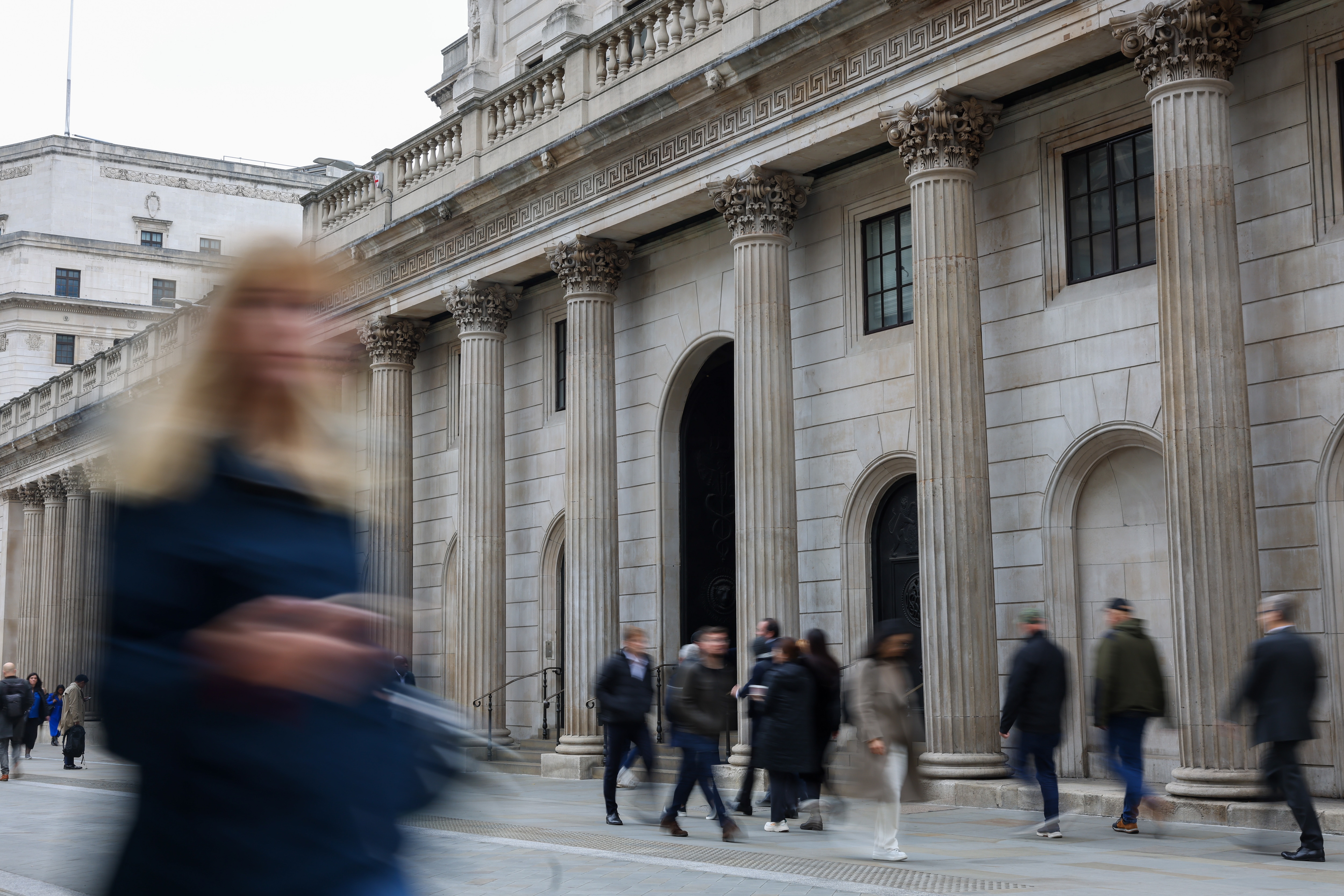
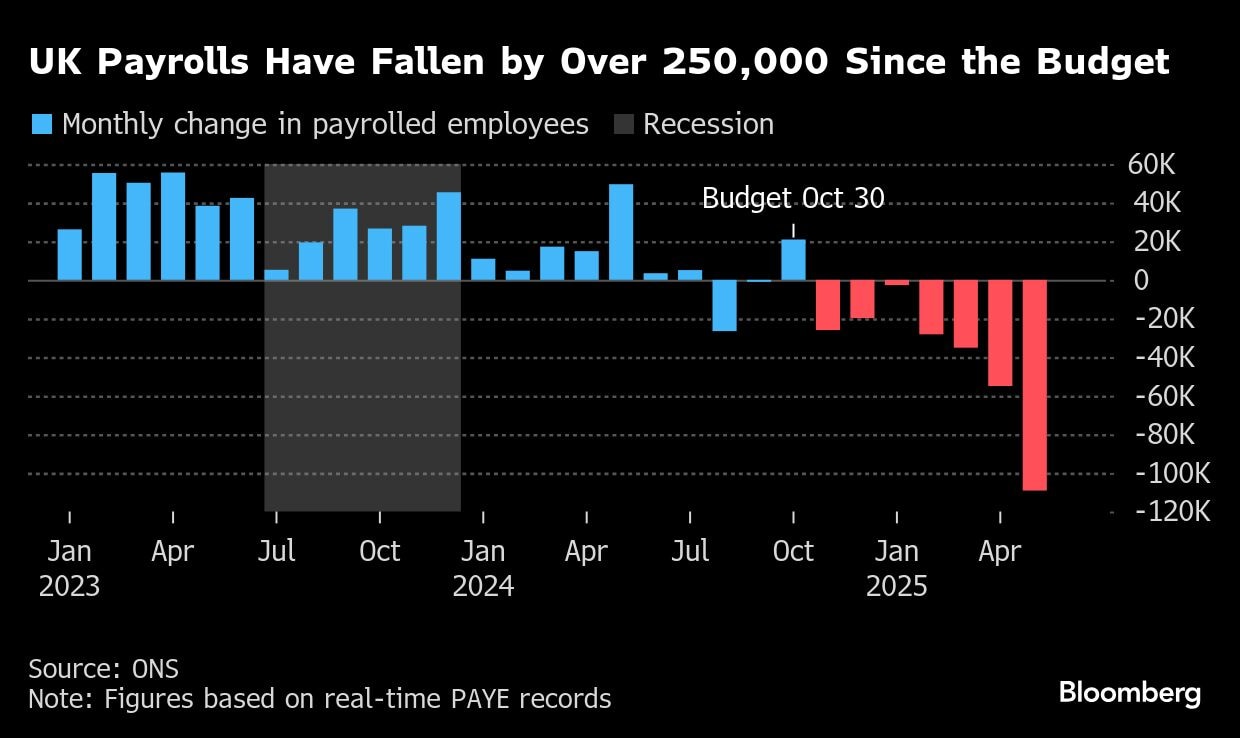
The Bank of England held interest rates at 4.25% in a more divided vote than expected as policymakers weighed up the UK's softening jobs market and weak growth against a backdrop of mounting geopolitical tensions.
In a decision that left rates on course for a potential quarter-point cut in August, six of the BOE's nine Monetary Policy Committee members voted to leave rates unchanged while three — externals Swati Dhingra and Alan Taylor, as well as Deputy Governor Dave Ramsden — preferred an immediate quarter-point reduction. Economists had expected a 7-2 split.
The minutes to the meeting showed that the committee “expected a significant slowing over the rest of the year” in pay growth amid a further loosening of conditions. Striking a dovish note, it said there were “some greater signs of disinflationary pressures from the labor market.”
It left its core guidance unchanged that future rate cuts will be “gradual and careful.”
Traders focused on the more-dovish-than-expected vote split. They added to bets on further interest-rate cuts, pricing another two quarter-point reductions in 2025.
The repricing saw the yield on 10-year gilts trading around 4.52% compared with 4.53% ahead of the decision. The pound initially slipped before trading 0.1% higher on Thursday at $1.344.
“Definitely August seems like a done deal,” said Pooja Kumra, senior European and UK rates strategist at TD Securities, on Bloomberg TV. She expects to see a gradual decline in wage and inflation data before the next meeting but cautions they are unlikely to move to cutting consecutively like the ECB, given they are sticking to their “gradual and cautious” approach.
“Interest rates remain on a gradual downward path,” said Governor Andrew Bailey, in a written statement alongside the decision. “The world is highly unpredictable. In the UK we are seeing signs of softening in the labor market.”
In a separate video clip posted to social media, Bailey added: “What we need to see is that evidence of loosening in the labor market gets translated through into inflation.”
The governor was also forced to write a letter to Chancellor of the Exchequer Rachel Reeves, as UK inflation has deviated from the BOE's 2% target by more than 1 percentage point. He said in the letter that the rise in CPI should be temporary, and there were signs of normalization in wage pressures.
Earlier Thursday, rates were cut elsewhere in Europe, with the biggest surprise coming from Norway. Norges Bank caught economists and traders off guard by delivering its first post-pandemic reduction in borrowing costs, causing the krone to slide. The Swiss National Bank cuts its rate to zero, meanwhile, in a sixth consecutive and widely-expected move. Both central banks pointed to lower inflationary pressures.
Trump And Iran
The bank has lowered rates four times since August into steadily building economic and political headwinds that started in April with US President Donald Trump's global trade war and escalated last week after Israel attacked Iran. The US is preparing for a possible strike on Iran, potentially raising the stakes even further.
The committee noted the sharp rise in oil prices since Israel's attack, which pushed up crude by more than 10% at one point and is threatening the drive inflation higher. It said it would “remain vigilant about these developments and their potential impact on the UK economy.”
Read More: US Officials Plan for Possible Strike on Iran in Coming Days
There was better news on trade following last week's US deal with China over rare-earth exports and confirmation that some restrictions on the UK will be dropped. “The direct impact of the trade shock on world GDP could be smaller than the committee had expected,” it said. “Trade policy uncertainty would nevertheless continue to have an impact on the UK.”
The improved trade backdrop meant that, although underlying GDP growth “remained weak,” the MPC raised its second quarter forecast to 0.25% from 0.1% in May - providing some support to the government's claims it has fixed the foundations of the economy and growth is improving.
The MPC is trying to balance elevated inflation against a cooling economy but its job is being complicated by conflict in the Middle East and US trade policy. May's spike in inflation to 3.4% from 2.6% in March, on the back of temporarily higher household energy bills, was in line with the BOE's May forecasts, it said.
Before the June decision, markets gave an August quarter-point rate cut an 80% probability and traders were pricing two further reductions by summer 2026 that would result in rates rates settling around 3.5%.
The decision to hold rates this month followed the same action by the US Federal Reserve on Wednesday. The Fed has now held the benchmark federal funds rate in a range of 4.25%-4.5% at four successive meetings. The European Central Bank has cut rates eight times to 2% and has said signalled that it is near the end of the loosening cycle.
Essential Business Intelligence, Continuous LIVE TV, Sharp Market Insights, Practical Personal Finance Advice and Latest Stories — On NDTV Profit.