- India faces a 25% US tariff impacting textiles, pharma, electronics, and machinery sectors
- India's goods exports to the US equal 2.2% of GDP, limiting direct tariff impact
- Weaker rupee may offset some tariff effects by boosting global price competitiveness
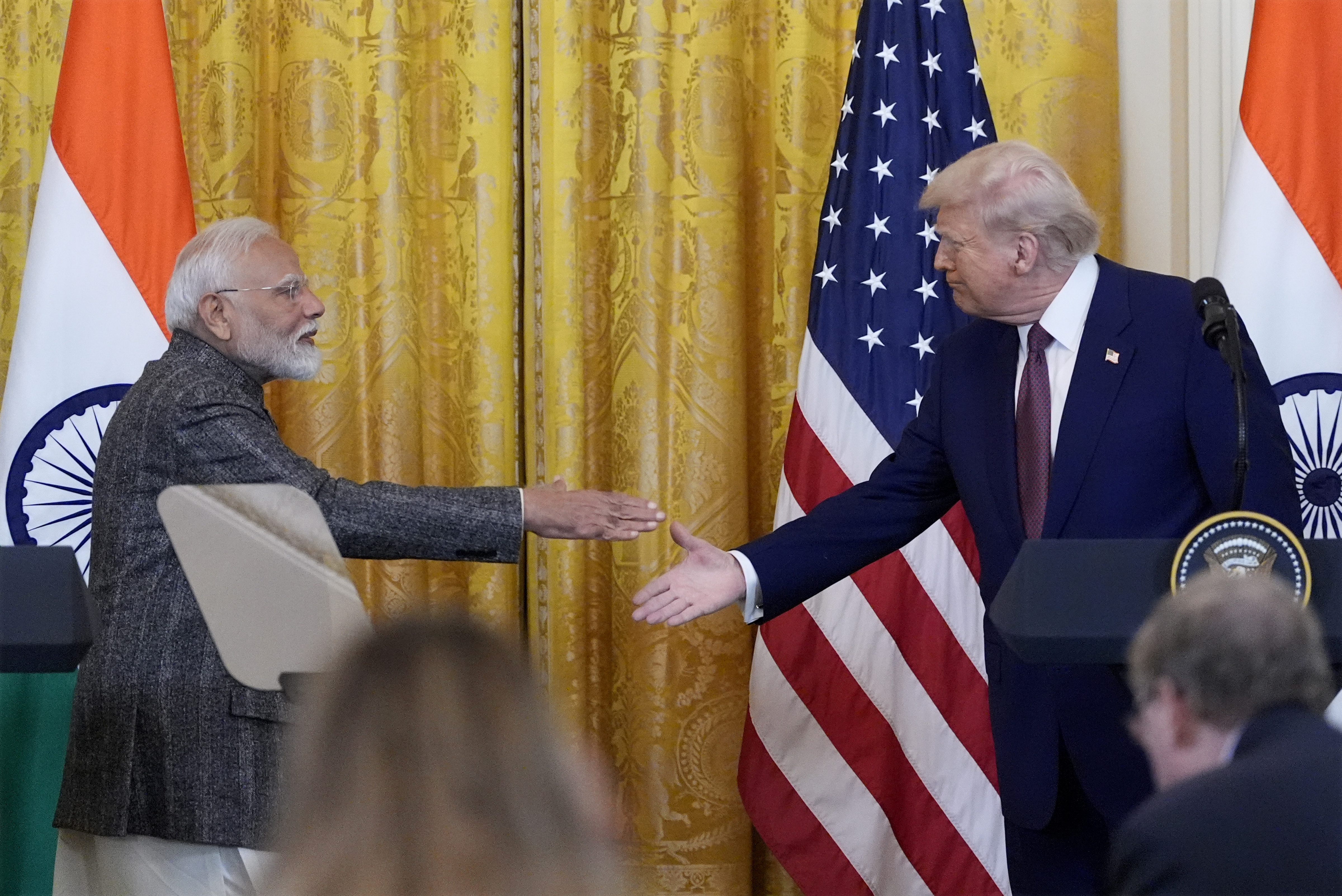
US President Donald Trump's decision to slap India with a 25% tariff and additional punitive duties for trade with Russia will shave off some economic growth, but a weaker rupee may extend some support.
Key sectors, including textiles, pharmaceuticals, electronics, agri-products, and machinery, are expected to feel the brunt. The recent weakness in the Indian rupee, if sustained, could cushion the impact by improving the price competitiveness of Indian goods globally.
India and the US have been locked in negotiations for an interim trade agreement for months. Despite multiple rounds of discussions recently, a mini or an interim trade agreement has remained elusive.
Also Read | Layoffs Are Rising In Tech, But These Skills Are Helping People Unlock Better Pay
After Trump's decision on Wednesday, New Delhi said negotiations with Washington will continue and did not impose any retaliatory duties.
Here's a brief on what analysts are saying:
Morgan Stanley
At an aggregate level, India's goods exports to the US are 2.2% of GDP.
This implies a less severe direct impact of tariff-related developments.
Further, nuances will emerge at the sector level based on the tariff differential with other economies and exposure to the US.
Remain watchful of the developments from the next round of negotiations.
The second-order impact of the tariffs through weaker corporate confidence and a deferred capex cycle, which in our view is likely to be more pronounced.
Textiles make up close to half of India's overall exports, while the share of pharma products is 40%.
DAM Capital
Final tariffs for some ASEAN countries have now come through, at lower than the 25% rate for India.
India has stood its ground in not agreeing to lowering tariffs for agri-products.
India can gain if the tariffs on China remain substantial.
If most of the adverse effects eventuate, the worst-case impact would be a 30-basis-point hit to GDP growth.
The greater immediate macro impact depends on whether FII outflows and rupee depreciation accelerate.
Negative: Auto, Renewables (higher tariffs relative to competition).
Neutral for now: EMS, Cap goods, Steel/aluminium, Oil & Gas, Pharma.
Mixed: Chemicals, Textiles (dependent on final tariff rate for Bangladesh).
Nuvama
India's goods exports to the US may be hurt, but it is small as a share of GDP.
Some loss in exports to the US could be offset by redirecting exports to other nations.
Recent rupee weakness, if it is sustained, could also work to limit the tariff impact.
A bigger implication of the US tariffs could be the shrinking of the US trade deficit, especially amid a weaker dollar and higher rates.
This shall impart a deflationary impulse to the global economy, hurting trade, growth, and earnings everywhere.
This will keep markets volatile as FII flows could soften—key market movers now.
See more global monetary easing is likely down the line.
Elara Securities
See a 30 basis point drag on India's growth in case of no deal with the US.
Direct impact of higher tariffs is likely to be felt on pharma, auto ancillaries, industrial machinery, and gems and jewellery exports.
The rupee weakness could benefit the IT sector.
Post 25% tariff imposition, India's rate is higher than Vietnam, the Philippines, and Indonesia.
India's rate is lower than Bangladesh, Thailand, and Taiwan.
See a possibility of gaining advantage in apparel, electrical machinery, nuclear reactors, boilers, machinery & appliances, automobiles, and gems and jewellery.
The India-UK trade deal is also likely to give a further fillip.
CLSA
Unfriendly words from President Trump plus a higher-than-expected tariff. This alters the near-term narrative of India as a safe haven.
Hopes of rising relative trade advantage questioned; exporters could be hit.
This may not be the final word, but elevated valuations may hurt the market.
Jefferies
Estimated GDP impact of 25-40 bps.
Higher current account deficit and higher crude impacting rupee, and lower rate cut possibility.
FPI sentiment could stay weak as India's relative 'friend of US' and 'beneficiary of China +1' image takes some knock.
Remain hopeful of an eventual trade deal and some of the above impact getting reversed.
Essential Business Intelligence, Sharp Market Insights, Practical Personal Finance Advice, Daily Fuel, Gold and Silver Prices and Latest Stories — On NDTV Profit.