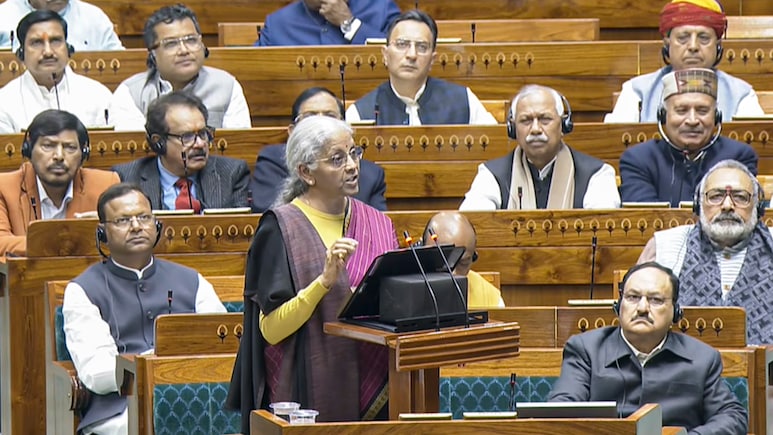
India's latest Union Budget stands out not as a one-off announcement document, but as a reform express-methodical, forward-looking, and anchored firmly in macroeconomic stability. Under the leadership of Prime Minister Narendra Modi executed by Finance Minister Nirmala Sitharaman, the Budget reinforces a long-term development strategy that balances growth, resilience, and inclusivity. Rather than chasing short-term populism, it lays down a clear pathway toward Viksit Bharat by focusing on future-oriented sectors while ensuring that no segment of society is left behind.
Stability as the Core Economic Philosophy
At its foundation, this is a stability-driven Budget. Fiscal discipline remains central, with debt-to-GDP projected at 55% and fiscal deficit declining from 4.4% to a projected 4.3% of GDP. Such calibrated consolidation signals continuity and credibility-critical for investor confidence, sovereign ratings, and long-term capital formation. Net market borrowing is carefully managed, even as total expenditure expands, reflecting a mature approach to public finance rather than reckless expansion.
This stability is not accidental. It is built on the cumulative effect of over 350 structural reforms rolled out in recent years-ranging from GST simplification and labour codes to quality control orders. Importantly, the Budget highlights cooperative federalism, with Central and State governments working together on deregulation, infrastructure delivery, and growth facilitation. The 16th Finance Commission's 41% vertical devolution further strengthens states' fiscal capacity, reinforcing decentralised development.
Also Read | Layoffs Are Rising In Tech, But These Skills Are Helping People Unlock Better Pay
A Strong Push to Future-Oriented Growth Engines
What gives this Budget its reform-express character is its decisive tilt toward sectors that will define India's economic future. Strategic manufacturing receives sustained attention: semiconductors with a Rs 40,000 crore capital outlay, biopharma with Rs 10,000 crore support, rare earth mining corridors across multiple coastal and mineral-rich states, and dedicated pathways for chemicals and container manufacturing. These are not isolated announcements but components of a broader strategy to secure supply chains, reduce import dependence, and position India as a global manufacturing hub.
Infrastructure continues to act as the growth multiplier. With public capital expenditure maintained at Rs 12.2 lakh crore, highest ever in Indian history and multi fold higher than 2013's Rs 141,912, the Budget ensures momentum in logistics, freight corridors, waterways, and urban connectivity. Dedicated freight routes, new national waterways, coastal cargo schemes, and support for seaplane manufacturing collectively strengthen multimodal logistics. The Infrastructure Risk Guarantee Fund further addresses a long-standing bottleneck by improving credit flow to large projects.
Equally significant is the emphasis on city economic regions and high-speed rail corridors. By linking growth to specific regional drivers-temple towns, industrial clusters, and urban corridors-the Budget recognises that India's development story will be spatially differentiated, not uniform.
MSMEs and Legacy Sectors: Reform with Continuity
While future sectors dominate headlines, the Budget does not abandon India's traditional economic backbone. Two hundred legacy industries are targeted for rejuvenation through technology and infrastructure upgrades. MSMEs receive comprehensive support: a Rs 10,000 crore SME Growth Fund, continued backing through the Self-Reliant India Fund, liquidity measures, and the innovative Corporate Mitra framework to help firms meet compliance requirements. This combination of finance, facilitation, and formalisation reflects a nuanced understanding of MSME constraints.
Human Capital and Services as Growth Drivers
A defining feature of the Budget is its recognition that India's growth story is as much about people as it is about capital. Services are explicitly positioned as a core driver of national ambition, with a target of achieving a 10% global share by 2047. A high-powered education-to-employment committee underscores the intent to align skills with labour market needs.
Health, tourism, gaming, design, animal husbandry, and sports receive targeted interventions. The expansion of allied health professionals, multi-skilled caregivers, medical tourism hubs, and Ayurveda institutions reflects both domestic welfare priorities and export potential. Creative industries-gaming, comics, and design-are nurtured through school and college-level interventions, signalling confidence in new-age employment avenues.
Tourism is approached not merely as leisure but as economic infrastructure: digital knowledge grids, trained guides, sustainable mountain railways, and redevelopment of archaeological sites collectively enhance India's cultural and ecological assets.
Inclusion as a Structural Principle
Inclusivity runs through the Budget as a structural principle, not a rhetorical flourish. Farmers are supported through high-value agriculture initiatives spanning coastal, hilly, and plantation economies. Fisheries, animal husbandry, and entrepreneurship are integrated into rural income strategies. Women entrepreneurs are empowered through community-owned retail outlets, while Divyangjan receive customised skill training, employment pathways, and support for assistive manufacturing.
Mental health infrastructure, trauma care facilities, and regional focus on the North-East-including Buddhist circuits, e-mobility, and tourism hubs-ensure that development reaches both vulnerable populations and historically under-served regions.
Taken together, this Budget reflects a confident state steering a complex economy through reform, not reaction. It combines fiscal prudence with strategic ambition, sectoral foresight with social inclusion, and central leadership with cooperative federalism. This is not merely a Budget for the next year-it is a roadmap for India's economic transformation over the coming decades.
Pradeep Bhandari is the national spokesperson of the Bharatiya Janata Party.
Disclaimer: The views expressed in this article are solely those of the author and do not necessarily reflect the opinion of NDTV Profit or its affiliates. Readers are advised to conduct their own research or consult a qualified professional before making any investment or business decisions. NDTV Profit does not guarantee the accuracy, completeness, or reliability of the information presented in this article.
Essential Business Intelligence, Sharp Market Insights, Practical Personal Finance Advice, Daily Fuel, Gold and Silver Prices and Latest Stories — On NDTV Profit.