Navigating Friction And Energy Realities: An Analysis Of Marco Rubio's October Visit To India
Occurring at a critical juncture marked by stalled trade negotiations and escalating geopolitical pressures over global energy supplies, the visit offers a profound window into modern US-India relations.
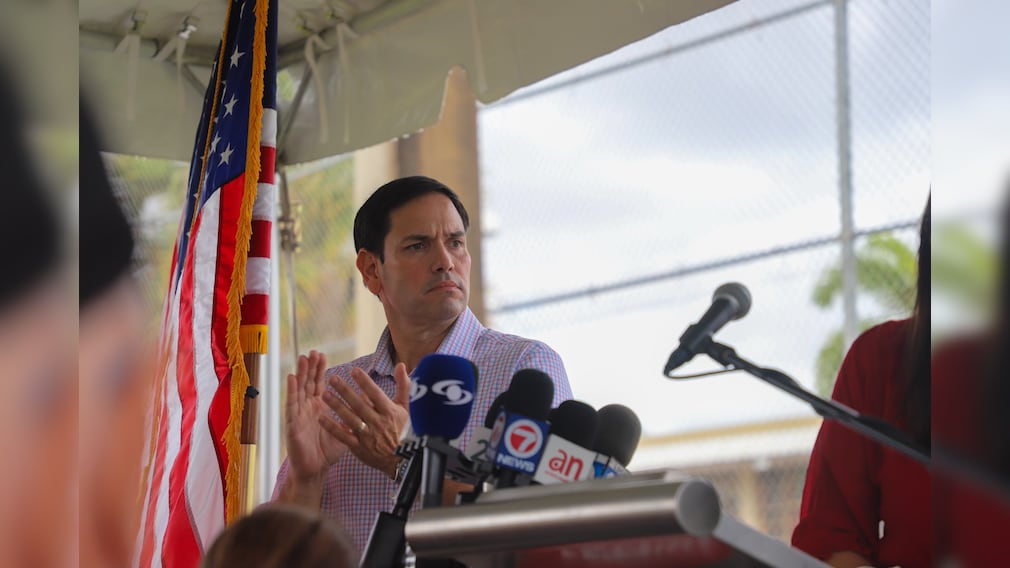
US Secretary of State Marco Rubio will embark on his second official visit to India this year from October 17 to 22, 2026. Part of a broader diplomatic tour that begins in Samarkand, Uzbekistan, Rubio's itinerary is notably unconventional: he is skipping the capital New Delhi entirely, choosing instead to focus his engagements in the financial hub of Mumbai and the energy center of Jamnagar, Gujarat.
This calculated geographic shift underscores the highly pragmatic, economic, and energy-focused nature of the modern India-US partnership. Occurring at a critical juncture marked by stalled trade negotiations and escalating geopolitical pressures over global energy supplies, the visit offers a profound window into modern Washington-New Delhi relations.
READ | Jaishankar Flags India's Concerns To Rubio Amid Proposed 100% Tariffs On Russian Oil Buyers
The Shift to Jamnagar: Energy Security and the Shadow of Sanctions
The inclusion of Jamnagar-home to Reliance Industries' massive oil-refining complex, the world's largest single-site refinery-serves as the primary anchor of the visit. According to US State Department announcements, the trip is explicitly aimed at expanding bilateral energy cooperation and commercial investments.
However, the visit occurs against a tense backdrop and coincides with an impending deadline regarding potential US penalties and trade barriers on countries procuring Russian energy.
India's imports of Russian crude oil have jumped substantially following the global supply shocks induced by the recent conflicts in the Middle East. Simultaneously, New Delhi remains deeply anxious about proposed US legislation that could allow the Trump administration to levy tariffs of up to 100% on nations purchasing Russian energy.
By visiting the very heart of India's refining sector, Rubio is executing a high-stakes balancing act: attempting to steer India toward Western energy alignments while navigating the hard economic realities of India's strategic autonomy.
READ | US-India Trade Deal 'Nearly Final'; Rubio Set For October Visit: Envoy Sergio Gor
Mumbai and Stalled Trade Deals: The Pursuit of Economic Resiliency
In Mumbai, Rubio is scheduled to meet with External Affairs Minister S. Jaishankar and key corporate captains. The meetings arrive at a fraught moment for the bilateral commercial architecture. Earlier this month, both sides indicated that long-running efforts to secure a final bilateral trade agreement have stalled once again over stubborn disputes regarding tariffs and market access.
Despite these setbacks, the engagement in Mumbai aims to inject fresh momentum into corporate collaborations. It also serves to advance high-tech integration. Ahead of Rubio's arrival, a high-level US National Security Council delegation landed in India to lay the groundwork for the TRUST initiative.
Originally launched in February 2025, the initiative focuses on building resilient supply chains in highly sensitive sectors like semiconductors, artificial intelligence, space, and biotechnology. By bypassing New Delhi's bureaucratic corridors to engage directly with Mumbai's financial leadership, the US top diplomat is signaling a desire to insulate long-term supply chain partnerships from immediate legislative roadblocks.
READ | US State Secretary Marco Rubio To Visit India: Date, Cities, And What's On Agenda
Strategic Implications and the Challenge of Transactional Diplomacy
From a broader geopolitical standpoint, Rubio's visit is very significant. For India, the trajectory of US foreign policy under the current administration has introduced an element of unpredictability. Reassurances regarding the Quad and maritime security in the Indo-Pacific are frequently juxtaposed against the US's transactional approach to tariffs and immigration.
The relationship has reached an economic plateau, demanding constant diplomatic management rather than assuming structural alignment. Furthermore, Rubio's broader itinerary-particularly his participation in the C5+1 Ministerial meeting in Central Asia alongside a 200-member commercial delegation-indicates a synchronized American push to counter Chinese and Russian influence across Eurasia.
A strong, economically stable partnership with India is central to this objective, even if the two capitals disagree on specific regional conflicts and electoral dynamics.
Conclusion
Marco Rubio's forthcoming visit to India illustrates the dual nature of contemporary Indo-US relations: structurally vital yet tactically complex. By anchoring his diplomacy in the boardrooms of Mumbai and the refineries of Jamnagar, Rubio is focusing directly on the tangible pillars of energy, advanced technology, and corporate enterprise.
While the trip may not immediately resolve deep-seated differences over Russian energy imports or protective tariffs, it serves as a crucial mechanism to keep the strategic partnership grounded in mutual economic necessity amidst an increasingly fragmented global order.
Disclaimer: The views expressed in this article are solely those of the author and do not necessarily reflect the opinion of NDTV Profit or its affiliates. Readers are advised to conduct their own research or consult a qualified professional before making any investment or business decisions. NDTV Profit does not guarantee the accuracy, completeness, or reliability of the information presented in this article
-
India Exports Capital. Why Not Export Trusteeship?

The big question, then, is whether India can build an institution that global borrowers, investors, banks, and lawyers can trust, even without an Indian connection.
-
France's Economy & Politics Are In Crisis | The Reason Why
Let's look at how the French economy and politics evolved under Nicolas Sarkozy, Franois Hollande and Emmanuel Macron.
-
You May Inherit The Business. You Must Earn Its Credibility.
Succession tests the founder's ability to share authority as much as it tests the next generation's readiness to assume it.
-
Signing Deals Is One Thing; Making Them Work Is Another | The Week In Whys
Sometimes, things don't turn out as planned. Indian companies have lost some bids to rivals, some projects won't produce until 2030.
-
FOMC Wall, PERM Suspension, Hospital Stocks | Talking Points This Week
A PERM suspension would directly affect green-card sponsorship rather than H-1B visas, so the near-term earnings impact could remain relatively limited. The key question is whether this marks a new phase in US scrutiny of Indian IT.
-
Everything, Everywhere, All At Once: Dalal Street's Week To Forget | Joining The Dots
Visa curbs, a Starlink spat and cancer drug caps: what connects this week's shocks for Indian markets
-
India Is Going Abroad For Critical Minerals. But It May Take Years To Pay Off | The Reason Why
Although India's steps are in the right direction, they remain modest compared with India's growing dependence.
-
When Everyone Has AI, What Gives You An Edge?
India's young workforce is entering an uncertain world of work where powerful AI tools are becoming widely accessible. The advantage will belong to those who combine deep expertise with digital fluency, and the distinctly human capabilities that technology cannot manufacture.
-
Wrong Labels, High Pesticide Residues Holding Back Agri Exports | The Reason Why
India needs stronger domestic food-safety and labelling standards, with best practices becoming part of everyday business for farmers, traders and food companies.
-
India Is Easy To Enter, Harder To Attract | The Week In Whys
The question is no longer just whether India can attract companies and capital. It is how much value they create here, how deeply they invest, and whether India remains relatively attractive when they have plenty of other options.










