- Rising obesity is a major public health and economic risk in India, says Economic Survey 2026
- LocalCircles survey finds 76% Indians know obese individuals in close social networks
- 56% of obese individuals in these networks suffer from lifestyle diseases like diabetes
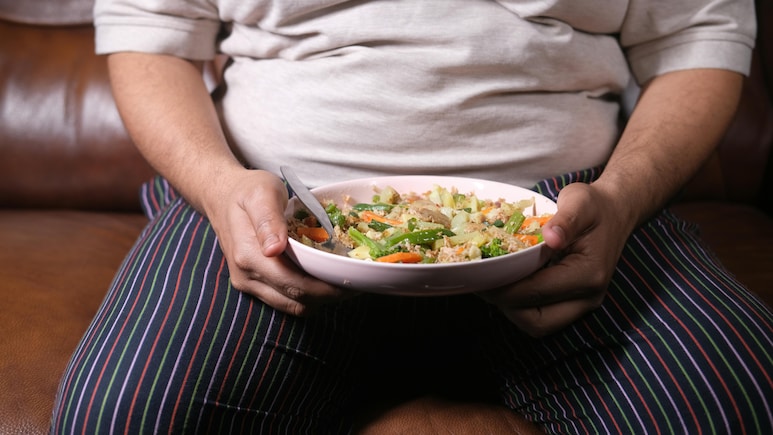
India's obesity challenge is no longer confined to medical journals or lifestyle debates-it is now firmly on the policy agenda. The Economic Survey 2026, tabled in Parliament yesterday, warned that rising obesity driven by sedentary lifestyles and ultra-processed foods is emerging as a major public health and economic risk. With the Union Budget scheduled for tomorrow, fresh citizen data is intensifying calls for fiscal measures to make healthier choices more affordable.
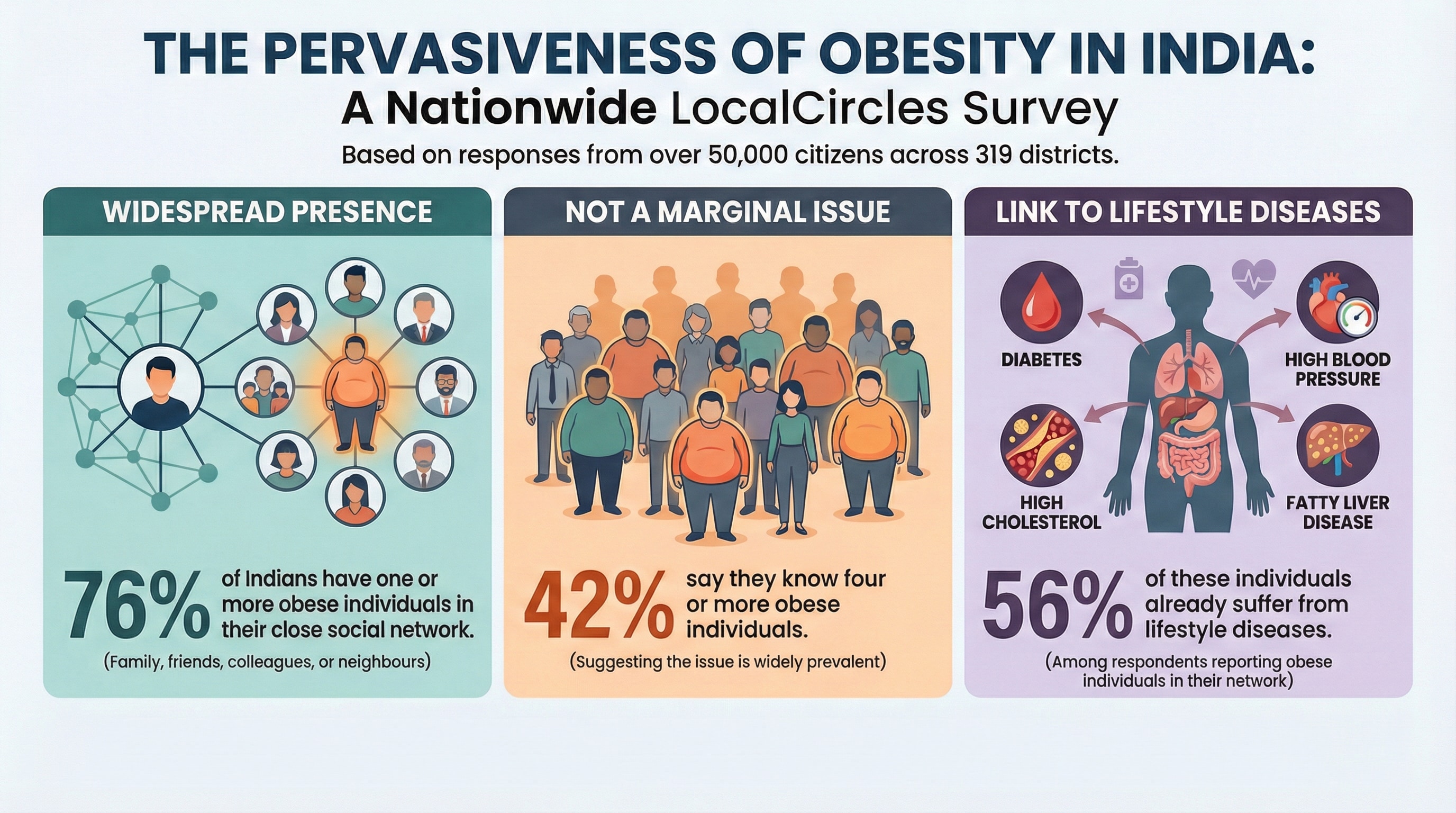
A nationwide survey by LocalCircles shows just how pervasive obesity has become in everyday Indian life. Based on responses from over 50,000 citizens across 319 districts, the survey found that 76% of Indians have one or more obese individuals in their close social network, including family, friends, colleagues or neighbours. Alarmingly, 42% said they know four or more obese individuals, suggesting the issue is no longer marginal but widespread.
Lifestyle Diseases Already Widespread
The data also underscores that obesity is rarely an isolated condition. Among respondents who reported obese individuals in their close network, 56% said these individuals already suffer from lifestyle diseases such as diabetes, high blood pressure, high cholesterol or fatty liver disease.
Also Read | Layoffs Are Rising In Tech, But These Skills Are Helping People Unlock Better Pay
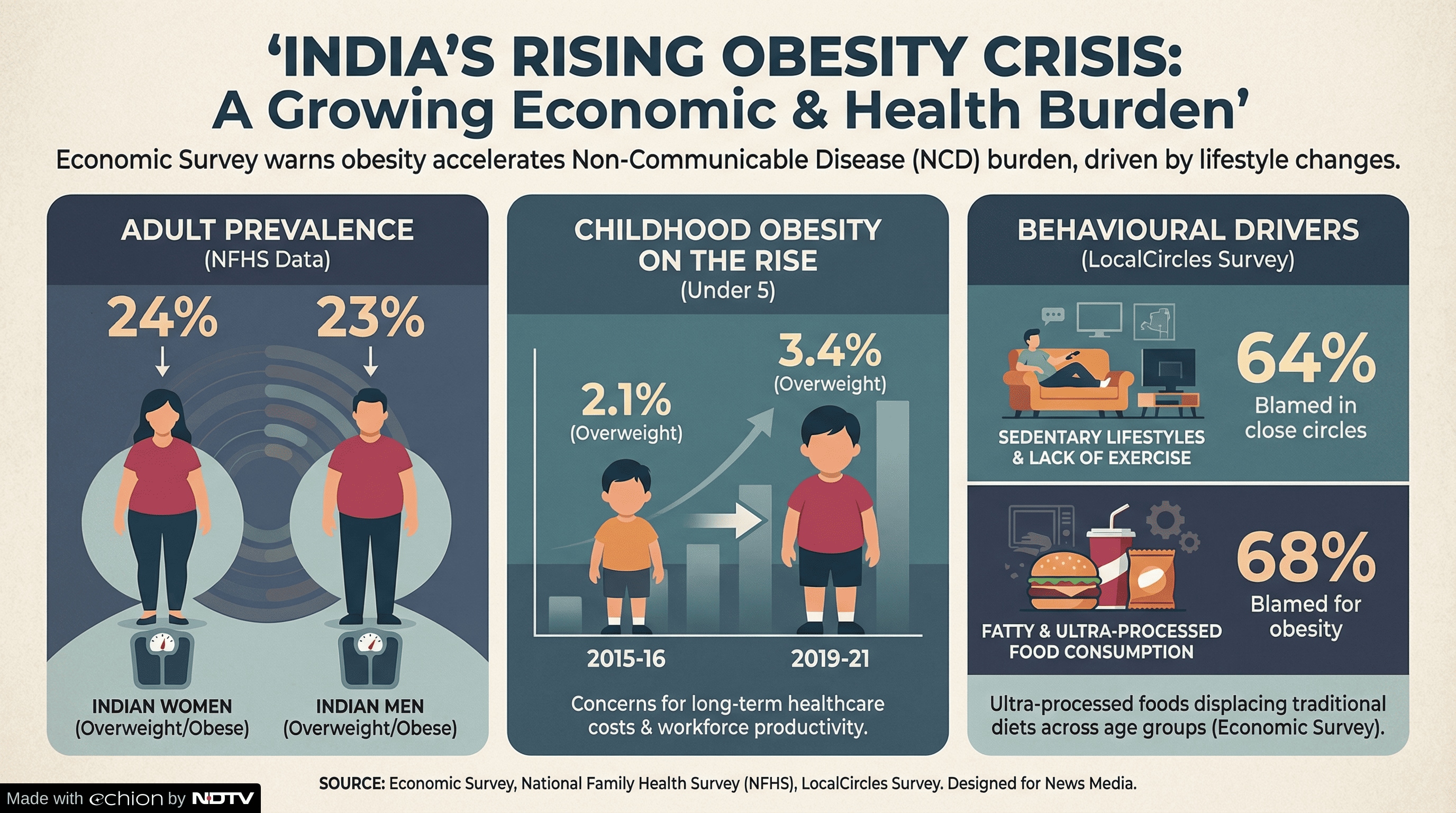
This mirrors the Economic Survey's warning that obesity is accelerating India's non-communicable disease (NCD) burden. The Survey cited National Family Health Survey (NFHS) data showing that 24% of Indian women and 23% of men are overweight or obese, while childhood obesity is also rising. The proportion of children under five classified as overweight increased from 2.1% in 2015-16 to 3.4% in 2019-21, raising concerns about long-term healthcare costs and workforce productivity.
Sedentary Lives And Ultra-Processed Diets
The LocalCircles survey points clearly to behavioural drivers. 64% of respondents attributed obesity in their close circles to sedentary lifestyles and lack of exercise, while 68% blamed fatty and ultra-processed food consumption. The Economic Survey echoed this assessment, warning that ultra-processed foods are rapidly displacing traditional diets, worsening nutrition outcomes across age groups.
The survey suggests awareness is not the problem-affordability and access are.
Drugs Surge, But Citizens Look Beyond Medication
While weight-loss drugs gained traction in India last year, both experts and citizens remain cautious. The Economic Survey cautioned against indiscriminate use of pharmaceutical interventions, highlighting risks such as muscle loss, nutrient deficiencies and rebound weight gain. The LocalCircles data reinforces this view, noting strong public recognition that obesity solutions lie primarily in diet, exercise and lifestyle change-not expensive medication.
With Budget Day approaching, expectations are becoming more explicit. Survey respondents said they expect Budget 2026 to make products and services linked to healthy living more affordable-including nutritious food options, fitness facilities, preventive healthcare and lifestyle interventions.
ALSO READ: Economic Survey On Poverty, Inclusion: India's Rural Transformation Gains New Momentum
Essential Business Intelligence, Sharp Market Insights, Practical Personal Finance Advice, Daily Fuel, Gold and Silver Prices and Latest Stories — On NDTV Profit.