India Preventing Global Growth From Slipping Into Recession, Says Market Veteran Ridham Desai
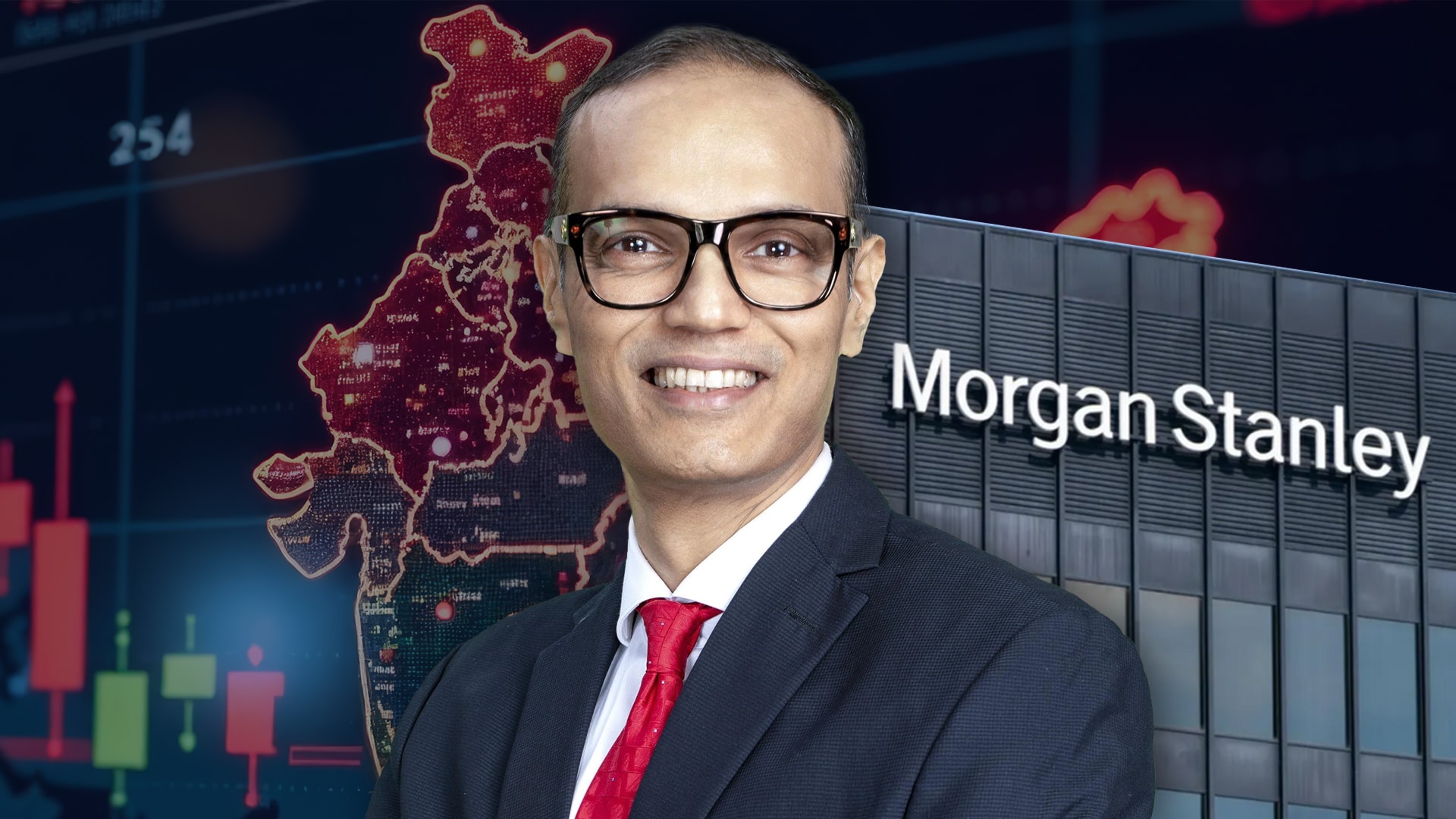
India is the reason why global growth is not slipping into recession.
That's the word coming in from Morgan Stanley's Ridham Desai, who believes that India remains relatively insulated from global uncertainty and is likely to contribute 20–25% of global growth over the next 12 months.
“In fact, if you ask me, actually on a multi quarter basis, I'll be far more worried about China than the US,” Desai told NDTV Profit in a televised interview. “India's exposure on the external front is largely in services. And there, I think there's a fair bit of strength that we are seeing. So I think the services export may continue to remain quite robust.”
Desai acknowledged that global conditions remain uncertain due to three key risks: tariff-related developments led by the US, slowing growth and deflation in China, and rising geopolitical tensions. However, he maintained that India's macro position is strong in comparison.
The comments came as India's economy grew 7.4% in the January–March quarter from a year earlier, driven by strong performance in the construction and manufacturing sectors. For the fiscal 2025, the economy expanded by 6.5%, in line with the government's earlier estimate.
In contrast, global growth projections have weakened. The International Monetary Fund expects the world economy to grow 2.8% this year, according to its latest World Economic Outlook. This would mark the slowest expansion since the Covid-19 pandemic and the second-lowest since 2009.
“India is measurably better than the rest of the world, and its growth is unlikely to slow down significantly,” he said. “India is not a small cap stock, it's a relatively large… it's actually going to be contributing to maybe 20, 25% of global growth in the next 12 months.”
Desai said that while some slowdown in growth is likely in the fiscal 2025-26 relative to the fourth quarter of the preceding fiscal, this follows what he called a bumper performance in the last quarter. He also said India's trade exposure to the US remains limited at about 2% of GDP, which reduces the direct macroeconomic impact from American policies.
“The US tariff issue will be behind us in maybe two quarters, but the China issue will linger much longer,” Desai said. “China is facing significant deflation pressures… and the tendency will be for China to export that weak pricing to the rest of the world, which will hurt Indian exporters in markets where we compete with China.”
China's economy expanded by 5.4% in the March quarter compared to the previous year, but continued deflationary pressures and soft export demand remain concerns. Meanwhile, the US economy contracted at a 0.2% annualised rate in the same period, according to preliminary estimates.
Corporate Earnings Recovery And Capex Outlook
On corporate earnings, Desai said India's Q4 performance came in better than expected, after analysts had trimmed their forecasts following a weak December quarter. He attributed the earlier slowdown to temporary fiscal compression due to elections and monsoon-related spending, which have since reversed.
“The fiscal deficit recovered, and so the government spending has recovered. Therefore, as a consequence, the fiscal deficit has recovered. Monetary policy has eased considerably,” he said. “India's domestic situation looks quite strong.”
Desai added that services exports could remain resilient even if US growth slows down, as American companies may outsource more to reduce costs and protect earnings. However, he cautioned that goods exports could be vulnerable.
“Clearly, companies that may have been investing for export markets may just wait for a little while,” he said. “Private capex will probably be better than last year, but not ideal where we would ideally want it to be.”
Desai further said that while India is not completely shielded from global uncertainty, it remains on stronger footing than many other economies and is likely to remain a key driver of global growth in the near term.

-
Indians Are Travelling, But Not Every Journey Is A Holiday | The Week In Whys

Pilgrims, patients and working women are the real travellers, and the system hasn't quite caught up with them.
-
Getting To Work Costs Women More | The Reason Why
It is not just about women paying more than men. It is about women paying much more in cities than in villages.
-
AI Bias In Investing Cannot Be Eliminated, But It Can Be Governed
Framing is a particularly important example as identical financial information presented in terms of gains rather than losses can lead an LLM to reach a different assessment.
-
Joining The Dots | Dark Skies, Steady Diya: Why Hope Holds This Diwali
With war, a weak rupee and foreign outflows weighing on sentiment, policymakers at the NDTV World Summit and market veterans at NDTV Profit Ignite: Diwali Edition offered the same advice: stay invested and filter out the noise.
-
The Curious Case of Equitas Small Finance Bank And A CEO Who Quit For Stock
PN Vasudevan believes persistent investor concerns over a perceived conflict of interest had become a governance overhang on Equitas Small Finance Bank's stock, even as the lender improved profitability and asset quality.
-
Talking Points This Week: AI Cash Burn, A Tiger Comeback And An India That Still Finds Its Own Path
India is not immune to higher oil or tighter global liquidity, yet its earnings base is broader, its domestic policy levers are still available.
-
Foreign Investors Own Half Of HDFC Bank and ICICI Bank. An LTCG Cut Could Matter Most Here
Foreign portfolio investors have US$115 billion parked in HDFC Bank, ICICI Bank. If the government cuts long-term capital gains tax, Jefferies says returning foreign money could land here first.
-
'Never Seen This Level Of Negativity': Sandeep Tandon Says The Next Rally May Be Closer Than You Think
Veteran investor Sandeep Tandon says foreign selling is easing, large-caps are due a comeback and mid-caps are crowded, while he turns positive on gold, power and pharma this Diwali.
-
Indians Stay With Family, Not In Hotels | The Reason Why
India still lacks enough clean, reliable and affordable hotels for budget-conscious travellers.
-
The Economic Imperative: Analysing The Material Driving Force Behind India-Canada Strategic Reset
This economic complementarity is further reinforced by deep institutional investment ties and talent mobility, which form the bedrock of the bilateral framework.










