IMF Slashes Global Growth Forecast, Says Downside Risks Dominate As Trump Tariffs Bite
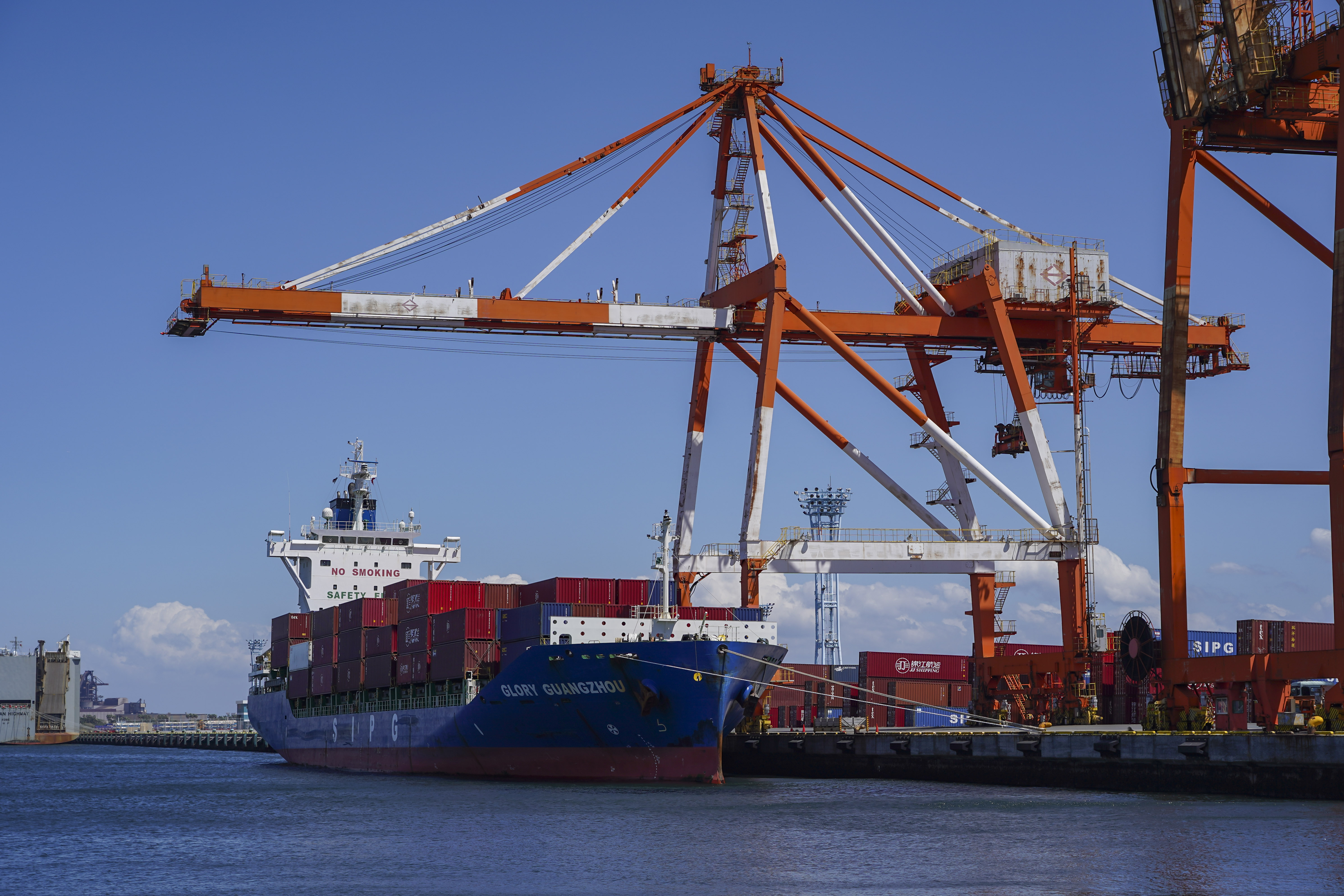
The International Monetary Fund sharply lowered its forecasts for world growth for this year and next, warning the outlook could deteriorate further as US President Donald Trump's tariffs spark a global trade war.
The downgrades add weight to similar warnings from several Wall Street banks in recent weeks, with JPMorgan Chase & Co. and Goldman Sachs Group Inc. saying the chances of a recession in the US have spiked.
The IMF cut its projection for global output growth this year to 2.8% in its updated World Economic Outlook released Tuesday. That's lower than its January forecast of 3.3% and would be the slowest expansion of gross domestic product since the Covid-19 pandemic in 2020. It would also be the second-worst figure since 2009.
The fund reduced its estimate for next year to 3%, a drop of 0.3 percentage points.

For the US, the trade war will stoke a supply shock that drives up prices and weighs on productivity, the IMF said. For trading partners, the higher duties will translate as a demand shock that hits output and prices.
Effective tariff rates in the US have jumped to levels not seen in a century, the IMF said.
“We are entering a new era,” IMF Chief Economist Pierre-Olivier Gourinchas said in a briefing with reporters. “The global economic system that has operated for the last 80 years is being reset.”
US stocks, the dollar and long-dated Treasuries have been volatile amid the Trump onslaught, sinking Monday as he upped calls for the Federal Reserve to slash interest rates, exacerbating concerns about the central bank's independence and the direction of the world's biggest economy. The S&P 500 Index has lost around 12% since the end of 2024.
The US and China were among countries to see the biggest IMF downgrades.
The US is forecast to grow 1.8% this year and 1.7% in 2026, a cut of 0.9 and 0.4 percentage points, respectively. The IMF increased its forecast for US inflation in 2025 by roughly one percentage point to 3%.
China is tipped to grow 4% this year and next, down by 0.6 and 0.5 percentage points.
The world's growth prospects would improve immediately if trade tensions calmed and long-standing complaints about non-tariff barriers and trade-distorting measures by some countries were addressed, the IMF said.
Still, it said the near-term risk is of further escalation with knock on consequences for growth. The Washington-based fund cut its forecast for global trade growth this year by 1.5 percentage points and sees only a slight recovery next year.
“The risks to the global economy have increased and are firmly to the downside,” Gourinchas said.
The IMF cautioned that many scenarios are possible given the uncertainty surrounding trade policy. The fund said it jettisoned projections that had been nearly finalized before April 2, when Trump announced sweeping tariffs on the world, and was forced to compress a forecasting cycle that typically takes over two months into 10 days.
In an explainer of how it compiled its new forecasts amid the rolling tariff turmoil, the IMF said it has used a reference forecast — or a central scenario — based on information available as of April 4, rather than a baseline forecast.
Analysis by Alex Isakov and Adriana Dupita of Bloomberg Economics last week found that, based on a review of previous IMF forecasts, the fund tends to underestimate the depth of downturns.
“The IMF's projections tend to skew optimistic during potentially disruptive crises,” they wrote. “However much the IMF may downgrade the growth forecasts to start, history suggests the ultimate blow will be worse.”

-
Indians Are Travelling, But Not Every Journey Is A Holiday | The Week In Whys

Pilgrims, patients and working women are the real travellers, and the system hasn't quite caught up with them.
-
Getting To Work Costs Women More | The Reason Why
It is not just about women paying more than men. It is about women paying much more in cities than in villages.
-
AI Bias In Investing Cannot Be Eliminated, But It Can Be Governed
Framing is a particularly important example as identical financial information presented in terms of gains rather than losses can lead an LLM to reach a different assessment.
-
Joining The Dots | Dark Skies, Steady Diya: Why Hope Holds This Diwali
With war, a weak rupee and foreign outflows weighing on sentiment, policymakers at the NDTV World Summit and market veterans at NDTV Profit Ignite: Diwali Edition offered the same advice: stay invested and filter out the noise.
-
The Curious Case of Equitas Small Finance Bank And A CEO Who Quit For Stock
PN Vasudevan believes persistent investor concerns over a perceived conflict of interest had become a governance overhang on Equitas Small Finance Bank's stock, even as the lender improved profitability and asset quality.
-
Talking Points This Week: AI Cash Burn, A Tiger Comeback And An India That Still Finds Its Own Path
India is not immune to higher oil or tighter global liquidity, yet its earnings base is broader, its domestic policy levers are still available.
-
Foreign Investors Own Half Of HDFC Bank and ICICI Bank. An LTCG Cut Could Matter Most Here
Foreign portfolio investors have US$115 billion parked in HDFC Bank, ICICI Bank. If the government cuts long-term capital gains tax, Jefferies says returning foreign money could land here first.
-
'Never Seen This Level Of Negativity': Sandeep Tandon Says The Next Rally May Be Closer Than You Think
Veteran investor Sandeep Tandon says foreign selling is easing, large-caps are due a comeback and mid-caps are crowded, while he turns positive on gold, power and pharma this Diwali.
-
Indians Stay With Family, Not In Hotels | The Reason Why
India still lacks enough clean, reliable and affordable hotels for budget-conscious travellers.
-
The Economic Imperative: Analysing The Material Driving Force Behind India-Canada Strategic Reset
This economic complementarity is further reinforced by deep institutional investment ties and talent mobility, which form the bedrock of the bilateral framework.










