China’s Economy Likely Grew 5.2% In Months Before US Tariffs
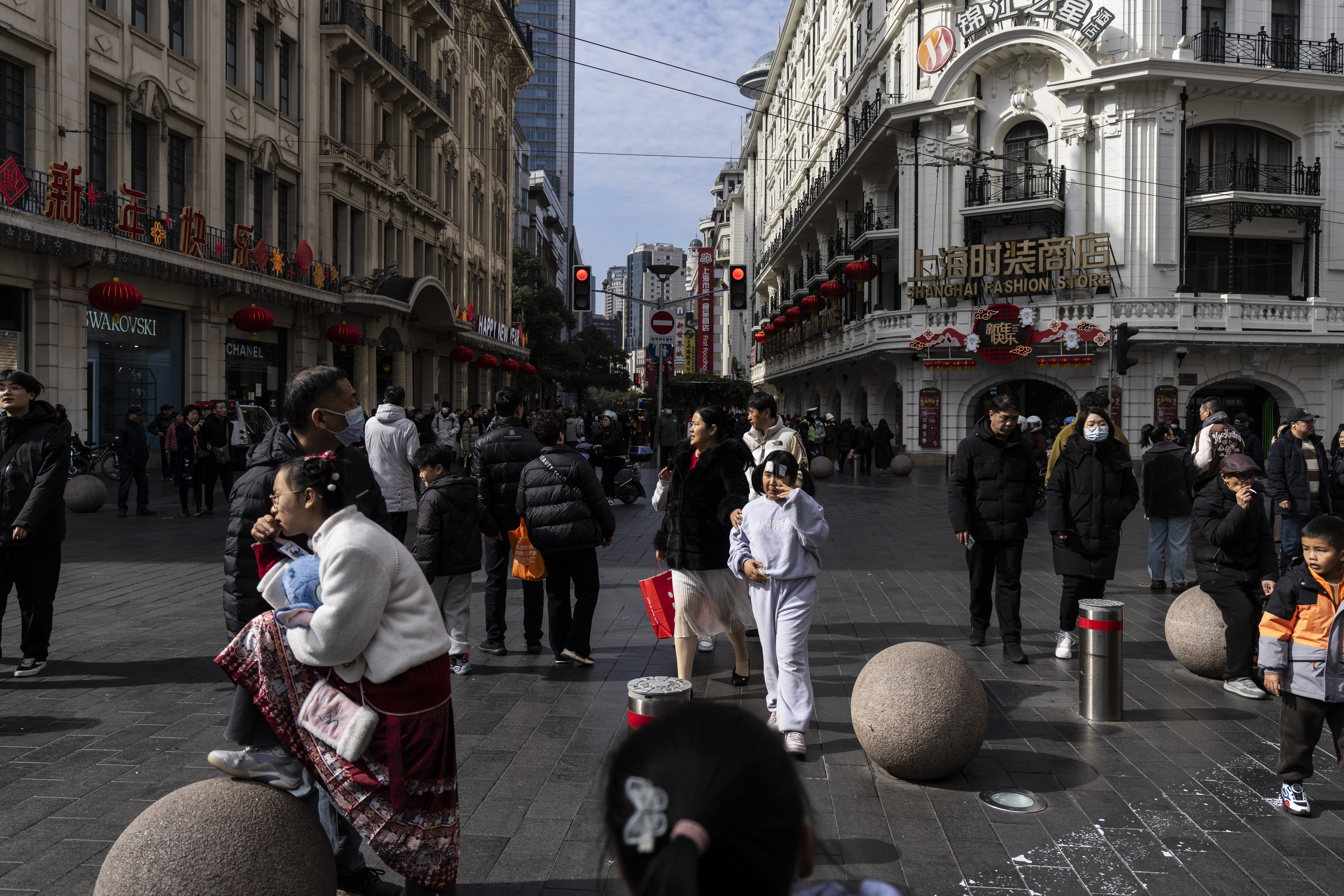
China will likely report solid economic growth for the start of 2025, a period before Donald Trump's tariffs threaten its around 5% growth target without more stimulus.
Official data out Wednesday are expected to show retail sales picked up in March thanks to government subsidies, a Bloomberg survey of economists suggests. Industrial production and overall investment probably held steady, according to median estimates.
This strength may provide little solace to markets and businesses, as the US president's tariff increases earlier this month brought total levies on most Chinese goods to at least 145%. Such levels of import duties are forecast to hurt China's exports and knock several percentage points off the economy's expansion this year.
“Growth is likely to deteriorate rapidly from the second quarter, given the low possibility of near-term bilateral negotiations to establish an offramp for the 125% tariff hike,” Morgan Stanley economists including Robin Xing wrote in a report dated Saturday. Trump imposed a total of 20% duties tied to Beijing's alleged role in the trafficking of fentanyl in February and March.

All eyes will be on any signals for stimulus after the release of first-quarter data. So far, officials have only indicated they have enough policy space and tools to deal with the tariff shock without revealing specific measures. There's growing anticipation that China's central bank will soon cut interest rates or the reserve requirement ratio, which will free up cash for banks to lend and invest.
The risk is that significant policy support might only come when economic data clearly shows a slowdown or if markets experience a sharp downturn.
The reactive nature of policy means any extra stimulus may only arrive in the second half of the year, according to Morgan Stanley. This could be too late to boost business and household confidence, potentially leading to slower spending and investment as well as prolonged deflation.
Here's a look at the data to be released on Wednesday 10 a.m.:
GDP, Consumption
China's gross domestic product likely expanded 5.2% in the first three months from a year ago, based on consensus forecast. That extends a recovery that began in late 2024 due to a broad stimulus push. While it's slightly slower than the 5.4% growth in the last three months of last year, it's still a solid result given challenges from the property slump and weak consumer sentiment.

Retail sales are predicted to have increased 4.3% in March from a year ago. While still slower than pre-pandemic growth, this would be the fastest pace since October.
China in March announced it would double the size of a nationwide trade-in program for consumer products this year to 300 billion yuan ($41.1 billion) from 2024. The initiative subsidizes purchases from smartphones to TVs and has boosted home appliance sale since late 2024.
In a sign of recovering consumer spending, domestic tourism revenue during the three-day Qingming holiday in early April rose 6.7% from a year ago and the number of trips increased 6.3%, according to the Ministry of Culture and Tourism.
Industry, Investment
China's industrial output is expected to have maintained a steady pace of production at 5.9% in March, same as the January-February period and similar to the expansion seen in the whole of 2024.
The industrial sector has benefited from exporters shipping goods early to avoid tariffs, which caused China's overseas shipments to jump 12% in March year-over-year. This surge is expected to weaken starting in April.
Positive readings from the manufacturing purchasing managers' index survey in the past two months also suggest factory activity was resilient before the tariffs.

Fixed-asset investment is also forecast to have continued growing at 4.1% in the first three months, matching the growth in January-February and rebounding from 2024.
The government has brought forward its sales of bonds this year, providing an early boost to infrastructure project funding. That has likely led to a surge in excavator sales in March.
The property sector could record a steeper decline in investment, reflecting a continued downturn in the broader market as previous signs of improvement proved fleeting.
The stronger performance of the industrial sector relative to consumption is likely to continue, underscoring the urgent need for policymakers to stimulate domestic demand in the face of shrinking external demand.
Citigroup economists including Ji Xinyu noted in a Monday report that while the supply side of the domestic economy seemed to have held up in April, the property market's momentum softened.
“Policy efforts could be essential to stabilise the economy and offset the tariff impact,” they wrote.

-
Indians Are Travelling, But Not Every Journey Is A Holiday | The Week In Whys

Pilgrims, patients and working women are the real travellers, and the system hasn't quite caught up with them.
-
Getting To Work Costs Women More | The Reason Why
It is not just about women paying more than men. It is about women paying much more in cities than in villages.
-
AI Bias In Investing Cannot Be Eliminated, But It Can Be Governed
Framing is a particularly important example as identical financial information presented in terms of gains rather than losses can lead an LLM to reach a different assessment.
-
Joining The Dots | Dark Skies, Steady Diya: Why Hope Holds This Diwali
With war, a weak rupee and foreign outflows weighing on sentiment, policymakers at the NDTV World Summit and market veterans at NDTV Profit Ignite: Diwali Edition offered the same advice: stay invested and filter out the noise.
-
The Curious Case of Equitas Small Finance Bank And A CEO Who Quit For Stock
PN Vasudevan believes persistent investor concerns over a perceived conflict of interest had become a governance overhang on Equitas Small Finance Bank's stock, even as the lender improved profitability and asset quality.
-
Talking Points This Week: AI Cash Burn, A Tiger Comeback And An India That Still Finds Its Own Path
India is not immune to higher oil or tighter global liquidity, yet its earnings base is broader, its domestic policy levers are still available.
-
Foreign Investors Own Half Of HDFC Bank and ICICI Bank. An LTCG Cut Could Matter Most Here
Foreign portfolio investors have US$115 billion parked in HDFC Bank, ICICI Bank. If the government cuts long-term capital gains tax, Jefferies says returning foreign money could land here first.
-
'Never Seen This Level Of Negativity': Sandeep Tandon Says The Next Rally May Be Closer Than You Think
Veteran investor Sandeep Tandon says foreign selling is easing, large-caps are due a comeback and mid-caps are crowded, while he turns positive on gold, power and pharma this Diwali.
-
Indians Stay With Family, Not In Hotels | The Reason Why
India still lacks enough clean, reliable and affordable hotels for budget-conscious travellers.
-
The Economic Imperative: Analysing The Material Driving Force Behind India-Canada Strategic Reset
This economic complementarity is further reinforced by deep institutional investment ties and talent mobility, which form the bedrock of the bilateral framework.










