51st GST Council Meet: Online Gaming To Be Taxed 28% On Deposits And Other Key Decisions
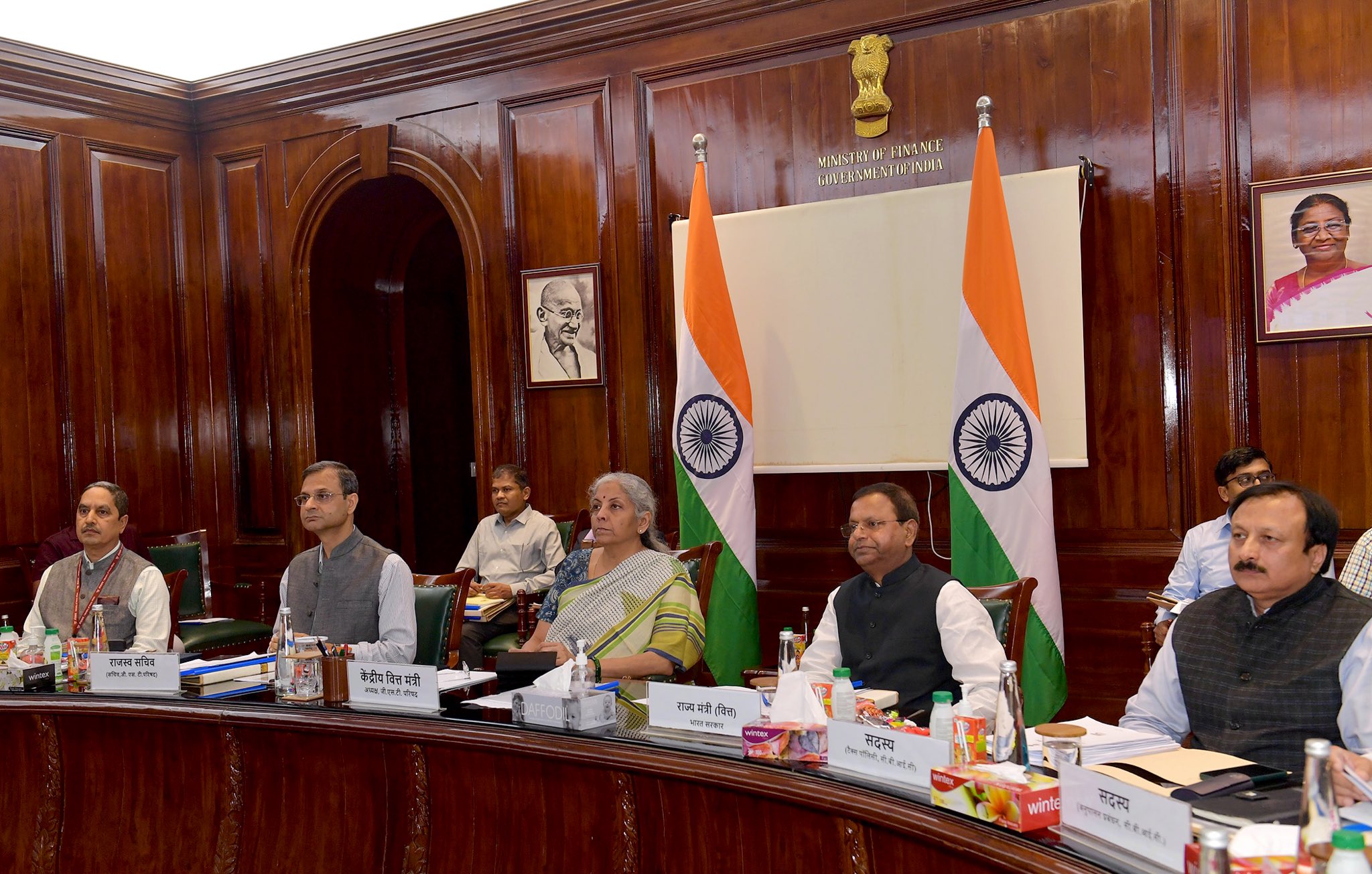
The 51st GST Council has recommended that a 28% tax be levied on face value for online games, horse racing, and actionable claims in casinos at the entry level, while noting that a few states expressed their reservations against the decision.
In a move that will bring parity to the three gaming events and avoid repetitive taxation, total deposits submitted by the player to the supplier at the entry point will be the method of valuation for tax levy in the case of online gaming, rather than the total value of each bet placed.
"...the valuation amount for tax will be based on the amount paid/payable to/deposited with the supplier by or on behalf of the player ... excluding the winnings of previously played games," Union Finance Minister Nirmala Sitharaman said in a media briefing on Wednesday after the virtual meeting.
A lack of consensus also prevailed on the decision, with a few states, namely Delhi, Goa, Sikkim, and Tamil Nadu, expressing specific reservations.
According to Sitharaman, Minister Atishi from Delhi is said to have asked for the decision to be reviewed and sent back to the Group of Ministers. Goa and Sikkim also felt the decision taken last time would hurt them and proposed that the mechanism of levy should be considered on gross gaming revenue.
The state of Tamil Nadu, represented by the newly appointed Finance Minister Thangam Thennarasu, expressed apprehension that the levy of taxes would nullify the statewide ban on online gaming.
Revenue Secretary Sanjay Malhotra, who was also present at the briefing, said that an additional provision in the language of the decision may be allowed so that already enacted state laws will be unaffected.
The minister added that the clarifications and amendments will be enforced as of Oct. 1 and be reviewed once more after six months of their implementation.
"The Council's decision to levy GST on deposits made at entry level has brought a sigh of relief for the sector ... with the said amendment, the valuation mechanism for casino and online gaming is kept at par, i.e., GST will be charged only on the value of coins purchased and money deposited in wallets, respectively, rather than levying GST on each game played. This is a welcome clarification for industry stakeholders.L Badri Narayanan, Executive Partner, Lakshmikumaran & Sridharan Attorneys
Offshore Suppliers Mandated To Register
In response to the possibility of players shifting offshore gaming platform entities, the department has mandated that offshore entities have GST registrations.
A failure in registration could result in the platform being blocked, in accordance with the provisions of the Information Technology Act.
The Council also recommended to insert a specific provision in IGST Act, 2017, to provide for liability to pay GST on the supply of online money gaming by a supplier located outside India to a person in India, for single registration in India for the said supplier through a simplified registration scheme and also for blocking of access by the public to any information generated, transmitted, received or hosted in any computer resource used for supply of online money gaming by such supplier in case of failure to comply with provisions of registration and payment of tax.Government press release
Amendments And Clarifications
The Council recommended certain amendments in the CGST Act, 2017, and IGST Act, 2017, including an amendment in Schedule III, entry 6 of the CGST Law where 'online money gaming', 'casinos, and 'horse racing' would be cited as actionable claims that attract tax levy.
The amendments also seek to define online gaming (which includes online money gaming) and make no distinction between games of skill and games of chance, as agreed upon in the 50th GST Council meeting.
"The Council recommended that the CGST Rules, 2017, may be amended to insert specific provisions for the valuation of the supply of online gaming and the supply of actionable claims in casinos accordingly," a release on the subject said.
The Council suggested including the definition of virtual digital assets in the CGST law. Therefore, if virtual digital assets are used as payment consideration for purchasing online games, they will attract GST, and their definition will be the same as the income tax law.
Rules for determining the place of supply for online gaming will be separately clarified, Revenue Secretary Malhotra said while clarifying BQ Prime's query.
Additionally, if an individual chooses to withdraw the deposit amount (on which tax has already been paid) at any point, no refund can be availed of on the GST that has already been paid.
Wednesday's GST Council meeting comes less than a month after the 50th meeting on July 11, where a uniform 28% GST was decided to be levied on the full face value of casinos, horse racing, and online gaming. The decision was met with strong apprehension regarding the viability and survival of the Indian online gaming industry.
Watch the video here:

-
One Battle After Another: India's Corporate Dynasties Battle For Control

2026 could go down as Corporate India's year of succession wars, governance battles and family fault lines.
-
Rs 50-Lakh Gold In Bank Locker, Rs 3 Lakh Of Protection: The Gap Most Families Don't Know About
The RBI ties a bank's liability to the annual locker rent and families who want to insure their jewellery face a separate question about how to prove what was inside.
-
The More Food Turns Into Fuel, The Harder It Is To Read Agricultural Markets | The Reason Why
A policy designed to reduce dependence on imported fuel can create new pressures elsewhere in the food economy.
-
Your iPhone Costs 12 Grams Of Gold, A Car About 100. What Does Your Life Weigh?
Measured in rupees, almost everything looks more expensive than it did a generation ago. Measured in grams of gold, a lot of it has become cheaper.
-
Gold Is Rs 22,000 Cheaper Than A Month Ago. Should You Buy Amid The Wedding Season?
Gold's potential slide to $3,500 could save around Rs 4,700 per 10 grams, but a soft inflation print could just as easily push prices back up. One way to split the risk is to buy in parts, some now and the rest after the Fed's Dec. 9 decision.
-
AI Agents Are Gaining Power. Who Governs Them?
Artificial intelligence agents promise to transform productivity by moving machines from assisting decisions to executing them. But as organisations delegate greater authority to these AI-agents, they must first establish who controls that authority and who remains accountable when things go wrong.
-
Why Swapping Your Old Gold Can Trigger A Rs 5 Lakh Tax Bill, And How You Can Avoid It Legally
Swapping old gold for new is taxed as a sale and a fresh purchase. Getting your own gold remade can cut most of that bill, though it has its own costs.
-
The AI Trade is Done. The Real Opportunity for Investors Starts in 2027 | Unhedged Position
As pureplay AI stocks plunge and circular, capex-led financing unwinds, 2027 is set to be a year of reckoning for AI companies. Yet the bust clears the way for a better opportunity for investors in 2027 -- shifting the spotlight from AI builders to the companies using AI.
-
Leadership As Mission: Why The Age Of AI Demands More Human Leadership
Debjani Ghosh examines how AI is changing leadership, arguing that its success must be measured by its impact on people and the accountability of those guiding its use.
-
We May Need Another Tukaram Mundhe To Fight Air Pollution | The Reason Why
Developers may install basic measures such as sprinklers and green nets, resume work, and continue violating rules when this equipment stops working.









