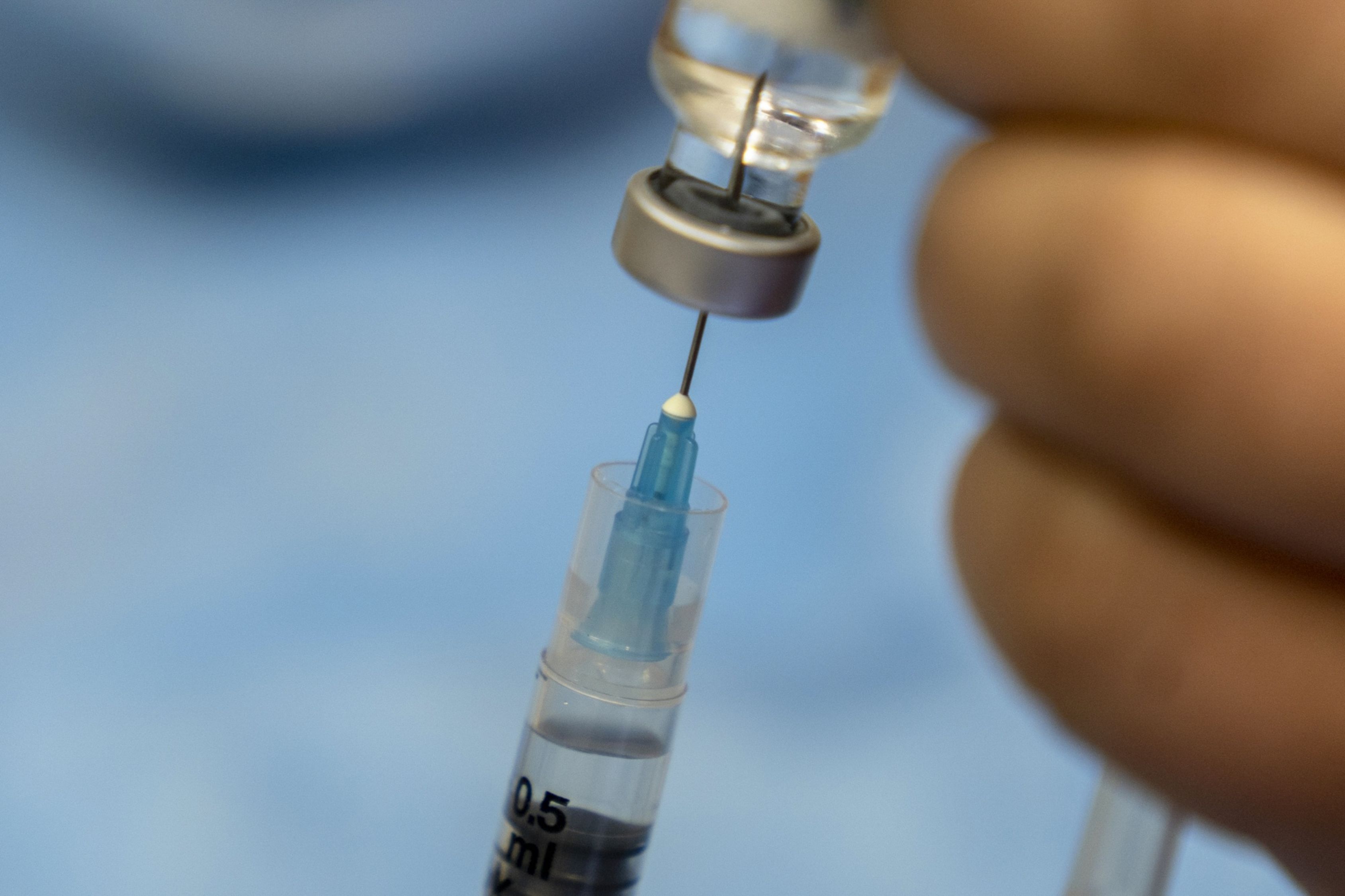
India's central government has lifted its singular control on supply and delivery of Covid-19 vaccines in a bid to tackle the massive rise of cases that have crippled the country's health infrastructure.
Everyone above the age of 18 will be eligible to get vaccinated from May 1, the government said in a press statement. The vaccine procurement policy has been liberalised to allow manufacturers to supply upto 50% of their supply to the centre and 50% to states and the open market.
The decision, taken at a meeting chaired by Prime Minister Narendra Modi, comes as a deadly second wave of the Covid-19 pandemic has gripped the world's second-worst affected country. Rising cases have overwhelmed India's already struggling health infrastructure, leading to a shortage of hospital beds, oxygen and critical drugs.
Also Read | Layoffs Are Rising In Tech, But These Skills Are Helping People Unlock Better Pay
Also Read: As Second Wave Brings Downside Risks, Policy Options Are Limited
Key Features Of Vaccine Policy - Phase III
Under the third phase of vaccination, all local vaccine manufacturers will supply 50% of their monthly doses to the central government. They will be free to sell the rest to states and in the open market.
Manufacturers will have to declare pricing before May 1 for the vaccine doses that will be available for state governments and in the open market.
Private hospitals will have to procure their supply exclusively from the 50% that has been set aside for the non-central government entities. Private vaccine providers will also have to declare their self-set rates, the statement said.
Vaccinations at government-specified centres will continue to be free of cost for healthcare workers, frontline workers and those above 45 years of age.
From within its share of vaccine the central government will allocate vaccines to states and union territories based on criteria such as number of active cases, speed of vaccination and wastage.
The government said manufacturers will be incentivised to ramp up production and also invite other domestic and international producers. “It would also make pricing, procurement, eligibility and administration of vaccines open and flexible, allowing all stakeholders the flexibility to customise to local needs and dynamics,” the government said.
While today's decision will have little near-term impact it will definitely act as a medium-term positive, said a Barclays India report authored by its chief economist Rahul Bajoria.
Barclays cited three reasons;
1. A liberal pricing policy will incentivise vaccine producers to ramp up capacity, and attract other international producers to consider producing vaccines in India through licensing.
2. A more decentralised vaccine distribution policy with no major age cap may allow those living in cities, which have been the epicentre of Covid-19, to get vaccinated faster.
3. A wider eligible population may help reduce vaccine hesitancy and ensure utilisation of existing vaccine supply remains high.
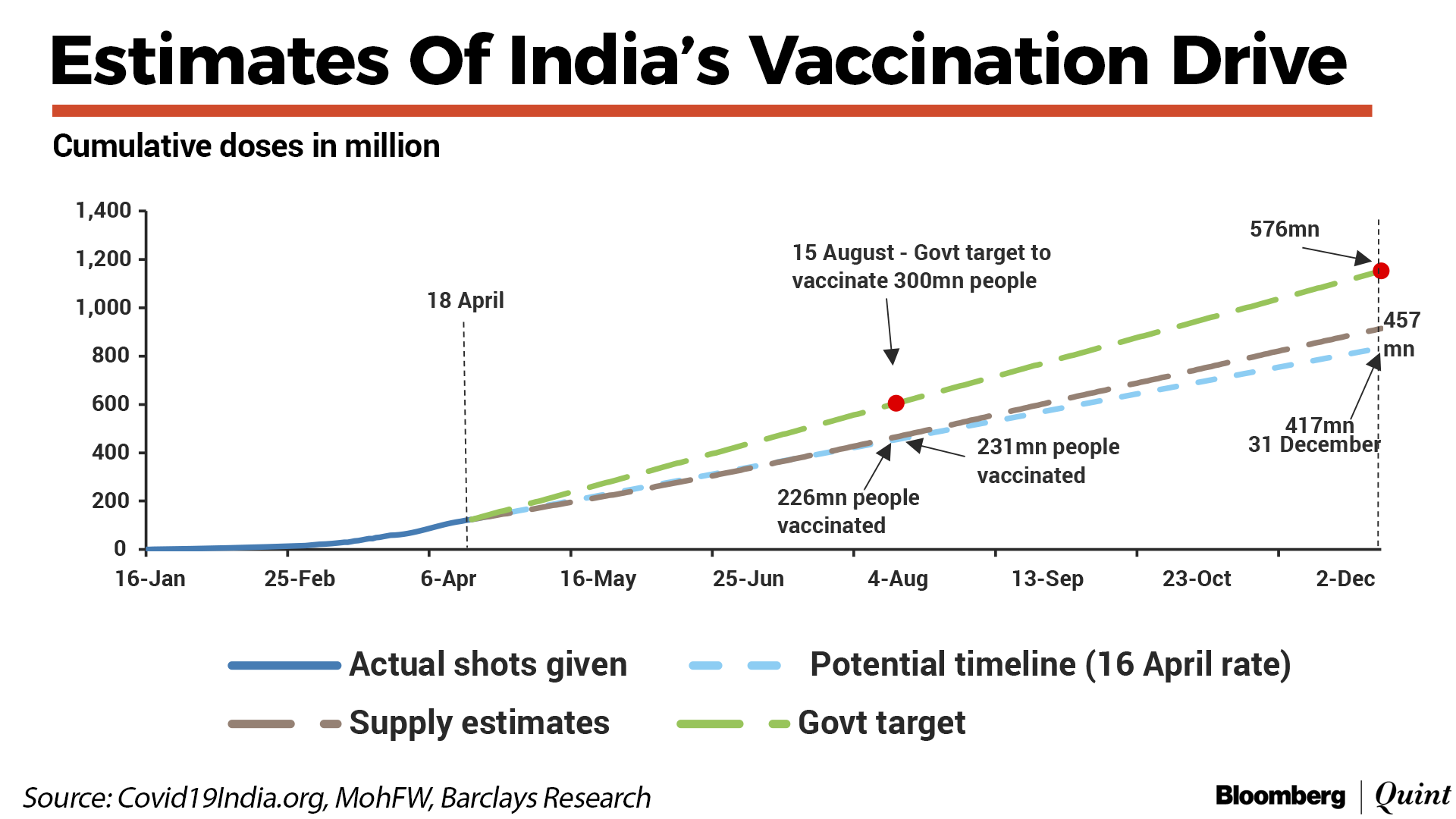
Yet, there are concerns that short supply of vaccine may skew prioritisation in the near term and will deprive poorer sections from accessing the vaccine, as pointed out by K Sujatha Rao, former secretary of health and family welfare in the central government, on social media.
Good that 18 ,+ will be eligible for the vax. But supply will compel prioritisation. Wld be useful to have sero surv surveys to get positivity rate among age groups. Worried abt states buying directly as quality assurance capacity weak in some states. Need to be sorted out. .
April 19, 2021Vaccine Supply
India's vaccination drive began in January for frontline workers. In March it was expanded to include all people above 45 years of age.
So far the country has vaccinated 12.38 crore people against a target of over 25 crore by July. Over 12 lakh doses were administered in the last 24 hours, said a government statement on Apr. 19.
As of now, India is administering two vaccines—Oxford and AstraZeneca's Covishield, which is being manufactured by Serum Institute of India Ltd.; and Bharat Biotech Ltd.'s Covaxin. Russia's Sputnik V recently received emergency use authorisation from Indian authorities. While it's currently manufactured abroad and will have to be imported, Russia has partnered with Dr Reddy's Laboratories Ltd. and others to manufacture Sputnik doses in India.
India is also inviting Pfizer, Moderna, Johnson & Johnson and others to seek emergency use approval of their vaccines as early as possible, VK Paul, who heads a panel advising Prime Minister Narendra Modi on the country's inoculation efforts, had said at a press briefing on April 13.
Meanwhile, the finance ministry is said to have approved advance payments of Rs 4,567 crore to Serum Institute and Bharat Biotech to expand vaccine capacity, reported news agency ANI citing unnamed sources. Of that Rs 3,000 crore will be for Serum Institute and Rs 1567 crore for Bharat Biotech, the agency reported late evening Apr. 19.
Note: This story has been corrected to reflect the amended government circular that says “private hospitals would have to procure their supplies of Covid-19 vaccine exclusively from the 50% supply earmarked for other than Government of India channel”.Essential Business Intelligence, Sharp Market Insights, Practical Personal Finance Advice, Daily Fuel, Gold and Silver Prices and Latest Stories — On NDTV Profit.