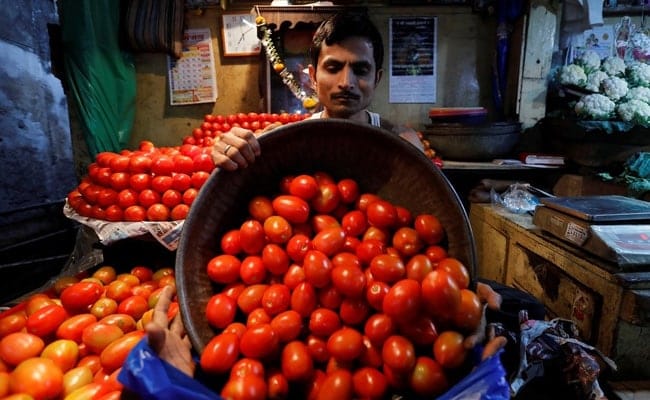
Wholesale deflation was at 3.21 per cent in May, marking the first time headline inflation - or the rate of increase in wholesale prices - turned negative since June 2016, official data showed on Monday. The latest reading also meant the deepest deflation (or negative inflation) since November 2015, when it was at 3.68 per cent. The rare contraction in the WPI came on the back of a good harvest along with low crude prices and weakness in demand, according to economists. The government released the overall Wholesale Price Index- or WPI-based inflation reading for May, days after suspending the release of Consumer Price Index (CPI)-based inflation for the month, having already skipped the release of data for April earlier.
The government has released only partial data due to inadequate inputs on account of the countrywide lockdown to curb the spread of the coronavirus pandemic, which is expected to have pushed an already-slowing economy into a standstill, forcing many businesses to trim operations and workforce alike.
Here's a look at the key inflation data released since June 12:
| Latest Figure | Latest Comparable Figure | |
|---|---|---|
| Consumer Inflation | 5.84% (March) | 6.58% (February) |
| Consumer Food Inflation | 9.28% (May) | 10.5% (April) |
| Wholesale Inflation | -3.21% (May) | 1% (March) |
Both indices determine the rate of change in prices of a slew of items, from food products to fuel and electricity. While the Consumer Price Index tracks trends in the retail prices paid by consumers in the country, the Wholesale Price Index gauges wholesale rates. While a cooling inflation is good, prolonged deflation is also considered harmful, as an economy needs prices to increase for healthy demand and consumption.
Economists expect inflation to pick up going forward once demand bottoms out for the time being, while some also warn that the reversal may not be so steep.
"Thin CPI inflation will be in a 5 per cent range as while supplies of food are good, the cost of intermediation is up, pushing up retail prices. Farmers get probably Rs 10-20 per kg for a green vegetable while we pay Rs 80 per kg as the costs go up with inter-district restrictions and more persons in the supply chain," Madan Sabnavis, chief economist at credit ratings agency CARE, told NDTV. "Non-food items also will see higher prices such as healthcare and airfares - already up. Hence core inflation too will go up," he said.
Core inflation is derived from consumer inflation by excluding select items that tend to have high short-term price volatility.
"As economic activity normalizes, some of the price movements will reverse. However, given global and domestic economic conditions there is unlikely to be any sharp increases in inflation," said Suvodeep Rakshit, vice president and senior economist at Kotak Institutional Equities.
"Food inflation has been moving as expected and is not a cause for concern. There is very little information on core inflation which would be more reflective of demand situation," he added.
Consumer food inflation moderated to 9.28 per cent in May, from 10.50 in the previous month, according to official data.
Before the onset of the COVID-19-triggered lockdown, which crushed an already-weakening demand across sectors, the Reserve Bank of India (RBI) tracked consumer inflation primarily for formulating monetary policy. However, the coronavirus lockdown forced the central bank - which targets to keep consumer inflation below 4 per cent over the medium term - to shift its focus to battling the immediate economic fallout from the pandemic.
All Eyes On Growth
In May, the RBI cut the repo rate - the key interest rate at which it lends short-term funds to commercial banks - to 4 per cent, the lowest level recorded since 2000, to prop up the economy following an emergency meeting of its Monetary Policy Committee. Governor Shaktikanta Das said the economy was expected to contract in the current financial year.
"It (RBI) is already divorced from inflation and the focus is on growth and relief and how to keep industry afloat as it affects production and employment. All policies are geared towards this direction," added Mr Sabnavis.
With consumer inflation well under control, the RBI has been focusing on growth and going forward, "it is going to be the same till there is any sustained spike in inflation, the chances of which are low as of now", said Mr Rakshit of Kotak.
Essential Business Intelligence, Continuous LIVE TV, Sharp Market Insights, Practical Personal Finance Advice and Latest Stories — On NDTV Profit.