New Delhi/Mumbai: India's turbocharged growth figures have been criticised by many analysts for giving too flattering a view of Asia's third-largest economy. Closer scrutiny reveals another reason to worry: it's the wrong kind of growth.
Consumer spending was the main driver behind India's 7.3 per cent growth in the October-December quarter, as a pick-up in urban spending more than compensated for subdued spending in rural areas where the majority of India's 1.3 billion people live.
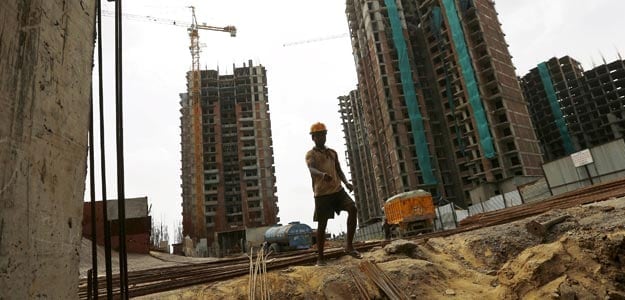
But there was little sign of an upturn in private capital investment, which has been dormant for the past four years, despite efforts by Prime Minister Narendra Modi's 19-month-old government to stimulate it through debt-fuelled higher public spending.
The higher spending by families and the government not only risks fanning inflation but also worsening household and national debt levels. Already retail loans are growing at a double-digit rate even as overall bank lending is crawling at its slowest pace in over a decade.
Personal loans that include loans for durable goods, housing and education are growing 14 per cent year-on-year compared with 5.4 per cent growth in overall bank credit, while credit card loans are growing at about 23 per cent on year.
It would be better all-round if PM Modi were to make faster progress on bank, land and tax reforms. But legislation for the latter two items is stuck in Parliament despite the government's large majority in the lower house.
"If India wants to be the next emerging market star, it has to reform," said Mark Williams, chief Asia economist at Capital Economics. "There is no alternative."
Reluctant lenders
Even after the Prime Minister's much trumpeted push to expedite clearances for major projects, most remain stalled.
In the December quarter, projects worth $155 billion (over Rs 10 lakh crore) remained stuck due to issues related to land acquisition and funding constraints, according to think-tank CMIE. New private investments in the same period dived 60 per cent.
Finding it hard to borrow from banks worried by stressed loans at their worst level in 13 years, cash-strapped private firms have kept a lid on fresh capital outlay, dashing PM Modi's hopes that higher public spending would provide a stronger investment multiplier.
Overall investment growth hit a 15-month low of 2.8 per cent in the December quarter despite a 34 per cent annual increase in public capital spending.
Even big projects have struggled to find takers. The $1.5-billion (Rs 10,000 crore) Zojila Pass tunnel in Kashmir, India's most expensive road project, languished for 18 months before being awarded to contractor IRB Infrastructure in January.
Deteriorating debt ratio
Statistically, India's economic growth has overtaken China's. But economists are questioning the official data, which they say has been overestimating the pace of expansion following a change made a year ago to the method GDP is calculated.
Finance Minister Arun Jaitley, due to present his third budget on February 29, is under pressure to relax fiscal deficit targets to further ramp up public spending to give the economy more momentum.
Meantime, the government is struggling to make progress on other fronts.
PM Modi has spelt out a plan to nurse ailing state banks back to health. Its implementation, however, remains patchy.
Similarly, no progress has been made on simplifying rules on land sales or on a major indirect tax reform that would eliminate customs barriers between states and, for the first time, create a single market nationwide.
"There is a big gap between promises and delivery," said Sandeep Upadhyay, managing director at the Centrum Infra Advisory Ltd. consultancy. "Results drive investments, not promises."
Essential Business Intelligence, Continuous LIVE TV, Sharp Market Insights, Practical Personal Finance Advice and Latest Stories — On NDTV Profit.