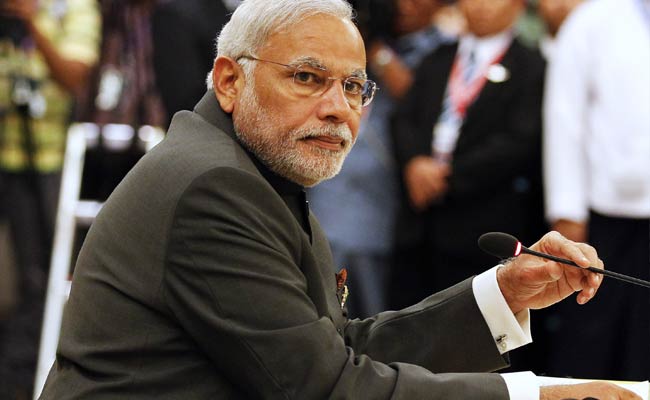
The passage of the insurance bill in Rajya Sabha is being hailed as a major win for the nine-month old Narendra Modi government. Foreign companies will now be able to buy up to 49 per cent stake in domestic insurance companies.
"At last the Insurance Bill is passed by Parliament. A big reform after a long time. Major victory for BJP," tweeted veteran investor Motilal Oswal.
At last the Insurance Bill is passed by Parliament. A big reform after a long time. Major victory for BJP.
Here's why the legislation is an important landmark:
1) Sentiment Booster: The insurance bill is the perfect example of how excruciating the pace of economic reforms in India can be. The bill was first introduced in 2008, but was opposed by Left parties and even the BJP. Political parties have been opposed to the insurance bill despite the fact that the controlling stake in insurance firms would remain with Indian promoters. Its passage, more than six years after it was first introduced, will improve India's visibility among foreign investors. "The biggest signal is that the country is moving towards path of reforms," said ICICI Bank's Chanda Kochhar.
Richard Rossow, senior fellow at the CSIS, Washington tweeted, "Whew! 11 years after Chidambaram announced the intention to bring the Insurance FDI Cap to 49 per cent - it happened!"
Whew! 11 years after Chidambaram announced the intention to bring the Insurance FDI Cap to 49%---- it happened!
2) Reforms May Gather Pace: The insurance bill sailed through Rajya Sabha on Thursday, where Prime Minister Modi's government is in a minority, bolstering hopes that the government may be able to push other key reform legislations in Parliament. Analysts are particularly eyeing the land bill, which has been cleared in the Lok Sabha, but faces stiff resistance in the upper house of Parliament.
"Passing of FDI up to 49 per cent in insurance a great signal that the government can get laws passed. Increase in financial savings key to our future," tweeted Uday Kotak, CEO of Kotak Mahindra Bank.
Passing of FDI upto 49% in Insurance a great signal that the Govt. can get laws passed. Increase in Financial savings key to our future.
3) More Foreign Investments: Global insurers such as Britain's Prudential, which holds a minority stake in India's biggest private life insurer ICICI Prudential Life, will now be able to increase their stake. According to Minister of State for Finance Jayant Sinha, foreign capital to the tune of Rs. 25,000 crore is likely to flow into the insurance sector. SBI's Arundhati Bhattacharya expects an "immediate" inflow of Rs. 20,000 crore. According to Nomura, the passing of the insurance bill will result in higher FDI inflows, which should over time encourage a stable source for financing the current account deficit.
4) Higher Penetration, Lower Premiums: Insurance penetration, or (ratio of premium to GDP), was 3.9 per cent in 2013, less than the world average of 6.3 per cent, according to Mr Sinha. Higher insurance penetration will help increase domestic savings, which can be used for infrastructure development. Higher foreign flows into the insurance sector will help incumbents to expand their presence in the country. More companies are likely to enter into the insurance sector as well, leading to higher competition and cheaper insurance premiums. (Read: Impact of Insurance FDI Hike)
5) Listing of Insurance Companies: According to SOTP or sum-of-the-parts valuation done by domestic brokerage Motilal Oswal, the insurance business contributes 28 per cent to Reliance Capital's business, 10 per cent to Exide's business, 7 per cent to SBI's business, 9 per cent to ICICI Bank's and HDFC Bank's business. The passage of the insurance bill may pave the way for listing of many insurance firms. HDFC Life, a joint venture between HDFC and Britain's Standard Life Plc, could come with the biggest initial public offer of this year, analysts say.
Essential Business Intelligence,
Continuous LIVE TV,
Sharp Market Insights,
Practical Personal Finance Advice and
Latest Stories — On NDTV Profit.