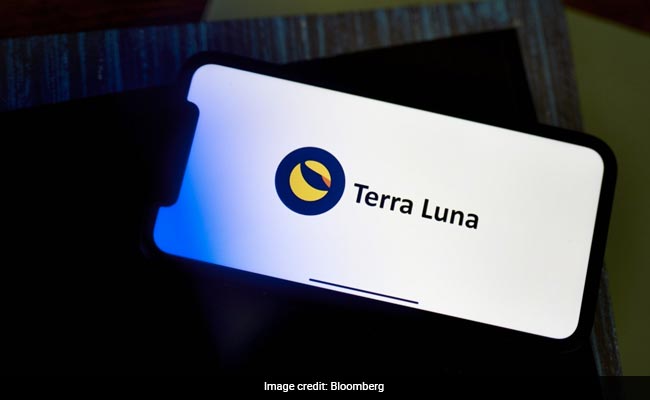
Results aren't living up to expectations for a quick recovery held by many of the investors who received new Luna tokens following last month's collapse of the cryptocurrencies tied to the failed Terra blockchain.
The average price of the Luna 2.0 token has remained below $11 in the week since they were distributed by Terra, according to data complied by tracker Kaiko.
Just a day before the TerraUSD (UST) stablecoin began to lose its 1-to-1 peg to the dollar on May 7, its affiliated token Luna was trading at about $86.
Around $40 billion in market value was erased for holders of UST and Luna -- whose devotion to the project had earned them the nickname Lunatics -- when the stablecoin depegged.
Still, that didn't prevent champions of Luna 2.0 from hyping the token with predictions that it would surge back “to the moon,” a popular crypto market catchphrase.
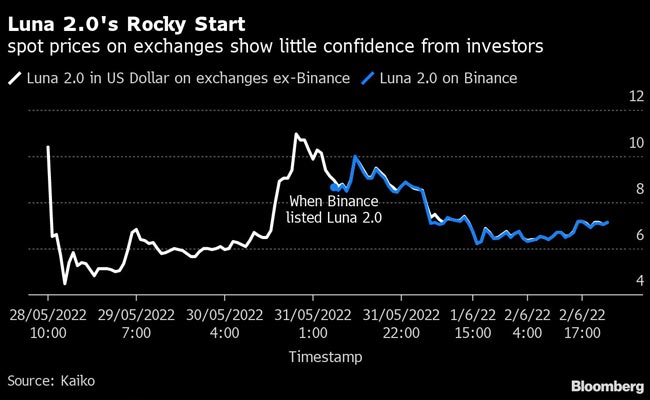
While there is not a widely recognized data point to calculate a market value for Luna 2.0, a rough estimate by data tracker CoinMarketCap puts the total value at about $1.37 billion.
That is based on 210 million new Luna tokens in circulation, using amounts claimed by the those who run the Terra project. Luna had a market value of about $27.8 billion on May 6, before it crashed.
A representative of the Terra project declined to comment on the performance of Luna 2.0.
UST was designed to maintain its dollar peg through both algorithms and trading incentives involving Luna.
The growth of Terra had exploded over the past two years, with investors attracted by the 20% interest rate offered by its quasi-bank app Anchor.
The blockchain, however, wound down in a few days, as a chain of events trigged a “death spiral,” a long-existing flaw of the project, that sent prices of UST and Luna to virtually zero.
Clara Medalie, research director at Kaiko, explained that to verify independently and accurately the market capitalization of a cryptocurrency, the data source essentially needs to run software, or a node, to validate and store the full history of the transaction of the blockchain.
“I imagine no data provider, including Kaiko, wants to invest engineering resources into running a Terra node assuming that the whole ecosystem is pretty much dead,” Medalie said.
The new Terra blockchain, which went live just about a week ago, was part of a plan in a community-approved proposal by Terra's main backer Do Kwon.
The original Terra blockchain was abandoned and is known now as Terra Classic. The new Terra blockchain does not include stablecoins. Seven projects have gone live on the blockchain so far, according to Terra.
“The airdrop was really poorly structured. It rewarded equity holders -- LUNA holders -- over savers or bond holders -- Anchor depositors or UST holders,” said Thomas Dunleavy, a senior analyst at crypto research firm Messari.
“Any network in crypto is built on trust, by not only users but also builders who commit their time and capital to grow the network.”
(Except for the headline, this story has not been edited by NDTV staff and is published from a syndicated feed.)
Essential Business Intelligence, Continuous LIVE TV, Sharp Market Insights, Practical Personal Finance Advice and Latest Stories — On NDTV Profit.