Jindal Steel Wins $22.5-Million Arbitration Order Against Bolivian Firm
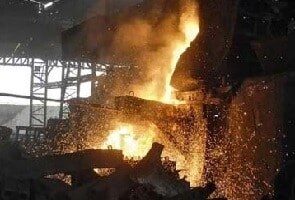
New Delhi: Jindal Steel Bolivia, an arm of Jindal Steel and Power Ltd (JSPL), has won an arbitration judgment against Bolivian mining company Empresa Siderurgica del Mutun (ESM).
"Jindal Steel Bolivia has been vindicated in connection with its investment in the El Mutun project in Bolivia by an international tribunal ordering payment to Jindal of more than $22.5 million by ESM," JSPL said in a statement on Saturday.
Jindal commenced arbitration before the International Chamber of Commerce (ICC) of Paris and sought recovery of $18 million in principal plus interest related to the illegal encashment of bank guarantees.
In an award dated August 6, 2014, the ICC Tribunal agreed granting the principal plus interest for a total in excess of $22.5 million (Rs 135 crore at 1 dollar = 60 rupees), the company said.
JSPL had in 2007 entered a joint venture pact with Bolivian state, ESM and another state-run firm to develop and exploit El Mutun iron ore mine, having reserves of around 40 billion tonnes of iron ore in the eastern Bolivia.
The company also planned to set up a 1.7 million-tonne-per-annum capacity steel plant along with other facilities for backward integration with an investment of $2.1 billion.
JSPL said it had invested "tens of millions of dollars" in the project, including providing $18 million in project guarantees.
It said the project was impeded because it never received access to land where the project was to be developed, contrary to the contract. In the statement, Jindal also said that bank guarantees amounting to $18 million were wrongly encashed.
The tribunal ruled that there was no entitlement "to encash the guarantees" and "ESM breached, with its encashment, the Contract obligations in respect of Jindal", according to JSPL.
"There was 'more than sufficient evidence...to establish that ESM did not comply with the obligation to deliver the lands' and this suspended Jindal's obligations under the Contract," JSPL quoted the tribunal as saying.
In addition to unlawful encashment in 2010, additional actions by Bolivia and its entities undermined the El Mutun project and forced the termination of the project contract, it said.
"Jindal has commenced a second ICC arbitration related to the project, focused among other things on damages arising out of the termination of the Muton contract. Jindal is seeking damages approaching approximately $100 million. The case is pending. Jindal instructed the international lawyers of White & Case for both arbitrations," JSPL said.
"Bolivia's treatment of Jindal and its representatives has reflected a pattern of maltreatment of foreign investors and their representatives in Bolivia in recent years."
"In response to its victory, Jindal observed that Bolivia and its entities broke Jindal's trust, broke Jindal's investment, and acted in violation of the contract and law," the company said, adding, "The case result vindicates Jindal's efforts to develop the El Mutan project despite the circumstances in Bolivia."

-
High US Salaries, No Green Card Certainty: The Financial Calculation Facing Indian H-1B Families

The suspension of PERM processing at eight technology employers does not cancel existing H-1B visas. What it does is force a question many Indian families have been avoiding: is the US salary worth tying your career and family plans to one employer?
-
Swiggy vs Eternal: Food Delivery's Two Rivals Are No Longer In The Same Race
Eternal is building a private AI assistant, dark.ai. Swiggy is still working out how to make Instamart pay, with an operating loss of Rs 895 crore in the July-September quarter while Blinkit stayed profitable.
-
Where You Live Shapes How You Get To Work | The Reason Why
Two-wheelers are the most popular way to get to work in India, accounting for nearly 43% of workplace commutes.
-
Unhedged Position: Can India See An Indonesia-Style Time Correction?
The Nifty is trading below levels it first clocked in 2024. Is there, then, as I have suggested in the headline, potential that the current time correction drags on painfully for the next three-five, even ten years?
-
Navigating Friction And Energy Realities: An Analysis Of Marco Rubio's October Visit To India
Occurring at a critical juncture marked by stalled trade negotiations and escalating geopolitical pressures over global energy supplies, the visit offers a profound window into modern US-India relations.
-
India Exports Capital. Why Not Export Trusteeship?
The big question, then, is whether India can build an institution that global borrowers, investors, banks, and lawyers can trust, even without an Indian connection.
-
France's Economy & Politics Are In Crisis | The Reason Why
Let's look at how the French economy and politics evolved under Nicolas Sarkozy, Franois Hollande and Emmanuel Macron.
-
You May Inherit The Business. You Must Earn Its Credibility.
Succession tests the founder's ability to share authority as much as it tests the next generation's readiness to assume it.
-
Signing Deals Is One Thing; Making Them Work Is Another | The Week In Whys
Sometimes, things don't turn out as planned. Indian companies have lost some bids to rivals, some projects won't produce until 2030.
-
FOMC Wall, PERM Suspension, Hospital Stocks | Talking Points This Week
A PERM suspension would directly affect green-card sponsorship rather than H-1B visas, so the near-term earnings impact could remain relatively limited. The key question is whether this marks a new phase in US scrutiny of Indian IT.









