(Bloomberg) -- Borrowing costs for India's lower-rated companies are rising at a faster clip than for higher-rated ones as money from mutual funds dries up, fueling their need to tap private credit, one veteran banker said.
Sujata Guhathakurta, president and head of debt capital markets at Kotak Mahindra Bank Ltd., said that alternative investments are filling the gap left by asset management companies. These have experienced a drop in inflows since the Franklin Templeton mutual funds crisis of 2020.
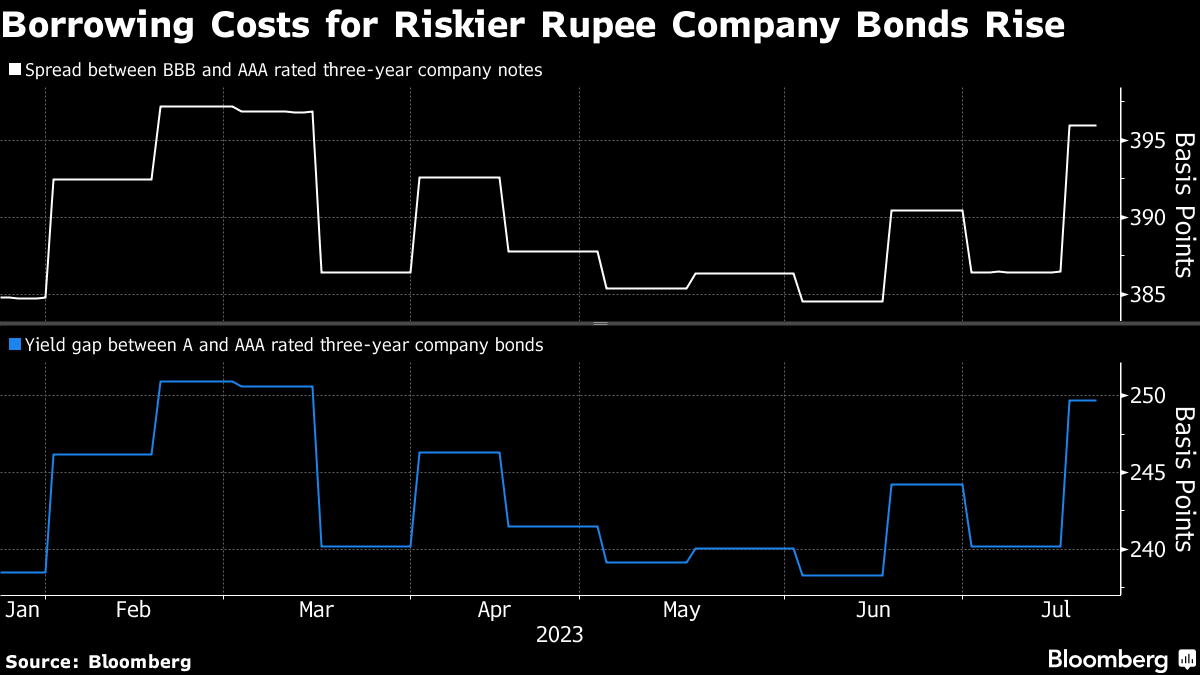
The yield premium on company notes rated BBB over those ranked AAA reached 396 basis points this month, the highest since March, data compiled by Bloomberg show. That's despite bets the central bank will forgo further interest-rate increases after keeping rates on hold in June.
“Credit risk funds have shrunk in size and some of that demand has gravitated to wealth funds, alternate investment funds and non-bank companies,” Guhathakurta said in an interview. “But the cost is higher” by as much as 1.5 percentage points.
Private credit — where non-banks lend directly to companies, often at high interest rates — has grown rapidly in recent years to about $1.5 trillion globally, according to Preqin Ltd., and the asset class is projected to hit $2.2 trillion by 2027.
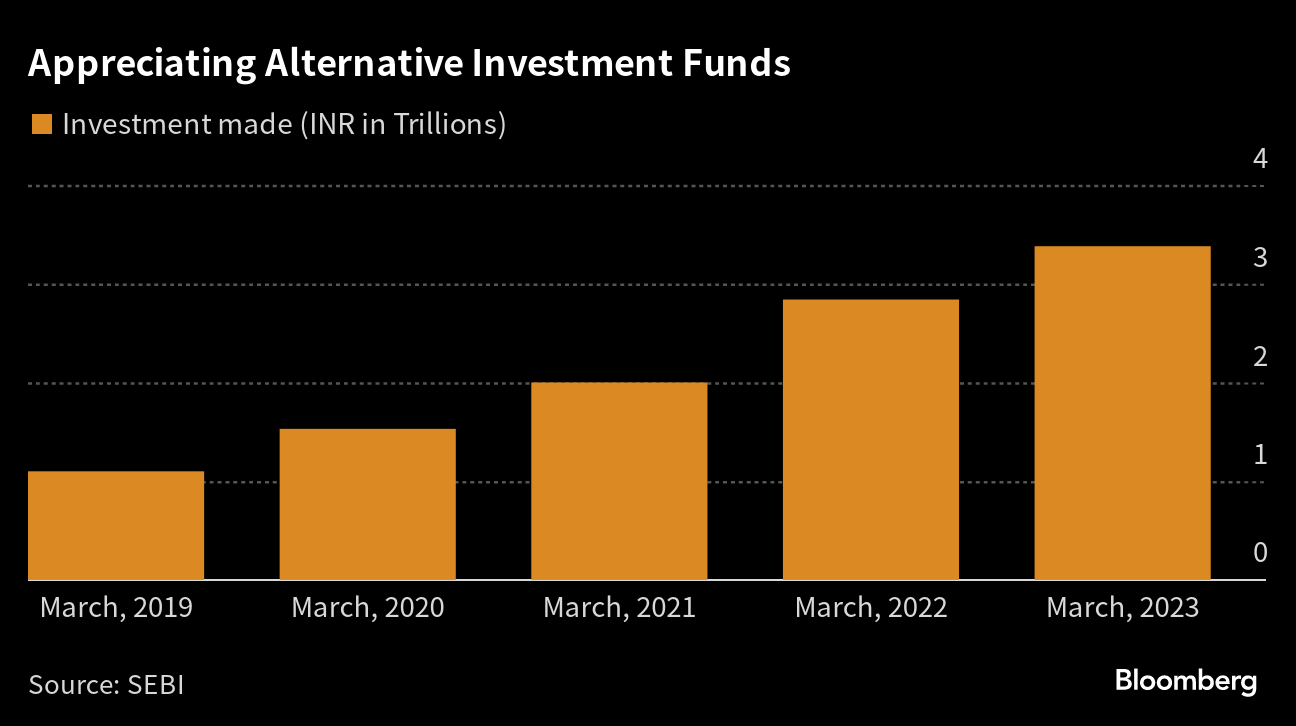
In India, alternative investments have skyrocketed since mid-2020, with investments more than doubling to 3.4 trillion rupees, according to the Securities and Exchange Board of India. The credit risk funds of asset management companies have seen a nearly 60% erosion in assets under management in about the same time span, according to data from the Association of Mutual Funds in India.
Here's more of Guhathakurta's comments:
- With a flat yield curve, highly rated corporates are getting short term and long-term money almost at similar levels
- Spreads may widen from current levels if primary issuance increases. The yield curve would then gradually steepen
- Given hopes the Reserve Bank of India is near the end of its rate-hike cycle, many corporates have actively started evaluating floating-rate debt. Firms want to borrow at a fixed rate only for a short amount of time as they don't want to lock in high funding costs
--With assistance from Divya Patil.
More stories like this are available on bloomberg.com
©2023 Bloomberg L.P.
Essential Business Intelligence, Continuous LIVE TV, Sharp Market Insights, Practical Personal Finance Advice and Latest Stories — On NDTV Profit.