Mumbai: Global financial services major HSBC has set an optimistic benchmark BSE Sensex target at 30,500 for December-end, 2017 saying that structural reforms like demonetisation and GST will boost growth in the long run.
Besides, the growth would be helped by higher public investment, bankruptcy code and direct transfer of subsidies.
"It could be possible that India will soon adopt the challenging yet beneficial path to reform and reaps the harvest of good governance, buoyancy in tax revenue and an environment conducive for business activity, far from fear of red tape and complex and opaque norms," HSBC Global Asset Management Company CIO Tushar Pradhan told reporters here.
Exuding optimism about India's growth trajectory, Pradhan said that "HSBC has set a Sensex target at 30,500 for December-end 2017".
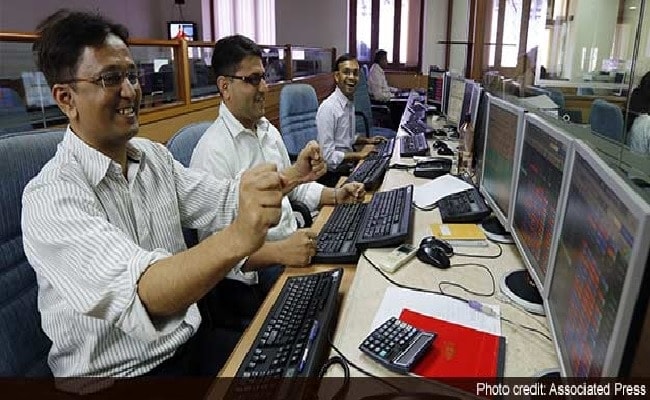
Sensex is currently trailing at 26,000-27,000 levels. The benchmark closed today at 27,140.41 -- up 240.85 points from the previous close.
While noting that demonetisation would have negative impact on the economy in the short-term, Pradhan said the move coupled with implementation of GST will propel growth in the long run.
"I think over the long term demonetisation coupled with GST (which are running parallel to each other) that is going to be very efficient way of boosting growth in India," Pradhan said.
"So if we move towards transparency and know where the money is coming from and also have GST we would have much less incentive to stay out of the banking system and not contribute to development," he added.
However, he noted various negative outcomes from demonetisation including near-term halt of economic growth as physical cash had disappeared; loss of income for service sector which accounts for 61 per cent of GDP.
Besides, he observed that the move could impact 60 per cent of Indian households assets.
"Propensity to consume -- both in black and the formal economy -- will fall," Pradhan noted.
Further, Pradhan said that successful implementation of GST would support fiscal stability; bring down cost of doing business including cost on logistics; help companies deliver better margins as well as pass along gains to consumers.
Meanwhile, Pradhan noted that fall in crude oil prices to helped the government save about $61 billion and the same may continue even as the oil price increase.
He also noted that the government's fiscal deficit target is on track, while food inflation has remained in control through supply side measures and good monsoons, among others.
(This story has not been edited by NDTV staff and is auto-generated from a syndicated feed.)
Essential Business Intelligence, Continuous LIVE TV, Sharp Market Insights, Practical Personal Finance Advice and Latest Stories — On NDTV Profit.