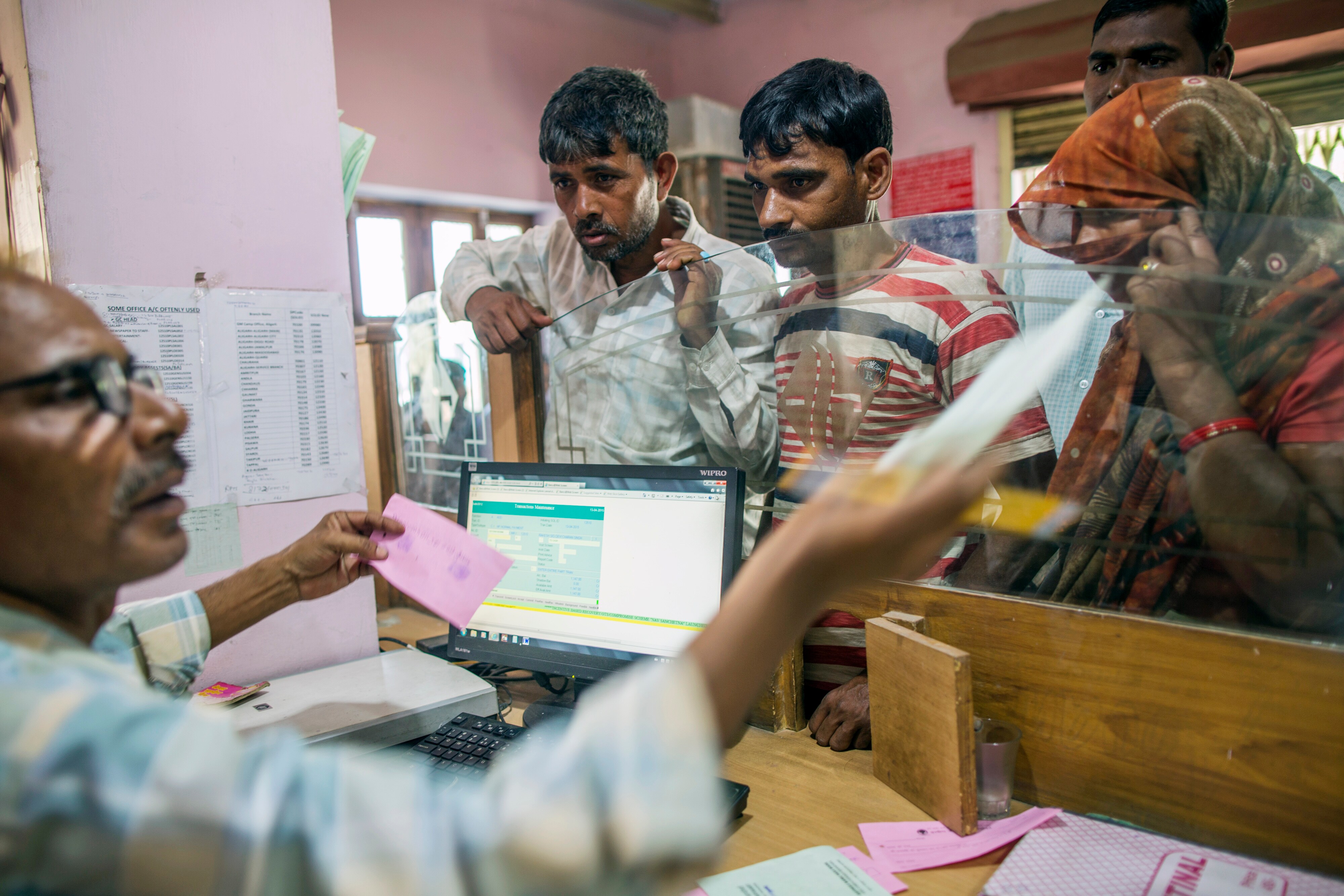
The government has identified four regional rural banks for listing on the stock exchanges in line with the Union Budget 2018-19.
Guidelines for the listing are almost ready, and entail details like the quantum of stake dilution, the instrument to be floated and category of possible investors in the public issue, sources said. The four RRBs are eligible to come out with initial public offerings and they may hit the capital market this year, they said.
It is proposed to allow strong RRBs to raise capital from the market to enable them to increase their credit to the rural economy, Finance Minister Arun Jaitley had said in his Budget speech earlier this year.
In a bid to make RRBs eligible to successfully raise capital from the market, a slew of reforms have been implemented, including compliance with corporate governance, technology upgradation, and capacity building.
There are 56 RRBs in the country with a combined balance sheet size of Rs 4.7 lakh crore. Of these, 50 are in profit, according to financial statements of RRBs for March 2017, released by the National Bank For Agriculture and Rural Development.
RRBs operating through about 21,200 branches witnessed a 17 percent rise in net profit to Rs 2,950 crore in 2016-17. Their loans and advances outstanding under various schemes rose 15 percent to Rs 3.5 lakh crore as of March 2017.
These banks were formed under the RRB Act, 1976 with an objective to provide credit and other facilities to small farmers, agricultural labourers and artisans in rural areas. The act was amended in 2015 whereby such banks were permitted to raise capital from sources other than the Centre, states and sponsor banks.
Currently, the Centre holds 50 percent stake in RRBs, while 35 percent and 15 percent stake are with sponsor banks concerned and state governments, respectively.
Even after stake dilution, the shareholding of the Centre and sponsor public sector banks together cannot come below 51 percent according to the amended act. As a result, the ownership and control would remain with the government.
In order to improve the financial health of RRBs, the government initiated the consolidation of RRBs in a phased manner in 2005.
Essential Business Intelligence, Continuous LIVE TV, Sharp Market Insights, Practical Personal Finance Advice and Latest Stories — On NDTV Profit.