Four Celebrities Reveal A Lot About Three Decades Of India's Consumer Market | The Reason Why
As these celebrities have grown older, so have the consumers who once followed them.
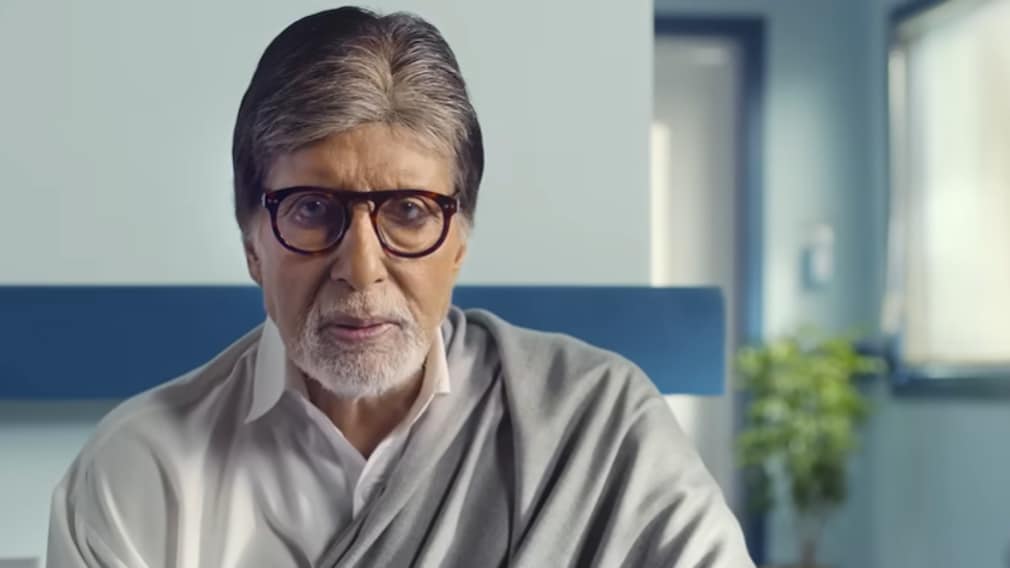
After the 2003 Cadbury's worm infestation controversy, Amitabh Bachchan became the face of its comeback. His reputation helped the company regain the public trust. It reminded us how star power can shift sentiment at scale. That is what makes celebrity endorsements interesting. Celebrities bring trust, aspiration, and a special connection with consumers.
Not only do brands adjust to changing consumer needs, but brand ambassadors also evolve along. To see how India's consumer economy has shifted and how celebrity endorsements have shifted with it, I studied over 200 brands endorsed by four long‑lasting stars: Amitabh Bachchan, Shah Rukh Khan, Sachin Tendulkar and Akshay Kumar. They aren't the whole market, but together they mirror the breadth of India's consumers and its most recognisable product categories.
From Consumers to Life Infrastructure
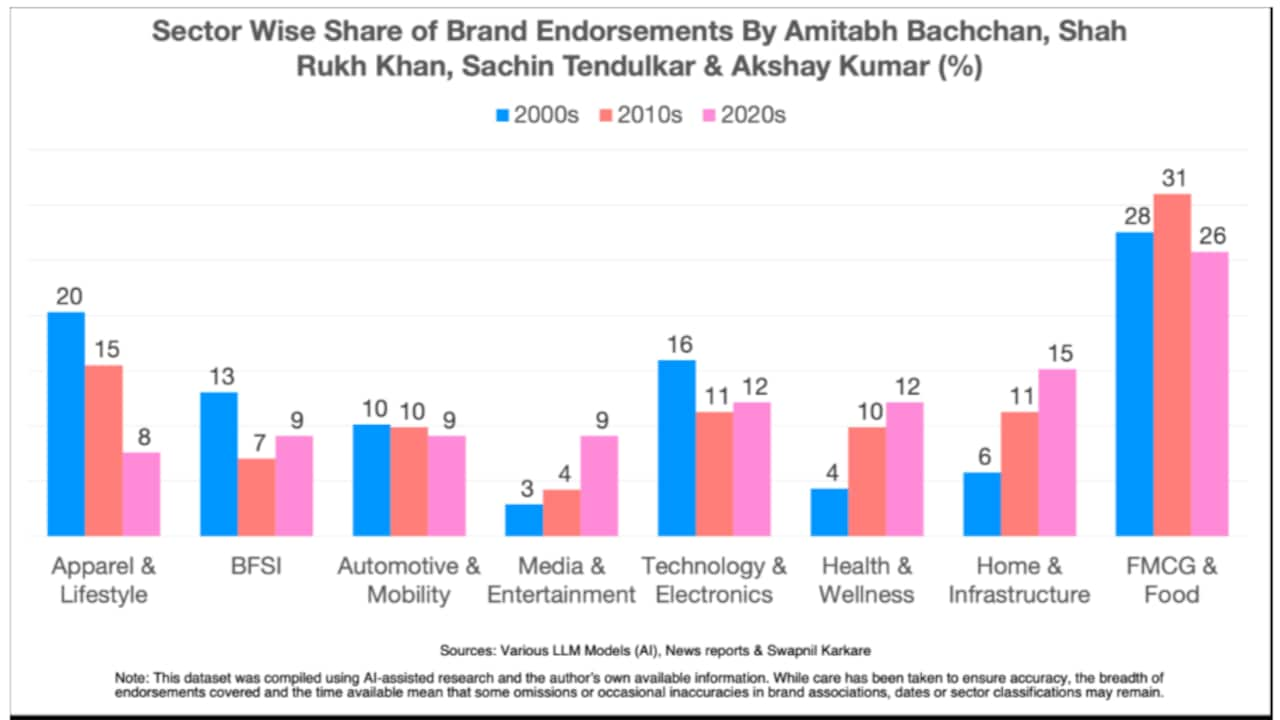
Across portfolios of these four celebrities, the shift from the 2000s to the 2020s is hard to miss. In the 2000s, they endorsed everything from mobile phones to baniyans and from chyawanprash to cars. Most of it sat in the mass-market segment, especially tangible things – something you could wear, use or aspire to own. Exceptions included luxury watches and financial products.
Today, ads for Thums Up, Tide, Kurkure, Everest and Maaza are still around, but there's been a clear rise in endorsements for things we can't easily see or touch in regular life. They include digital platforms, cement or steel that goes inside our homes and experiences like travel.
As these celebrities have grown older, so have the consumers who once followed them. That audience is now more mature, wealthier and making bigger decisions. Naturally, the brands chasing these celebrities have shifted toward products and services tied to larger, more consequential choices.
Also Read | India-Pakistan Fighting For Same Textile Market — And Trade Deals Are Changing It | The Reason Why
The Disappearance of Apparel & Moving Inside the Home
Apparel and footwear were prominent in their 2000s portfolios. We have seen ads for Levi's, Adidas, Belmonte, Grasim Suitings, and Reid & Taylor.
Today, these aren't dominating. This should not be interpreted as evidence that celebrities have stopped endorsing fashion. The better interpretation is that the traditional model of having one major star as the long-term face of an apparel or footwear company has become much less prominent thanks to social media marketing.
However, a new category has emerged: housing and home-improvement. In the 2000s, Binani Cement and Nerolac Paints remained isolated examples that used one of these faces. By the 2020s, the Big-4 celebs have endorsed cement, steel, steel pipes, paints, plywood, hardware and windows. For example, UltraTech Cement, Rungta Steel, APL Apollo, Berger Paints, Greenply, CenturyPly, SRMB Steel, Techno Paints, Häfele, Kajaria and Prominance. That tells us something interesting.
As these sectors formalise, more brands want visibility. Earlier, steel or window companies barely advertised. Now they want to reach businesses but also everyday consumers. And today's consumer is more aware and wealthy enough to build or renovate a home.
I have felt this myself. I am building a house right now and have chosen branded cement, steel, and windows myself. Earlier generations, for instance, might not have had so much agency or choice. That's where the role of superstars has shifted with changing needs and rising awareness. Their presence gives people a sense of familiarity and reassurance in categories where most of us don't have the technical knowledge.
From Global Aspiration to Indian Scale
Another notable pattern within these portfolios is the rise of Indian companies.
The 2000s contained many global brands like Nokia, HP, Adidas, TAG Heuer and Gillette. They wanted to tap India's rising consumer market, so they chose big stars. Foreign brands dominated the portfolios of these four celebrities, especially SRK's.
By the 2020s, Indian-founded companies and India-based startups became a major part of their portfolio. The Big-4's share of Indian companies in all ads rose from 58% in the 2000s to 77% in the 2020s. This is a major shift.
Changing Nature of Healthcare & Technology
Then, there are a couple of more changes: the rise of healthcare and the changing nature of tech ads.
Earlier, apart from traditional products such as chyawanprash, healthcare barely got any space. By the 2020s, these celebrities have expanded significantly, with MediBuddy, PharmEasy, Sugar.Fit, Dr Agarwal's Eye Hospital, Savlon, among others. This highlights the role of rising health awareness and preventive measures among the general public.
The character of the technology sector changed too. Earlier, tech meant hardware. Brands like Videocon, Nokia, Micromax and HP roped in these celebrities. Today, physical tech brands such as Realme, Acer and RRP Electronics remain, but they sit alongside a growing number of digital businesses and apps such as FAU-G, Unacademy, Spinny, PharmEasy and MediBuddy.
Final Take
There is one obvious limitation: all four celebrities in this analysis are men. That creates a bias, and I acknowledge it. These four celebrities do not represent India's entire endorsement market, but their journeys offer an interesting window into how brands, consumers, and the Indian economy have changed.
Their brand portfolios reflect not just what India buys, but what India has become. They endorse more of what goes into our homes, bellies, and phones. Yes, those aren't all the healthiest available choices for consumers, but that's a small sign of progress – not just about the corporate marketing teams, but also the consumers in India.
Also Read | US Bond Buyback Will Not Lower Yields | The Reason Why
-
Opinion | India at 38: From Innovation Overperformer to Innovation Powerhouse

India now has 453 VC-backed deep science startups, 18 of them late-stage, after 117 percent growth since 2020. Laurus Labs, at USD 9.3 billion, is the most valuable deep science company in any middle-income economy outside China.
-
Navigating Energy Crossroads: S Jaishankar's Call For Diversified Supply Chains At G20 Ministerial Meeting
As geopolitical fault lines continue to test maritime trade routes and commodity flows, Jaishankar's message remains pertinent: true economic resilience requires open markets, protected transit lines, and a genuine commitment to multilateral cooperation rather than coercion.
-
Indians Are Travelling, But Not Every Journey Is A Holiday | The Week In Whys
Pilgrims, patients and working women are the real travellers, and the system hasn't quite caught up with them.
-
Getting To Work Costs Women More | The Reason Why
It is not just about women paying more than men. It is about women paying much more in cities than in villages.
-
AI Bias In Investing Cannot Be Eliminated, But It Can Be Governed
Framing is a particularly important example as identical financial information presented in terms of gains rather than losses can lead an LLM to reach a different assessment.
-
Joining The Dots | Dark Skies, Steady Diya: Why Hope Holds This Diwali
With war, a weak rupee and foreign outflows weighing on sentiment, policymakers at the NDTV World Summit and market veterans at NDTV Profit Ignite: Diwali Edition offered the same advice: stay invested and filter out the noise.
-
The Curious Case of Equitas Small Finance Bank And A CEO Who Quit For Stock
PN Vasudevan believes persistent investor concerns over a perceived conflict of interest had become a governance overhang on Equitas Small Finance Bank's stock, even as the lender improved profitability and asset quality.
-
Talking Points This Week: AI Cash Burn, A Tiger Comeback And An India That Still Finds Its Own Path
India is not immune to higher oil or tighter global liquidity, yet its earnings base is broader, its domestic policy levers are still available.
-
Foreign Investors Own Half Of HDFC Bank and ICICI Bank. An LTCG Cut Could Matter Most Here
Foreign portfolio investors have US$115 billion parked in HDFC Bank, ICICI Bank. If the government cuts long-term capital gains tax, Jefferies says returning foreign money could land here first.










