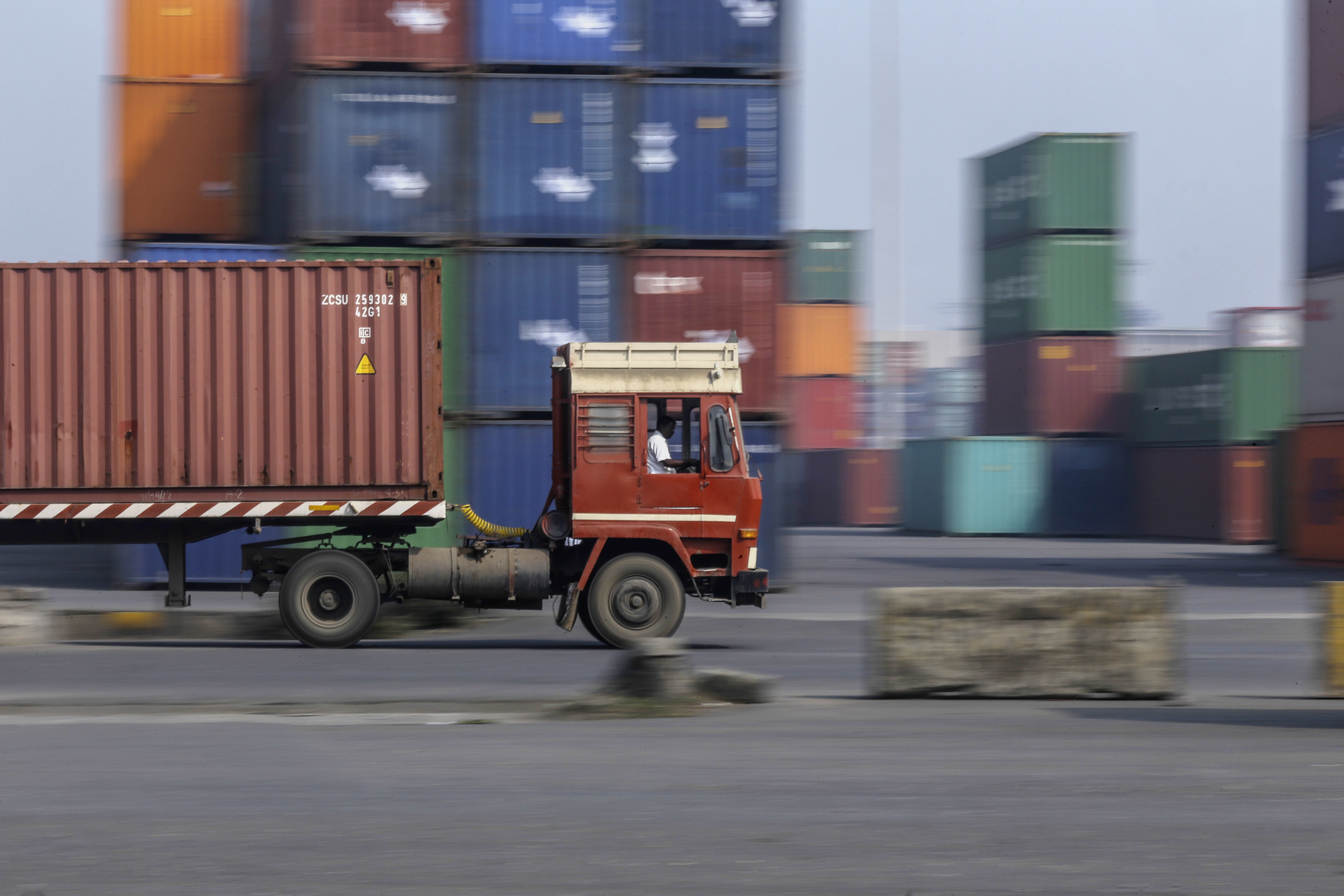
Automakers have seen strong revival in sales aided by the higher government spending on infrastructure, greater replacement demand and easing of Goods and Services Tax-led disruptions.
“GST has actually helped by creating a clear segmentation of the market leading to growth across segments,” Gopal Mahadevan, chief financial officer of the Chennai-based Ashok Leyland told BloombergQuint in an interview.
Fleet operators are finding it easier to manage a single truck of higher tonnage, as compared to maintaining two or three vehicles adding up to that weight, Mahadevan said. Operators are also expecting increased visibility on freight charges. That's prompted them to invest in heavy tonnage vehicles to cater customer preference for larger loads, he added. Besides, some of the end-customers like oil and gas, fast-moving consumer goods and chemicals companies “want their fleet operators to have new trucks”, resulting in higher replacement demand.
The commercial vehicles industry had seen de-growth till September last year as demonetisation, implementation of the nationwide tax regime and the transition to new emission standards resulted in lower sales. The turnaround came through in the third and fourth quarters of the year-ended March 2018 as the government stepped up its infrastructure spending and states increased implemented rated loads regulations, Mahadevan said.
Also Read: Ashok Leyland Has Defence Orders Worth More Than Rs 5,000 Crore
Other Highlights
- Ashok Leyland recently won a Rs 100 crore order from the Indian Army and hopes to capitalise on its position as one of the largest suppliers to the Indian Armed Forces.
- The automaker will also be looking to pass on higher raw material costs to consumers, being a “reluctant follower of the discounting model”.
- The implementation of scrappage policy in 2020 will lead to higher demand.
- It expects absolute industry volumes to hit four to seven lakh units by then, following the transition to Bharat Stage VI emission norms.
Watch the full interview here.
Essential Business Intelligence, Continuous LIVE TV, Sharp Market Insights, Practical Personal Finance Advice and Latest Stories — On NDTV Profit.