Budget 2025 Expectations: Nirmala Sitharaman Presents Economic Report, CEA Nageswaran's Address—As It Happened

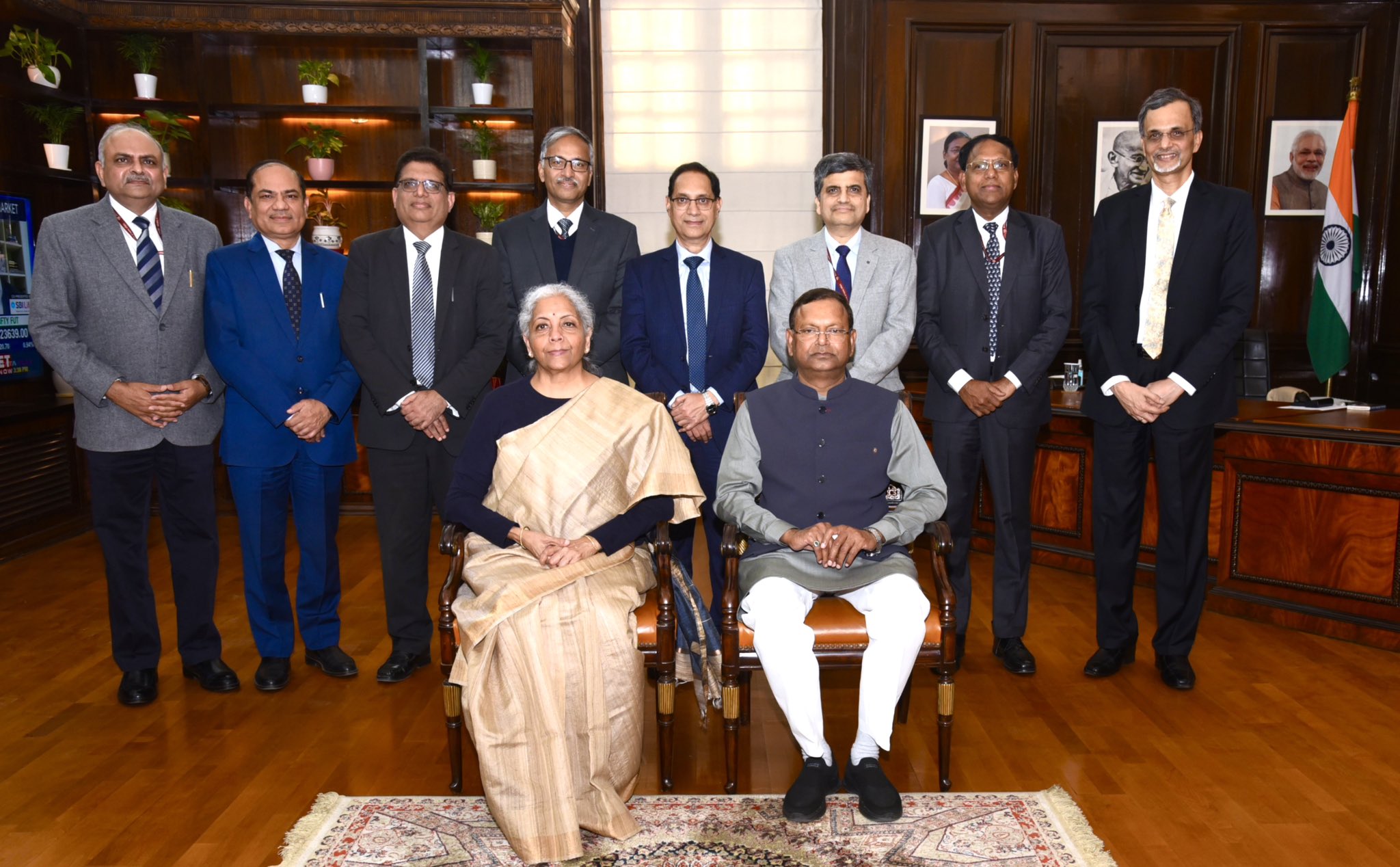
Finance Minister Nirmala Sitharaman will table the first full Budget of Modi 3.0 government on Feb. 1 amid expectations of tweaking income tax slabs, major boost for the infrastructure sector, larger allocations for rural development and the education sector. Sitharaman will also create history with her eighth consecutive Union Budget on Saturday.
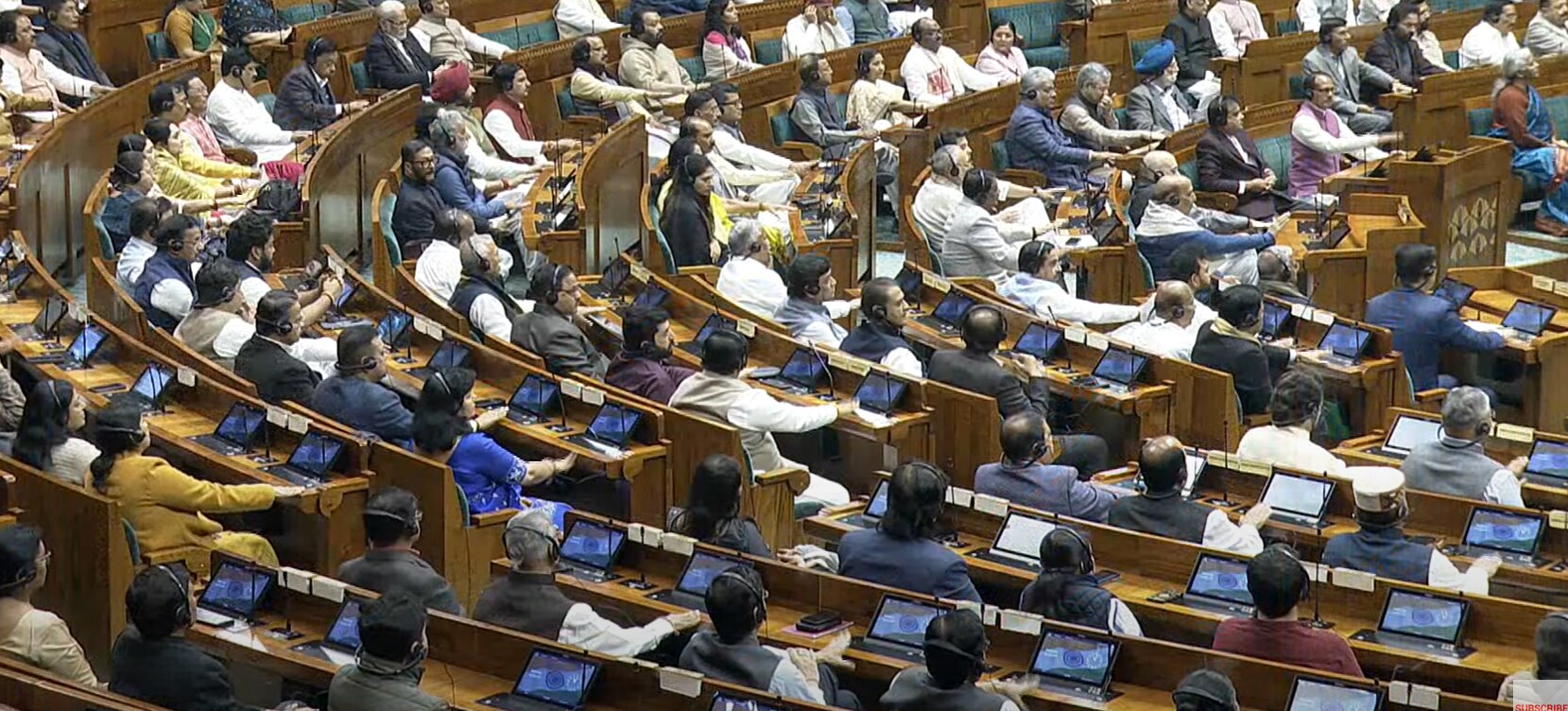
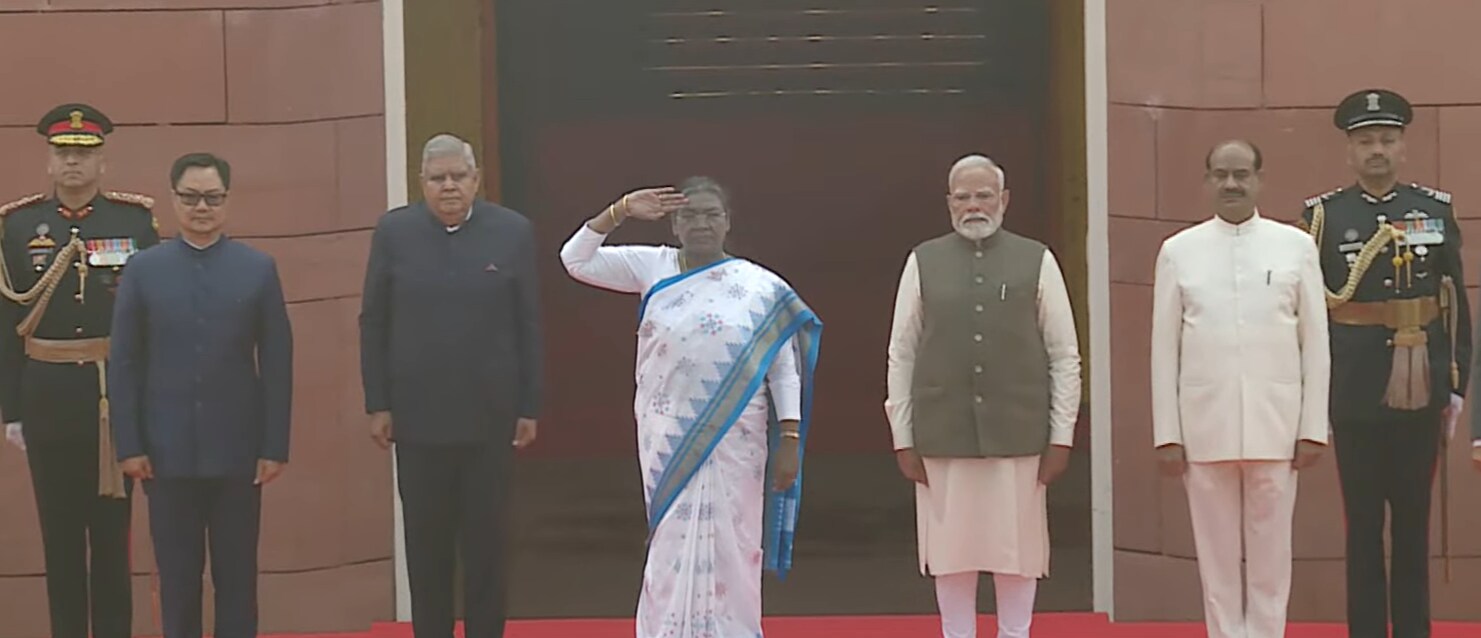
The Budget Session commenced on Friday with President Droupadi Murmu addressing the joint sitting of Lok Sabha and Rajya Sabha. The first part of the session will conclude on February 13 and the second part will start on March 10. The session will conclude on April 4.
Finance Minister Nirmala Sitharaman will start her Budget speech in the Lok Sabha at 11 a.m. on Saturday.
The Road sector streak of slow awarding continued in 9M fiscal 2024-25 with the NHAI awarding of Rs 135 billion compared to the already muted 9M fiscal 2023-24 of Rs 370 billion (approximately 65% y/y drop), according to a report by Anand Rathi Research Team.
"With a strong live tender pipeline (approximately Rs 1.1 trillion), the expected turbocharging by the government with greater capex allocation in the coming Budget, new plan being finalised and an agile monetisation plan by the NHAI are purported to revive the laggard Road sector. Intense competition in bidding is also being addressed to bring bidding discipline," the report said.
Chief Economic Adviser V Anantha Nageswaran on Friday discussed the projected gross-domestic-product growth of 6.3–6.8% for the upcoming financial year, influenced by global risks and trade uncertainties.
Global factors, such as potential spillover from global financial markets and increased uncertainty in trade and investment flows, are significant considerations in the growth projection, the CEA said in a conversation with NDTV Profit.
A strong emphasis on green logistics is essential, with incentives to promote the use of electric vehicles, biofuels, and IoT-enabled transport systems, said Subhasish Chakraborty, Founder, Chairman, and Managing Director of DTDC Express Ltd.
"We encourage the government to prioritise investments in infrastructure modernisation, particularly in the creation of smart logistics parks and multimodal transport networks that embrace sustainable practices," he said.
Chakraborty highlighted that these measures will help lower logistics costs while reducing carbon emissions, paving the way for a sustainable future in the sector.
I don't think current state of technology is there yet to displace labour and employment extensively, the CEA told NDTV Profit.
We need to smoothen the path of technological integration so it becomes labour augmenting, said Chief Economic Adviser V Anantha Nageswaran on Economic Survey 2024-25.
We need to ensure the youth is prepared to take advantage of technological developments, he said. "Need to be mindful of disruptive impact of industrial revolutions on labour markets," he said.
The credit guarantee scheme for small enterprises will help boost manufacturing activity, said the CEA on Economic Survey 2025.
Chief Economic Adviser V Anantha Nageswaran on Economic Survey 2024-25 highlighted that there are signs of pickup in urban consumption.
"Part of urban consumption slowdown is due to private sector's hiring and compensation practices," he said.
Union government doesn't have to nudge business because several state governments are already on that path, said CEA on Economic Survey 2024-25.
States that have implemented business reform action plans saw pickup in industrial activity, he said.
Chief Economic Adviser V Anantha Nageswaran in an exclusive interview with NDTV Profit said that global factors are going to play an important role.
"There is increasing uncertainty concerning trade and investment flows," he said.
It is crucial to address the persistent challenges faced by Micro, Small, and Medium Enterprises or MSMEs, which are integral to India’s economic growth, according to Manish Shah, MD & CEO at Godrej Capital.
"Despite their significant contribution, MSMEs continue to face a substantial credit gap, limiting their potential for growth and innovation. To bridge this gap, we anticipate the introduction of a dedicated liquidity facility for MSMEs, facilitating easier access to working capital and long-term financing. Such an initiative would empower MSMEs to invest in technology, expand their operations, and enhance competitiveness," he said.
Union Minister for Finance and Corporate Affairs Smt. @nsitharaman interacts with the Secretaries and the senior officials involved in the Budget making process @FinMinIndia while giving final touches to the Union Budget 2025-26 at her office in North Block, in New Delhi, today.… pic.twitter.com/lXjk64WGsO
— Ministry of Finance (@FinMinIndia) January 31, 2025
The economic survey has highlighted the robustness of the Indian economy driven by calibrated fiscal consolidation and stable private consumption, said Vimal Nadar, senior director and head, research at Colliers India. "With upsides in the form of domestic investment & manufacturing output growth, the government expects FY26 GDP growth rate to be in the range of 6.3-6.8%," he said.
Nadar highlighted that real estate will continue to play a pivotal role and demand across asset classes is likely to expand into multiple Tier II & III cities and economic corridors as well. "All-time high credit deployment with over Rs 28 trillion outstanding housing loans as of October 2024, indicates healthy residential activity," he said.
"Overall, the economic survey has outlined the need for continued infrastructure push, policy reforms and sector specific business enablers in the upcoming budget, which should help in sustaining the real estate growth momentum over the next few years," he said.
The Economic Survey has projected growth of 6.3-6.8% for FY26 which is what will be considered by the Budget tomorrow, said Madan Sabnavis, Chief Economist at Bank of Baroda.
"It does highlight the uncertainty in the global economic order and recommends further reforms especially in terms of ease of doing business to take the economy ahead," Sabnavis noted.
"It is positive of consumption and investment picking up in the second half of FY25 which should stabilise further in FY26," he further said
The index of eight core industries grew by 4% in December, compared to a growth of 4.4% in November, according to data by the Office of the Economic Advisor, published on Friday. Seven of the eight industries saw contractions in August.
The Economic Survey 2025 presents a forward-looking narrative on India’s economic trajectory, highlighting sustained growth, resilience across sectors and the importance of structural reforms, said Akshat Khetan, founder, AU Corporate Advisory and Legal Services. "The projected GDP growth of 6.3% to 6.8% underscores the country’s strong fundamentals, despite global uncertainties," he highlighted.
"A notable aspect is the revival in foreign direct investment, reflecting renewed investor confidence in India’s economic policies and business environment," he said,
The Union government's fiscal deficit has reached 56.7% of the budgetary target at the end of the first nine months of the financial year ending in March 2025. The gap between expenditure and revenue amounted to Rs 9.14 lakh crore during the period from April to December, compared to the total limit set at Rs 16.13 lakh crore for the ongoing fiscal year, according to provisional data released on Friday by the Controller General of Accounts.
Read full story here.
"The domestic production of electronic goods has grown at a CAGR of 17.5% from FY15 to FY24. The country has also drastically reduced its dependence on smartphone imports, with 99% now manufactured domestically," the Economic Survey said.
Programmes such as Make in India and Digital India, along with improved infrastructure, ease of doing business, and various incentives, have boosted domestic manufacturing and drawn foreign investments, as per the survey
The Economic Survey's projected growth rate of 6.3–6.8% for FY26 may be challenging given that growth in the fast lane is predicated on difficult deregulation and reforms at grass-roots level, said Ranen Banerjee, Partner and Leader Economic Advisory at PwC India.
"The survey hints at continued fiscal consolidation in the upcoming budget and at nudging the Monetary Policy Committee for policy support towards the growth engine in FY26."
Economic Survey 2025: 'Health Tax' Proposed On Brands Promoting Junk Food
The Carbon Border Adjustment Mechanism (CBAM) and EU Deforestation Regulation (EUDR) does not take into the fact that India is at a different level of development, according to officials with the CEA. "We see this a means of protectionist measure, imposed to product their industry," a top government official said, in response to a question from NDTV Profit.
As per multiple studies, there is not much to be gained in terms of stopping carbon emissions.
India faces the twin challenge of achieving higher levels of economic development and dealing with climate change, V Anantha Nageswaran said in the economic survey. "...it is hard to shake off the conclusion that both Carbon Border Adjustment Mechanism (CBAM) and EU Deforestation Regulation (EUDR) are trade protection measures garbed in the language of climate and environment," it said.
"We'll be happy to be proven wrong if growth comes out over 6.8%," said CEA Nageswaran.
The country's balance of payments is "comfortable" and foreign direct investment inflows are steady despite repatriation, CEA Nageswaran said in the press conference with reporters.
Sitting on a comfortable balance of payments
Gross FDI inflows are steady despite repatriation
Current account deficit at 1% of GDP
GDP growth estimate of 6.3%-6.8% in line with many global organisations' estimates
Net-zero policy cannot be pursued at the same time as fiscal sustainability and competitiveness
Countries are investing a lot in adaptation, rather than focusing on emission mitigation. India's renewable journey should include nuclear power, hybrid fuels.
Coal will remain essential for energy security.
International climate finance flows highly inadequate and biased in favour of mitigation
Countries to need to generate more adaptation financing
Priority should be adaptation
India should safeguard itself against single source concentration risk (China)
"AI presents both opportunities, challenges. Past tech revolutions have been painful when not carefully managed. Private sector needs to weigh benefits of AI against social costs. Careful AI deployment can delivery broad based benefits," said CEA Nageswaran.
"MSMEs have been helped via PLI schemes, cluster development program, timely paymetns via TReDS. Through the PLI scheme for white goods, entire supply chain for ACs is now in India," said CEA Nageswaran.
The Economic Survey 2024-25 has recommended setting up an independent body within the financial regulators to look into their regulations from all angles. The survey has also recommended the body to report its finding to the concerned regulator's board rather than its management.
It has been suggested that the agency would analyse the social and cost related aspects of the regulations before they are implemented.
"Such a move will signal that regulators are willing to live by the principles they expect regulatory entities to follow," the survey document read.
Read story here.
As India strives to achieve its vision of 'Viksit Bharat@2047', the need for upgraded infrastructure has become increasingly crucial. The Economic Survey 2025 highlights the importance of private participation in bridging the infrastructure gap, emphasising that public capital alone cannot meet the demands of the country's growing economy.
Post-elections, capital expenditure has gained momentum, with ministries related to infrastructure sectors utilising 60% of the budgeted capex during April-November 2024, the Economic Survey noted.
The National Monetisation Pipeline, launched in August 2021, has identified assets worth Rs 6 lakh crore for FY22-25, with asset monetisation for FY22-24 reaching Rs 3.86 lakh crore against the target of Rs 4.30 lakh crore.
Read story here.
"In terms of infra, India has done well. New trains, airports, reduced turnaround time at ports. Expansion in telecom, power sector capacity addition, decreasing data costs. Public transport has to play a much bigger role in green energy transition. Carbon emissions, cleaner air, road congestion will be addressed," he said.
For rural India, progress has been seen under PM Gram Sadak Yojna, PMAY, Jal Jeewan Mission, National Health Mission, the CEA said.
"Labour regulations designed to protect workers can have unintented consequences. Need to introduce flexibility in employment regulations," said CEA Nageswaran.
"India's goal should now be to fire all domestic drivers of growth. Deregulation exercise at the local, state government level for industries, education and employment needs to happen. Stringent regulations impact scale of industries by disincentivising it," said CEA Nageswaran.
Economic Survey 2025: India’s Share Of Global Manufacturing Is A Tenth Of China’s
"New import restrictions have increased due to strategic competitiveness. More than a $1 trillion are affected in value of trade due to restrictions. This new world might be with us for quite some time," said CEA Nageswaran.
Read CEA Nageswaran's Full Report Of Economic Survey 2025.
The Economic Survey highlighted elevated valuations and optimistic market sentiments in the US raise the likelihood of a meaningful market correction in 2025.
Should such a correction occur, it could have a cascading effect on India, especially given the increased participation of young, relatively new retail investors. Many post-pandemic investors have never witnessed a significant and prolonged market correction, CEA Nageswaran said.
Read story here.
Telecom sector is expanding with the smartphone boom, surging data consumption, and advent of 5G.
India stands as the second largest telecom market, with over 1.18 billion telephone subscribers.
India leads in mobile data consumption per subscriber and offers the world's most affordable data rate.
Currently, 5G services are available in 779 out of 783 districts.
Most critical obstacle to large-scale proliferation of AI in the medium term is resource efficiency.
For AI to scale effectively, significant reductions in costs and more efficient utilisation of scarce resources is must.
Prevailing trajectory in AI development prioritises performance over cost-effectiveness.
Training AI models are becoming increasingly expensive.
Economic Survey 2025: EU's Green Export Curbs Trade Restrictions In Disguise, Says CEA
Economic Survey 2025: Domestic IT Market Expected To See 6% Growth
The production of capital goods recorded a robust growth in FY24. The domestic production of electronic goods has grown at a CAGR of 17.5% from FY15 to FY24. India drastically reduced its dependence on smartphone imports, with 99% now manufactured domestically. Make in India and Digital India have boosted domestic manufacturing and drawn foreign investments.
Read story here.
Budget 2025: Date, Time, When And Where To Watch Nirmala Sitharaman's Speech Live?
The path to further industrialisation is paved with deregulation, R&D and innovation, and improving the skill levels of the workforce. A strong commitment to R&D should be ingrained in the industry's core values, as it is essential for global competitiveness and profitability.
Labour market indicators have improved.
Unemployment rate declined in the last seven years from 6.0 per cent in 2017-18 (July-June) to 3.2 per cent in 2023-24 (July-June).
Centre implemented measures to boost employment, foster self-employment, and promote worker welfare.
PM-Internship Scheme emerging as a transformative catalyst for employment generation.
Centre launched several initiatives to give a fillip to women's entrepreneurship. Initiatives launched for easier access to credit, marketing support, skill development, support to women start-ups, etc.
Net payroll additions under EPFO more than doubled in the past six years.
Digital economy growth and renewal energy sector offer enhanced opportunities for employment generation.
The government working on a resilient and responsive skilled ecosystem in line with emerging global trends like automation, generative AI, digitalisation, and climate change.
Kharif foodgrain production for 2024 is expected to reach 1647.05 Lakh Metric Tonnes (LMT), representing an increase of 89.37 LMT from the previous year.
High-value sectors like horticulture, livestock, and fisheries have become key drivers of overall agricultural growth.
As of 31st October, over 11 crore farmers have benefitted under PM Kisan, while 23.61 lakh farmers are enrolled under PM Kisan Mandhan.
The Gini coefficient, a measure of inequality in consumption expenditure, has been declining in recent years (For rural areas it declined to 0.237 in 2023-24 from 0.266 in 2022-23 and for urban areas, it fell to 0.284 in 2023-24 from 0.314 in 2022-23), aided by various fiscal policies of the government which are reshaping income distribution, CEA said in the Economic Survey 2025.
Social services expenditure of the government (combined for centre and states) has increased at a compound annual growth rate of 15% from FY21 to FY25.
The net payroll additions under EPFO have more than doubled in the past six years, signalling healthy growth in formal employment, the Economic Survey 2025 said.
Certain challenges need to be overcome by AI developers before wide-spread adoption can be achieved, the Economic Survey 2025 said.
Policymakers must balance innovation with societal costs, as AI driven shifts in the labour market could have lasting effects. Similarly, the corporate sector must act responsibly, handling the introduction of AI with sensitivity to India’s needs.
Read story here.
Adaptation becomes a priority for a country like India due to its higher vulnerability to climate change, the Economic Survey 2025 said.
Developing countries such as India have to bear a disproportionate burden of climate change and have no choice but to face the climate change consequence of historical emissions. Hence, India needs to undertake climate adaptation on an urgent footing as this has a direct impact on lives, livelihoods and the economy.
Focus of reforms and economic policy must now be on systematic deregulation as the key agenda under Ease of Doing Business 2.0, suggests Chief Economic Advisor V. Anantha Nageswaran in his Economic Survey.
"Strategic and systematic deregulation can catalyse growth, innovation, and competitiveness and is critical to encourage innovation for creation of a viable Mittelstand, i.e. India's SME sector. With deregulation, India's Mittelstand can help the states weather economic shocks, enable India to realise its manufacturing aspirations, attract long-term investments, and encourage growth which would be sustainable and 'employment-sensitive'."
"Keeping in mind the upsides and downsides to growth, real GDP growth in FY26 is expected to be between 6.3 and 6.8%," the Economic Survey said.
Read story here.
Economic Survey 2025: Relief From Food Inflation Likely Soon But Global Risks Loom
"Geopolitical risks remain elevated due to on-going conflicts and tensions, which pose significant risks to the global economic outlook," the Economic Survey said.
"India’s services trade surplus has lent balance to the overall trade account. India's robust services exports have propelled the country to secure the seventh-largest share in global services exports, underscoring its competitiveness in this critical sector."
Finance Minister Nirmala Sitharaman has tabled the Economic Survey 2025 in Lok Sabha. The House has been adjourned till 11 a.m. on Saturday.
Lawmakers will now be able to read the survey report.
Finance Minister Nirmala Sitharaman will present the Economic Survey 2025 in the Lok Sabha shortly.
Lok Sabha Speaker Om Birla is addressing the house and reading out obituary references.
Budget 2025: Are NSE, BSE Open Or Closed On Saturday, Feb. 1?
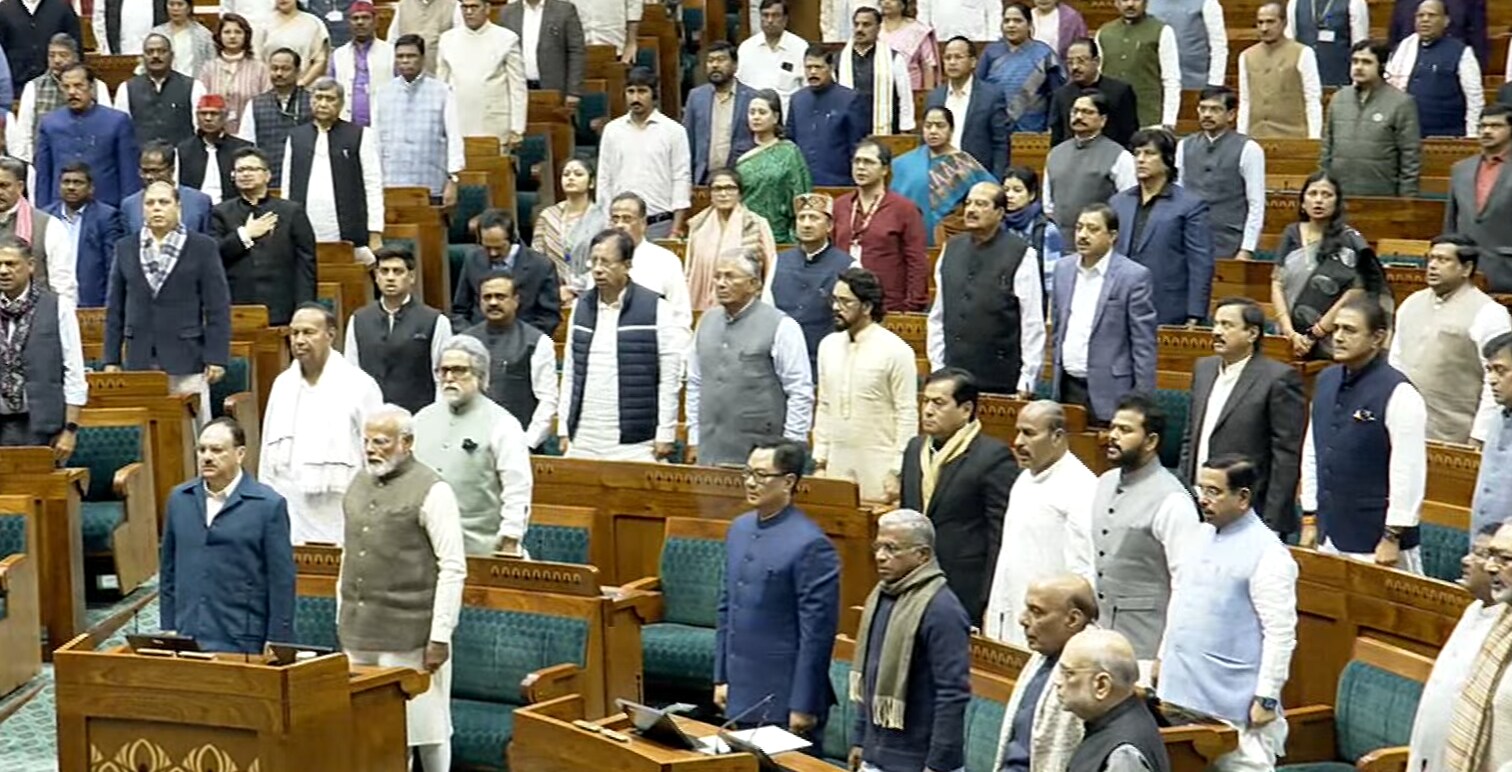
The Economic Survey is likely to project a 6.3-6.8% GDP growth for the next fiscal year, sources said. The Survey 2024-25, authored by Chief Economic Advisor V Anantha Nageshwaran and his team, will be tabled in Parliament this afternoon. India's GDP is projected to grow at a 4-year low pace of 6.4% in the current fiscal on weak manufacturing and investments, as per estimates of the National Statistics Office.
Read more here.
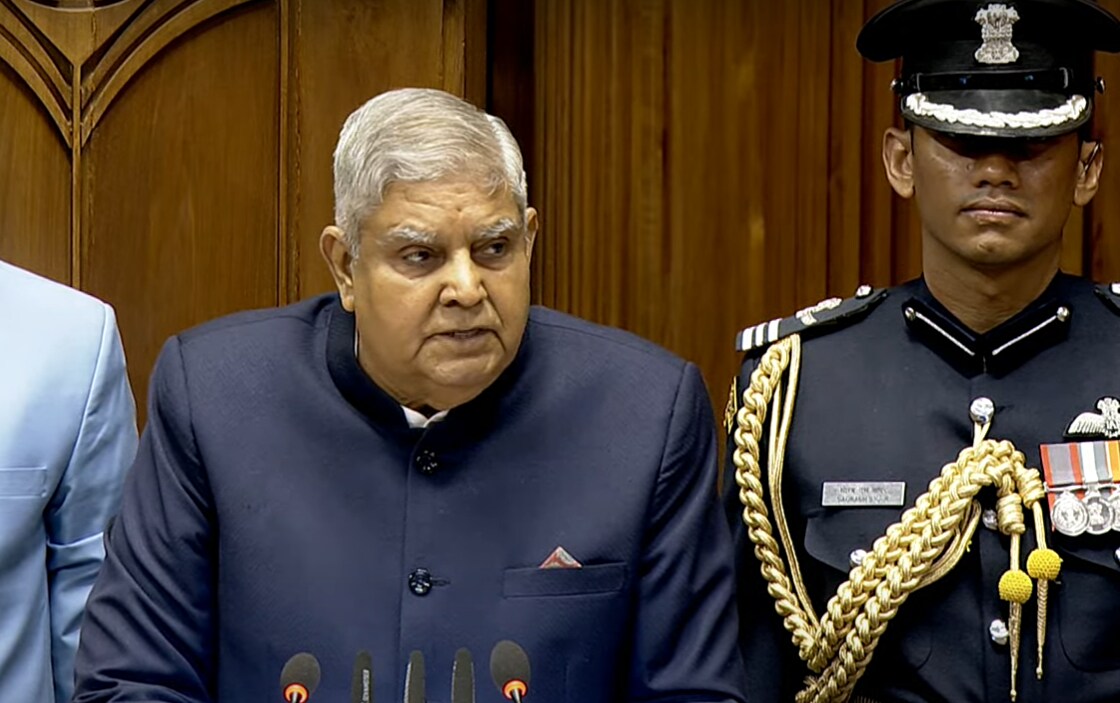
India has won global confidence in platforms like G20, G7, BRICS and SCO as a stable and progressive nation, said President Murmu.
Government working to give appropriate rates to farm produce and increase income of farmers. It has started 'Mission Mausam' at a cost of Rs 2,000 crore to make India weather-ready and climate smart, said President Murmu .
Over 1.75 lakh 'Arogyoa Mandir' have been established in the country to address healthcare needs of Indias, President Murmu said. "Looking at the rising number of cancer patients, custom duty on many cancer medicines has been waived off."
Budget 2025: Full Steam Ahead For Manufacturing, Railways With Capex Boost, Says Sanjeev Hota
DeepSeek To Be Hosted On Indian Servers, Says Ashwini Vaishnaw
President Murmu said, "Credit Guarantee Scheme for MSMEs and e-commerce export hubs are encouraging business in all sectors in the country."
My government has placed special focus on education of youth and creating new employment opportunities for them, said President Murmu.
"Today our youth is bringing glory to the country in every field from startups to sports to space...India is showing the way to the world in the fields of Artificial Intelligence and the adoption of technology."
The government has improved efficieny and transparency in the tax system. "To reduce tax disputes, faceless assesment has been introduced. Taxpayers have been given iberty to choose their tax regime."
President Droupadi Murmu said, "The government has taken steps towards 'One Nation, One Election' and Waqf Amendment Bill"
""The government has taken steps towards 'One Nation, One Election' and Waqf Amendment Bill," President Mumru said.
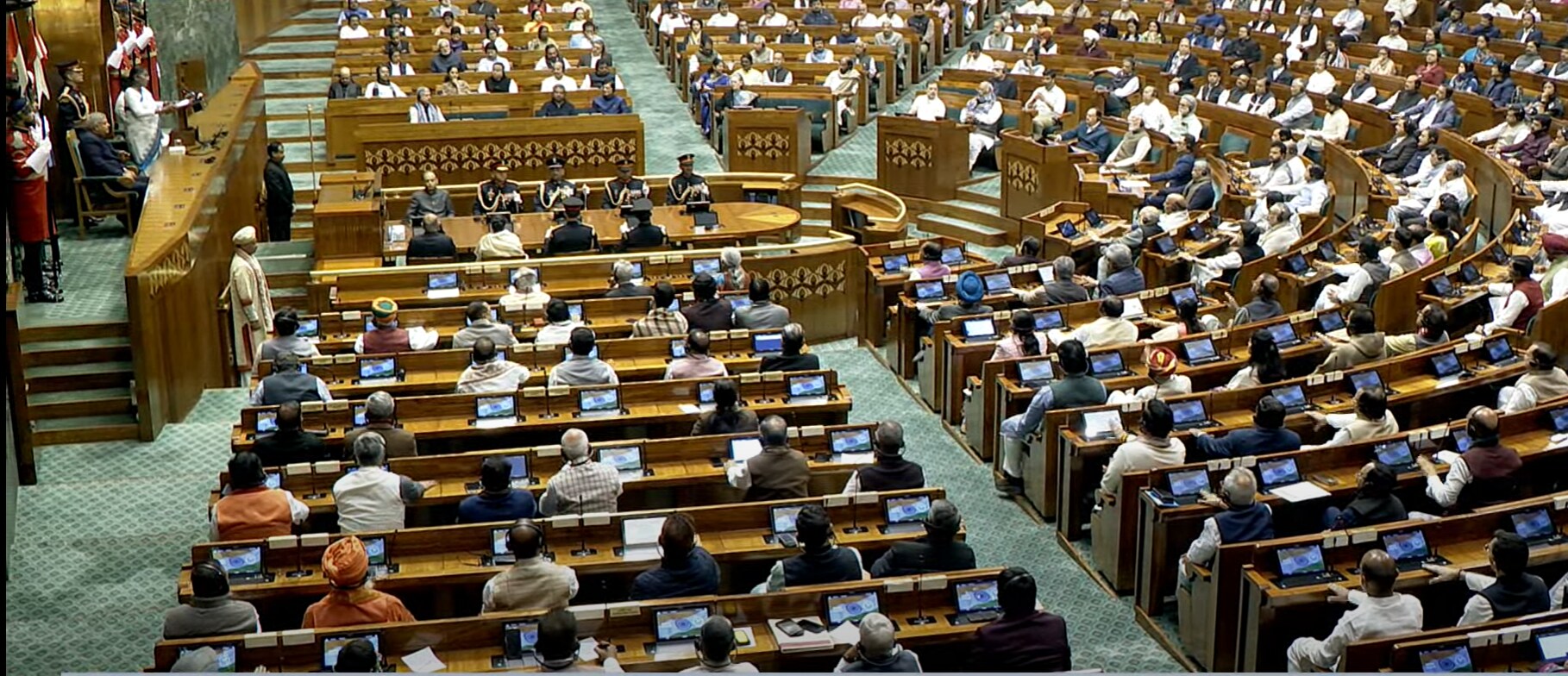
President Murmu condoled the death of devotees who died at the stampede during the Maha Kumbh on Thursday.
Budget 2025: No LPG Compensation To Result In Heavy Losses For OMCs
VIDEO | Union Budget 2025: President Droupadi Murmu (@rashtrapatibhvn) leaves from Rashtrapati Bhavan for Parliament. #BudgetSessionWithPTI #Budget2025WithPTI
— Press Trust of India (@PTI_News) January 31, 2025
(Source: Third party)
(Full video available on PTI Videos - https://t.co/n147TvrpG7) pic.twitter.com/832pR4f5MI
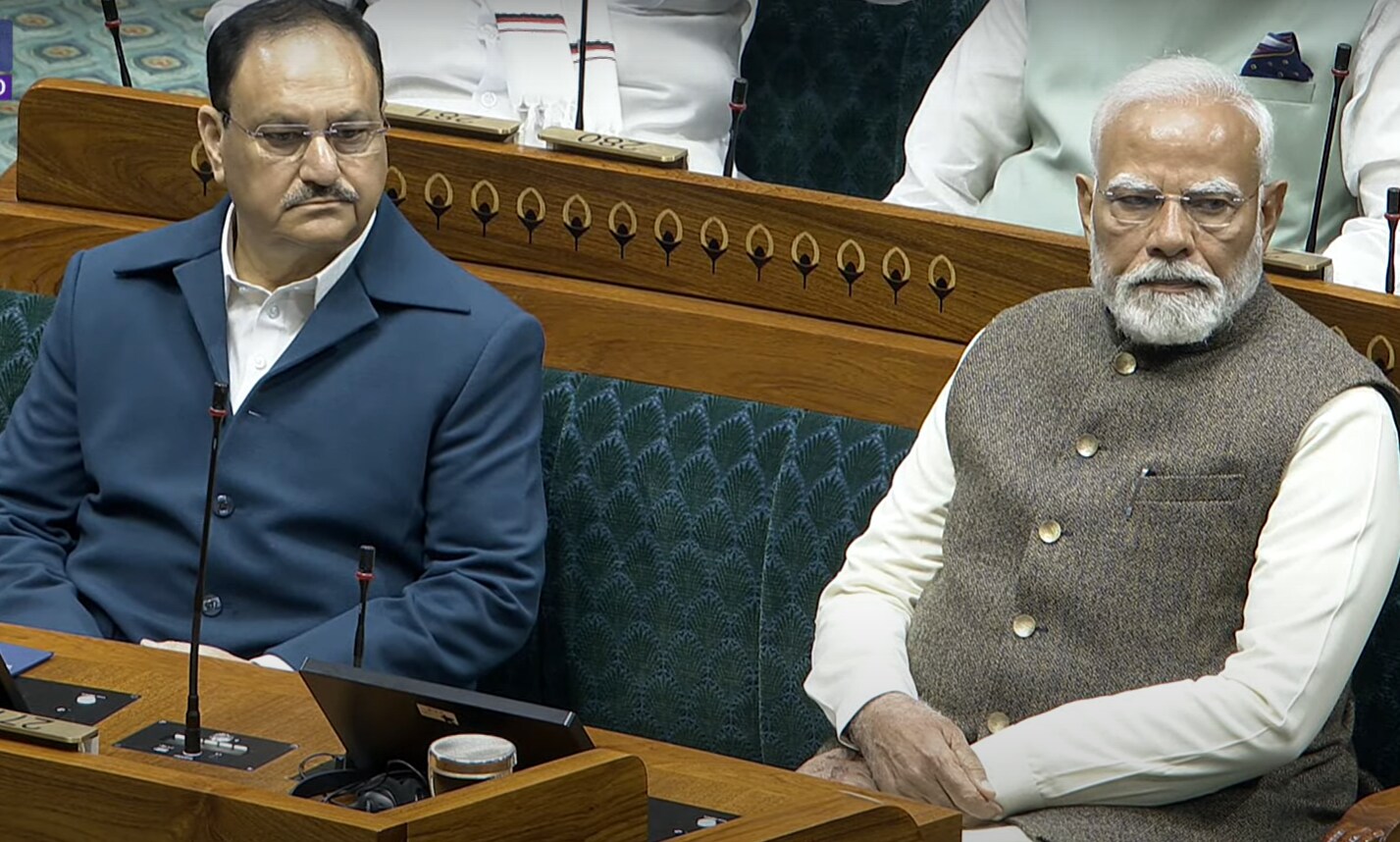
PM Modi said the budget will keep up with the aspirations and expectations of the nation. The key resolve will be "Innovation, Inclusion and Investment."
PM Modi said this year's budget will be a "big gift" for teenagers.
"Today's youth will be the biggest benefeciary of Viksit Bharat. This will be a big gift for teenagers. We will work with the matra of Reform, Perform and Transform. Promises will focus on youth in the budget."
PM Modi said many historic bills will be presented in the budget session for discussion in parliament. "We will work with resolve for all round development. Many decisions will be taken to re-establish the power and pride of women."
"I pray to Maa Lakshmi to shower her blessings on the nation. This is the first full budget of our third term. I can say with confidence that India will be developed nation by 2047, and this budget will provide fresh focus," PM Modi said.
VIDEO | Parliament Budget Session set to begin from today. Visuals from outside the Parliament building.#BudgetSessionWithPTI #Budget2025WithPTI
— Press Trust of India (@PTI_News) January 31, 2025
(Full video available on PTI Videos - https://t.co/n147TvrpG7) pic.twitter.com/RYTBcKtPs0
Essential Business Intelligence, Sharp Market Insights, Practical Personal Finance Advice, Daily Fuel, Gold and Silver Prices and Latest Stories — On NDTV Profit.