Ready To Work On Improving Ties For Sound, Stable Development: Chinese Foreign Minister
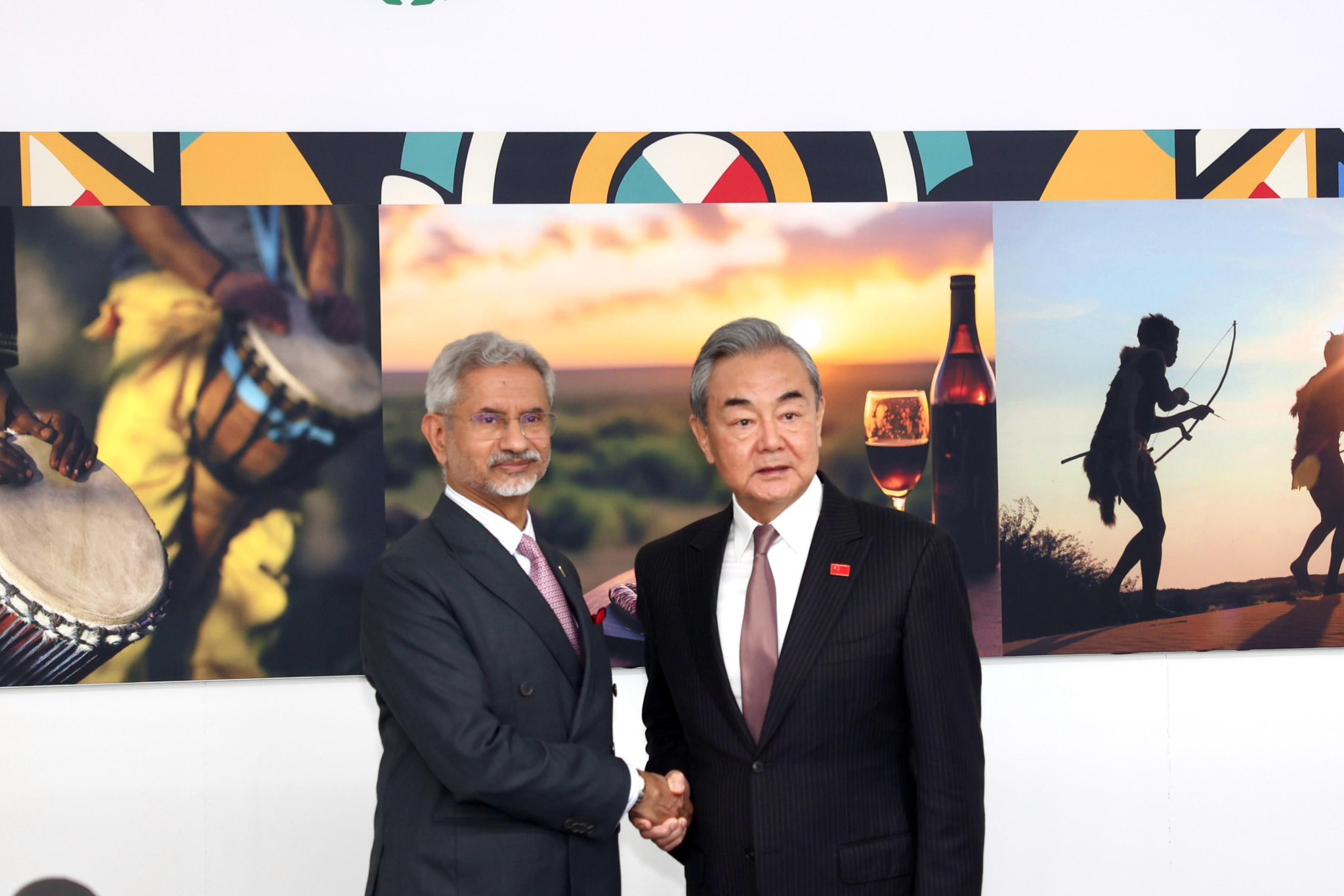
India and China have made “positive strides” and achieved a series of encouraging outcomes at all levels, said Chinese Foreign Minister Wang Yi said on Friday.
This, he said was possible because of last year's breakthrough that ended over fours year of military standoff between the neighbours in eastern Ladakh.
The development follows External Affairs Minister S Jaishankar's comment on India's "very, very unique relationship with China as the only 2 billion plus populated countries in the world", while speaking at an event in London on Wednesday evening.
Jaishankar also added that India wants a relationship "where our interests are respected, sensitivities are recognised and works for both of us”.
According to Wang, the boundary question or specific differences should not affect the bilateral relations between the two countries.
“China-India relations have made positive strides over the past year” after the successful meeting between Prime Minister Narendra Modi and President Xi Jinping at Kazan in Russia, the Chinese foreign minister said in reply to a query on how Beijing views the course of bilateral ties after the two countries ended the prolonged stalemate in the ties.
Both Xi and Modi provided strategic guidance for the improvement of ties at the Kazan meeting, Wang said on the sidelines of the annual session of China's parliament currently underway in Beijing.
On India's emphasis on peace at borders for the development of relations, Wang reiterated, “We should never allow bilateral relations to be defined by the boundary question or specific differences to affect the overall picture of our bilateral ties.”
“As two ancient civilisations, we have enough wisdom and capability to maintain peace and tranquillity in the border areas pending a fair and reasonable solution” to the boundary issue, said Wang, who is also a member of the powerful political bureau of the ruling Communist Party of China.
China believes that as the largest neighbours, both countries should be partners in each other's success.
“A cooperative partnership between the dragon and the elephant is the only right choice for both sides,” he said.
“There is every reason for us to support each other rather than undermine each other or undercut each other,” he said, adding that both the countries “should work with each other rather than guard against each other”.
“This is the only path that truly serves the fundamental interests of the two countries,” Wang said.
“As important members of the Global South, we have the responsibility to take the lead in opposing hegemonism and power politics” he said in apparent reference to the United States.
“We must not only safeguard legitimate rights and interests of our countries but also uphold the basic norms governing international relations,” he said.
"If China and India join hands, the prospect of greater democracy in international affairs and the stronger Global South will improve greatly,” he said.
Pointing to 2025 as the 75th anniversary of China-India diplomatic relations, he said, “China stands ready to work with India to sum up past experience and forge a fast forward and advance China-India relations on the track of sound and stable development.”
—With PTI inputs

-
High US Salaries, No Green Card Certainty: The Financial Calculation Facing Indian H-1B Families

The suspension of PERM processing at eight technology employers does not cancel existing H-1B visas. What it does is force a question many Indian families have been avoiding: is the US salary worth tying your career and family plans to one employer?
-
Unhedged Position: Can India See An Indonesia-Style Time Correction?
The Nifty is trading below levels it first clocked in 2024. Is there, then, as I have suggested in the headline, potential that the current time correction drags on painfully for the next three-five, even ten years?
-
Navigating Friction And Energy Realities: An Analysis Of Marco Rubio's October Visit To India
Occurring at a critical juncture marked by stalled trade negotiations and escalating geopolitical pressures over global energy supplies, the visit offers a profound window into modern US-India relations.
-
India Exports Capital. Why Not Export Trusteeship?
The big question, then, is whether India can build an institution that global borrowers, investors, banks, and lawyers can trust, even without an Indian connection.
-
France's Economy & Politics Are In Crisis | The Reason Why
Let's look at how the French economy and politics evolved under Nicolas Sarkozy, Franois Hollande and Emmanuel Macron.
-
You May Inherit The Business. You Must Earn Its Credibility.
Succession tests the founder's ability to share authority as much as it tests the next generation's readiness to assume it.
-
Signing Deals Is One Thing; Making Them Work Is Another | The Week In Whys
Sometimes, things don't turn out as planned. Indian companies have lost some bids to rivals, some projects won't produce until 2030.
-
FOMC Wall, PERM Suspension, Hospital Stocks | Talking Points This Week
A PERM suspension would directly affect green-card sponsorship rather than H-1B visas, so the near-term earnings impact could remain relatively limited. The key question is whether this marks a new phase in US scrutiny of Indian IT.
-
Everything, Everywhere, All At Once: Dalal Street's Week To Forget | Joining The Dots
Visa curbs, a Starlink spat and cancer drug caps: what connects this week's shocks for Indian markets
-
India Is Going Abroad For Critical Minerals. But It May Take Years To Pay Off | The Reason Why
Although India's steps are in the right direction, they remain modest compared with India's growing dependence.









