Davos 2025: India Should Allow Transmission Framework Deals, Capacity Reservations, Says Hitachi Energy Chief
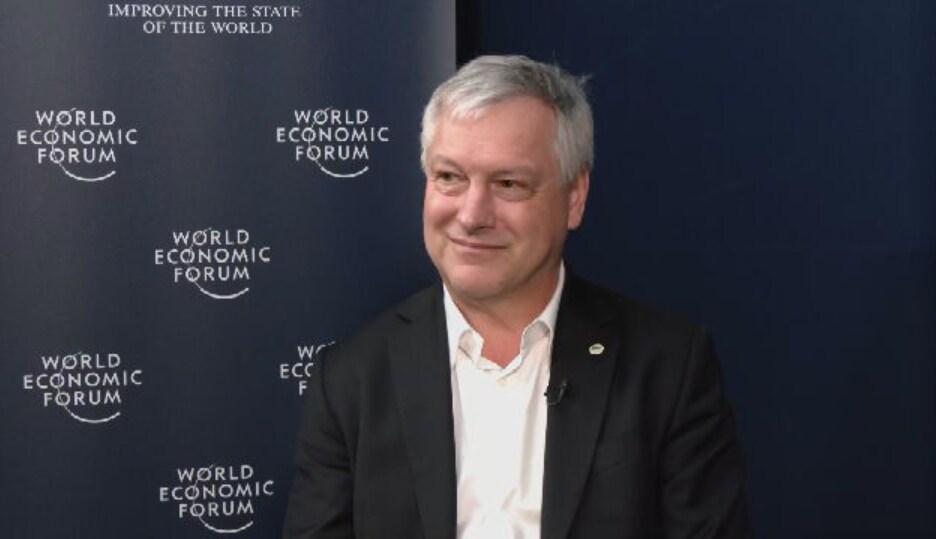
Indian regulators should allow framework agreements and capacity reservations for transmission companies to make investments more predictable, Andreas Schierenbeck, global chief executive officer of Hitachi Energy, said.
"We have to shift from buying one transformer for one project to framework agreements with wide programmes to have investment visibility," Schierenbeck told NDTV Profit, during a special interaction at the World Economic Forum in Davos.
A transmission framework agreement is a contract between transmission licensees that outlines the System Operator-Transmission Owner Code. The STC serves as a code that transmission licensees are required to maintain and comply with at all times.
Hitachi Energy India Ltd. will raise capital up to $500 million to expand operational capacity through issuance of equity shares or other securities or QIP in one or more tranches.
"India now has a very stable frequency, a stable grid, a clear strategy to build solar fields in mountains and battery parks. It is a good long term strategy and very good place to invest," he said, stressing business in the country is geared primarily to meet soaring local demand.
"The electrical grid is becoming the limiting factor for energy transition... The Indian approach is different from that of China, Germany and Japan. We have to adopt locally," he said.
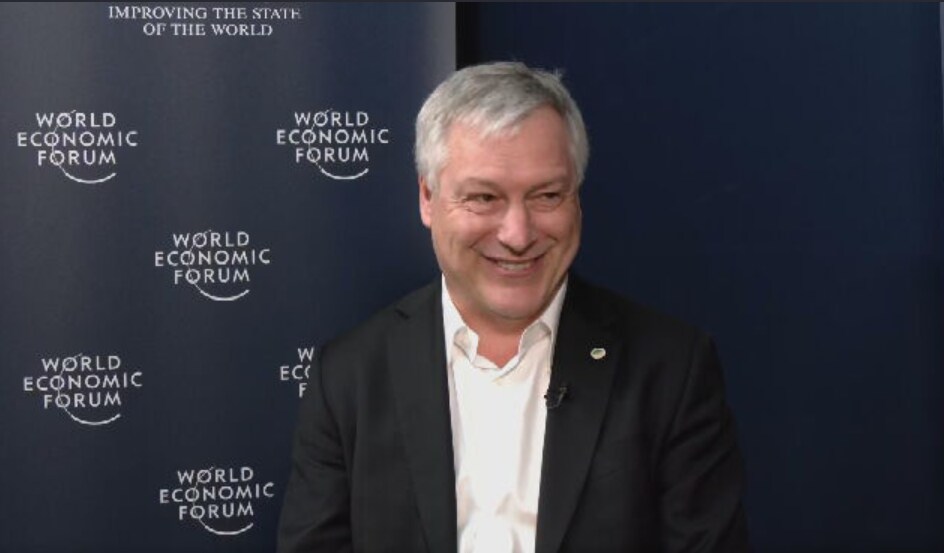
The Hitachi Energy CEO said the company is developing capabilities in power electronics which is important to stabilise the grid.
Talking about the challenges facing global energy transition towards greener alternatives, Schierenbeck said there is always pushback against renewables, whether its onshore or offshore wind, nuclear, or even cable and power lines. "We have to address the fears of the people. We have to add more generation assets and grid capacity."
The Hitachi Energy CEO said the company is developing capabilities in power electronics, which is important to stabilise the grid. Power electronics is the use of electronics to control and convert electric power and involves processing high voltages and currents to deliver power.
"You need a lot of power electronics to balance frequency and connect grids across countries. We are investing heavily in that," he said. "There is not a single grid in the world that relies on only one source. We have everything on the technology front, we just need to apply it," he added.

-
Unhedged Position: Can India See An Indonesia-Style Time Correction?

The Nifty is trading below levels it first clocked in 2024. Is there, then, as I have suggested in the headline, potential that the current time correction drags on painfully for the next three-five, even ten years?
-
Navigating Friction And Energy Realities: An Analysis Of Marco Rubio's October Visit To India
Occurring at a critical juncture marked by stalled trade negotiations and escalating geopolitical pressures over global energy supplies, the visit offers a profound window into modern US-India relations.
-
India Exports Capital. Why Not Export Trusteeship?
The big question, then, is whether India can build an institution that global borrowers, investors, banks, and lawyers can trust, even without an Indian connection.
-
France's Economy & Politics Are In Crisis | The Reason Why
Let's look at how the French economy and politics evolved under Nicolas Sarkozy, Franois Hollande and Emmanuel Macron.
-
You May Inherit The Business. You Must Earn Its Credibility.
Succession tests the founder's ability to share authority as much as it tests the next generation's readiness to assume it.
-
Signing Deals Is One Thing; Making Them Work Is Another | The Week In Whys
Sometimes, things don't turn out as planned. Indian companies have lost some bids to rivals, some projects won't produce until 2030.
-
FOMC Wall, PERM Suspension, Hospital Stocks | Talking Points This Week
A PERM suspension would directly affect green-card sponsorship rather than H-1B visas, so the near-term earnings impact could remain relatively limited. The key question is whether this marks a new phase in US scrutiny of Indian IT.
-
Everything, Everywhere, All At Once: Dalal Street's Week To Forget | Joining The Dots
Visa curbs, a Starlink spat and cancer drug caps: what connects this week's shocks for Indian markets
-
India Is Going Abroad For Critical Minerals. But It May Take Years To Pay Off | The Reason Why
Although India's steps are in the right direction, they remain modest compared with India's growing dependence.
-
When Everyone Has AI, What Gives You An Edge?
India's young workforce is entering an uncertain world of work where powerful AI tools are becoming widely accessible. The advantage will belong to those who combine deep expertise with digital fluency, and the distinctly human capabilities that technology cannot manufacture.









