What To Expect From RBI's June Monetary Policy Review And How To Prepare Financially
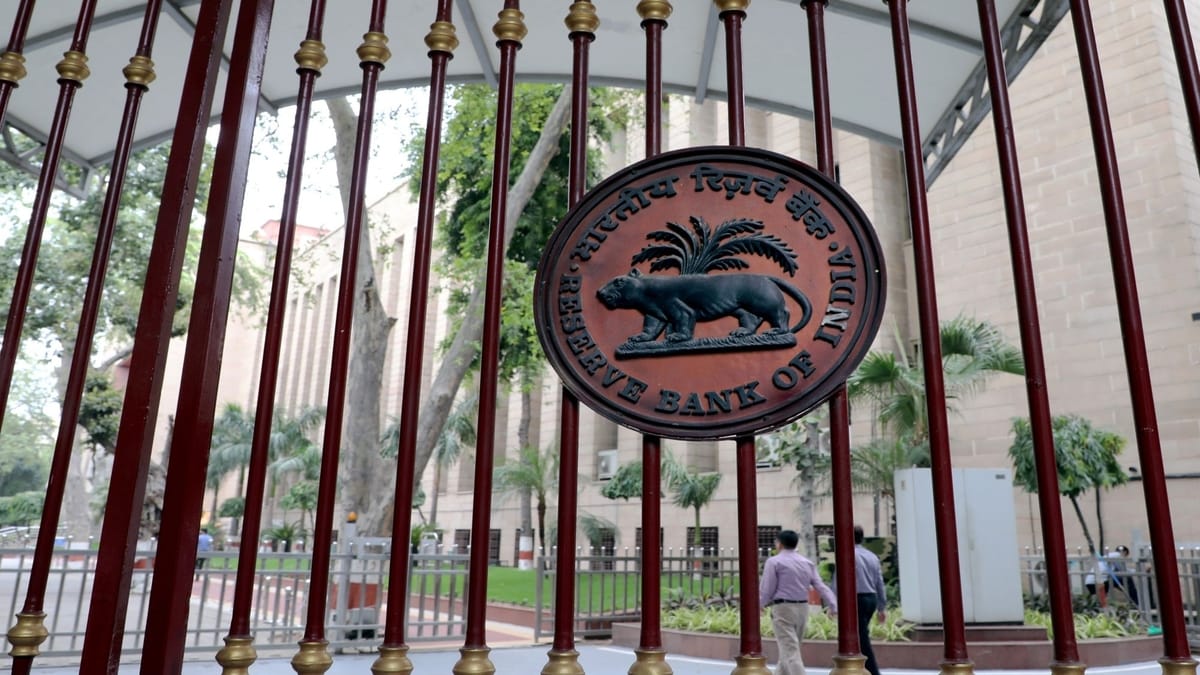
The Monetary Policy Committee (MPC) of the Reserve Bank of India is all set to meet from June 4 to 6. It is expected to continue to cut the benchmark lending rate as India's retail inflation came down to its lowest in nearly six years.
This comes after better-than-estimated GDP growth during the January-March quarter. Interestingly, all 30 economists polled by Bloomberg are expecting the MPC to continue with the rate cut for the third consecutive time. In June, the RBI is expected to bring down the benchmark lending rate, or the repo rate, by another 25 basis points to 5.75%. In this, one basis point is one-hundredth of a percentage point.
Meanwhile, a report by the State Bank of India (SBI) said that the apex bank is likely to go for a 50 basis points repo rate cut in the upcoming monetary policy review.
In the January-March period, the GDP growth rate witnessed a four-quarter high to reach 7.4%. The GVA rose 6.8% during the fourth quarter. For the full year, the GDP is estimated to witness a 6.5% growth, which is similar to the second advance estimate of 6.5%.
Previous Cycles
The RBI MPC reduced the key interest rate by 25 bps each during the February and April cycles. This brought the repo rate to 6%.
In the April policy, the six-member panel headed by RBI Governor Sanjay Malhotra even decided to change the stance from neutral to accommodative.
How To Prepare Financially?
The repo rate serves as a major tool to control liquidity, inflation, as well as economic stability. At this rate, the RBI lends money to the commercial banks in the country. This means that the repo rate has a key influence on the lending rates, especially when it comes to loan interest rates.
A cut in the repo rate makes borrowing cheaper for the commercial banks, which can look forward to lowering their lending rates. This ultimately leads to a lowering of lending rates and making EMIs more affordable and better terms for people seeking loans.
A projected repo rate cut of 25-50 basis points could positively impact borrowers as it can gradually lead to an interest rate revision by the bank. This may lead to a reduction in equated monthly instalments (EMIs) on home and personal loans.
So far, a 50 bps cut in the repo rate has been witnessed since February 2025. Following this, several banks in the country have brought down their repo-linked lending rates. Also, the lenders have lowered the marginal cost of funds-based lending rate (MCLR).
Hence, borrowers can expect an interest rate revision by banks, following another rate cut by the RBI, if any, in the upcoming June monetary policy review.
Pradeep Aggarwal, Founder and Chairman, Signature Global, told PTI that the RBI might offer major relief to homebuyers by reducing the repo rate by 25 basis points.
Aggarwal suggests that another rate cut at this juncture "would act as a catalyst for increased housing demand across segments." He added that both first-time homebuyers and investors will likely be encouraged to enter the real estate market with this change.

-
Blue Wave Will Derail the AI Trade but Won't Dismantle the AI Era | Unhedged Position

The Democrats' sweep of the US Congress will see politics collide with economic forces both over the long and short term.
-
It's Time To Take The GST Council's Bet On Trust Global
Payment records can prove India's services exports, and clear, proportionate rules can bring foreign digital sellers into the tax net.
-
Opinion | India at 38: From Innovation Overperformer to Innovation Powerhouse
India now has 453 VC-backed deep science startups, 18 of them late-stage, after 117 percent growth since 2020. Laurus Labs, at USD 9.3 billion, is the most valuable deep science company in any middle-income economy outside China.
-
Navigating Energy Crossroads: S Jaishankar's Call For Diversified Supply Chains At G20 Ministerial Meeting
As geopolitical fault lines continue to test maritime trade routes and commodity flows, Jaishankar's message remains pertinent: true economic resilience requires open markets, protected transit lines, and a genuine commitment to multilateral cooperation rather than coercion.
-
Indians Are Travelling, But Not Every Journey Is A Holiday | The Week In Whys
Pilgrims, patients and working women are the real travellers, and the system hasn't quite caught up with them.
-
Getting To Work Costs Women More | The Reason Why
It is not just about women paying more than men. It is about women paying much more in cities than in villages.
-
AI Bias In Investing Cannot Be Eliminated, But It Can Be Governed
Framing is a particularly important example as identical financial information presented in terms of gains rather than losses can lead an LLM to reach a different assessment.
-
Joining The Dots | Dark Skies, Steady Diya: Why Hope Holds This Diwali
With war, a weak rupee and foreign outflows weighing on sentiment, policymakers at the NDTV World Summit and market veterans at NDTV Profit Ignite: Diwali Edition offered the same advice: stay invested and filter out the noise.
-
The Curious Case of Equitas Small Finance Bank And A CEO Who Quit For Stock
PN Vasudevan believes persistent investor concerns over a perceived conflict of interest had become a governance overhang on Equitas Small Finance Bank's stock, even as the lender improved profitability and asset quality.










