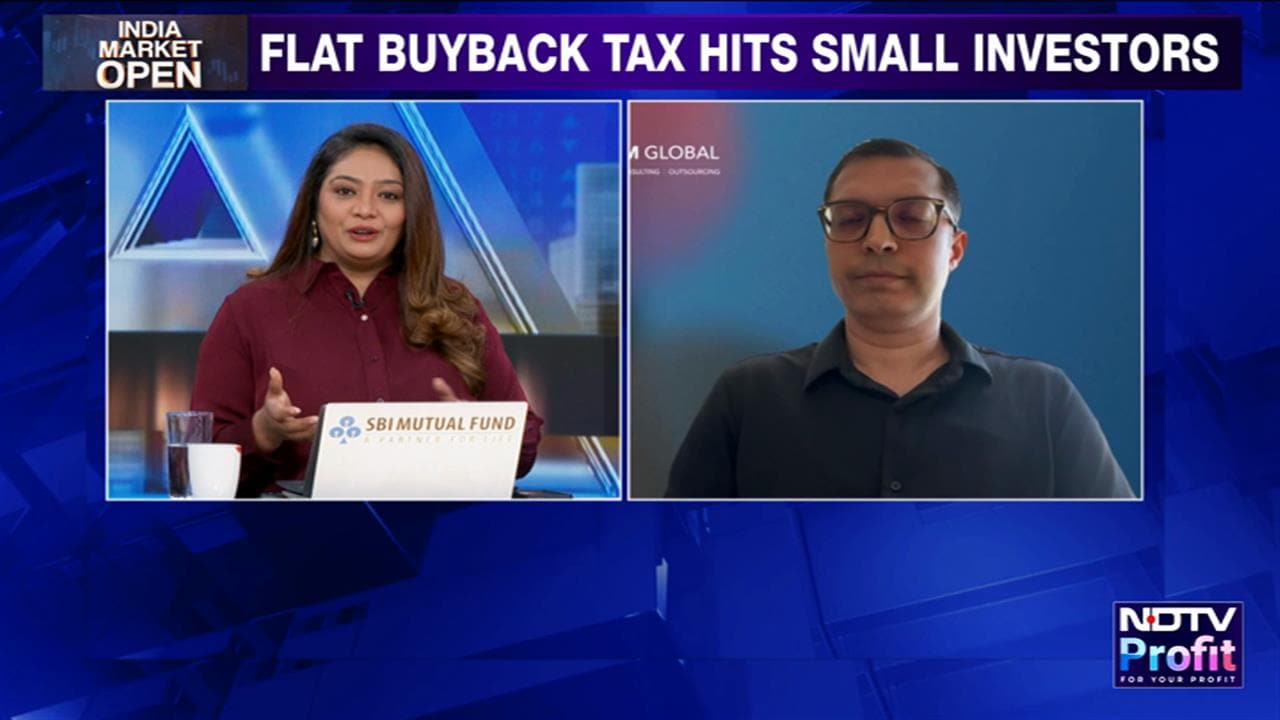
As the new financial year approaches, most salaried employees are reviewing their tax slabs. But according to Amarpal Chadha, Tax Partner at EY India, the bigger story may lie elsewhere - in how your perks are valued. Speaking on NDTV Profit, Chadha explained that beyond the old-versus-new tax regime debate, the draft Income Tax Rules under the Income Tax Act, 2025 introduce important changes to the way perquisites are calculated. And those changes directly affect how your salary is taxed.
Chadha emphasized that employees often overlook the concept of perquisites — non-cash benefits provided by employers.
"These are benefits in addition to the cash salary that is given," he explained, citing examples such as company-leased cars, meals provided in office, gifts, education reimbursements, medical benefits and house rent allowance (HRA). While slab announcements apply to taxable salary, perquisites are taxed separately based on prescribed valuation rules. The draft rules now revise several of these limits.
For instance, Chadha pointed out that the perquisite value of a smaller company car, earlier taxed at Rs 1,800 per month, will now rise to Rs 5,000. For larger cars, the increase is from Rs 2,400 to Rs 7,000. The driver benefit, previously valued at Rs 900 per month, will move up to Rs 3,000. "In some cases, the tax liability will go up because of the perk value," he noted.
ALSO READ: Budget 2026: Are You A Salaried Taxpayer? Here's What Changes For You
HRA: Only If You're in the Old Regime
One important clarification he made was that HRA benefits are available only under the old tax regime. While the revised rules expand the 50% metro exemption bracket to include additional cities such as Bengaluru, Ahmedabad and Hyderabad, this benefit is irrelevant for those who have opted for the new regime.
And, according to Chadha, more people are choosing that route. "I am seeing personally a lot of the younger generation just love the new tax regime because of its simplicity," he said. With more attractive slab rates, many are willing to forego deductions.
Inflation Reality Check
However, not all changes tighten the screws. Chadha highlighted that meal allowance limits have been raised from Rs 50 per meal to Rs 200. The medical loan benefit cap has jumped from Rs 20,000 to Rs 2 lakh.
"These are being aligned with financial reality," he said, pointing to inflation and rising costs as the broader backdrop. In other words, while certain perks become more expensive from a tax standpoint, others become more generous.
ALSO READ: Taxpayers Prefer Convenience As 72% Choose New Tax Regime: Zerodha's Nithin Kamath
Understanding Your CTC Structure
Chadha also broke down how a typical salary is structured. "Let's say somebody's CTC is 100," he said. "Typically, 35-40% would be basic salary." Around 50% of that basic could form HRA or company accommodation. Roughly 20% may go toward retirals such as EPF or NPS contributions.
What remains, often 20-40% of CTC, is allocated across allowances and benefits. It's this portion that will feel the impact of revised perquisite valuations. On bonuses, Chadha clarified that variable pay is usually over and above fixed pay, depending on company structure.
Payroll Systems Will Change
Chadha was clear that companies will need to update payroll systems to reflect the revised limits. "All companies would have to bring in these new rules... This will impact each and every company in their payroll calculations," he said. However, he does not see these tax rule changes directly impacting base salary structuring under labour laws. "This only provides the taxation limits changing," he clarified.
For employees, Chadha's advice is straightforward: review your salary structure before the new financial year begins. Understand which regime you are under. Assess how revised perquisite valuations affect you.
ALSO READ: Income Tax Rules Revised: Perk Limits Raised, Crypto Reporting Toughened
Essential Business Intelligence, Continuous LIVE TV, Sharp Market Insights, Practical Personal Finance Advice and Latest Stories — On NDTV Profit.