The More Food Turns Into Fuel, The Harder It Is To Read Agricultural Markets | The Reason Why
A policy designed to reduce dependence on imported fuel can create new pressures elsewhere in the food economy.
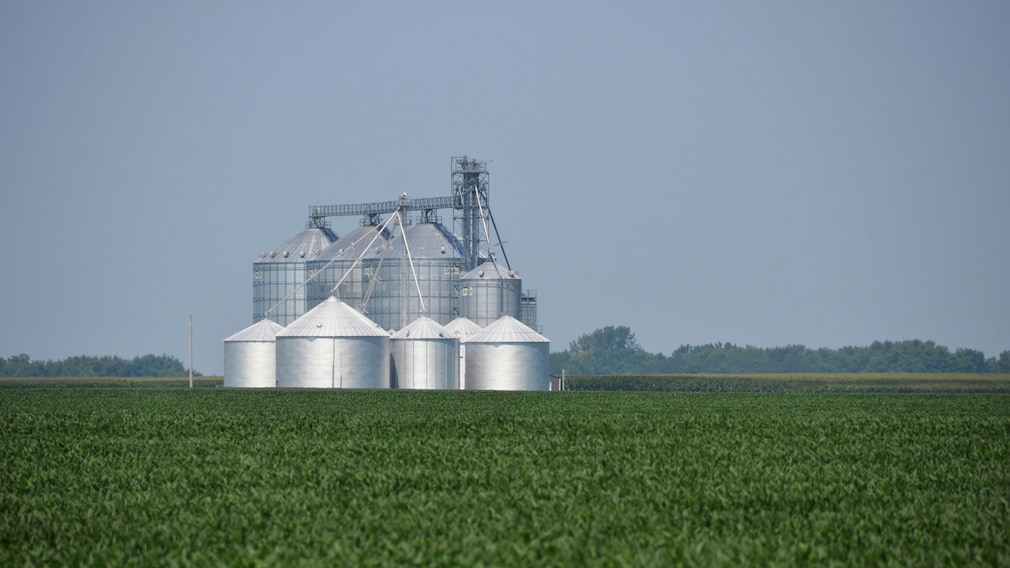
In a crisis, governments ensure their people have enough food and fuel. With biofuels, managing that has got a little more complicated. The same crops that we treat as food now go into our fuel tanks.
Countries are using crops they produce in large quantities to make biofuels. Indonesia, for instance, uses palm oil to make biodiesel. Brazil makes ethanol with sugarcane, and India with maize and rice. These are great strategies. Countries can reduce crude oil imports and save foreign exchange. But the loop doesn't end here.
These decisions impact not only energy markets but also agricultural markets. They can influence what farmers grow, how much they earn, and where they sell. That means this becomes an additional concern for governments. As more of these crops are diverted towards fuel, less may be available for food and other uses. And because the world is connected so deeply, these decisions create a ripple effect.
India's Own Dilemma With Biofuels and Food
India has seen it happen with its ethanol. Maize became the primary feedstock for ethanol in India. Earlier, it was sugarcane and related products. But crop availability and economics changed over the years.
I have analysed the side effects of ethanol in my earlier article, Ethanol Blending Isn't Just a Water Debate. I have discussed how higher demand for maize impacts poultry and dairy feed costs, while cheaper distillers' grains (a by-product of ethanol production) can disrupt markets for wheat bran and soybean meal.
A policy designed to reduce dependence on imported fuel can therefore create new pressures elsewhere in the food economy.
India's Edible Oil Dependency
India is one of the world's largest consumers and importers of edible oils.
India imported around 17 million tonnes of edible oils in the November 2025–October 2026 oil year. That includes 8 million tonnes of palm oil and 6 million tonnes of soybean oil. These two make up more than 80% of India's edible-oil import basket.
Indonesia and Malaysia account for 80% of India's palm oil imports, while 77% of soybean oil comes from Argentina and Brazil. So, what happens in these countries impacts India too.
Palm Oil Supplies May Fall
Indonesia and Malaysia dominate the global palm oil industry. Both are using palm oil as biodiesel feedstock.
Indonesia has increased palm oil blending faster. In 2020, it rolled out B30 (30% palm oil). In 2026, it planned to roll out B50 but scrapped it. It retained B40.
The programme used around 8 billion litres of palm oil in 2020. In 2025, it went up to nearly 15 billion litres. It is expected to go higher next year. Moreover, it has raised export duty on palm oil. That makes exporting more expensive. Overall, it means more palm oil will be used for domestic fuel production than exports.
Malaysia's pace is slower than Indonesia's. It introduced B10 in 2019 and is moving slowly towards B15. It will use more palm oil for biodiesel next year, but the impact on exports will be modest compared to Indonesia.
The Malaysian Palm Oil Council estimates that combined production in Indonesia, Malaysia and Thailand could fall from 73 million tonnes in 2026 to 71 million tonnes in 2027. Indonesia is expected to account for most of the decline.
Soybean Oil Stable, But Under Pressure
Argentina is the world's largest exporter of soybean oil and India's biggest supplier. Brazil is another major supplier.
In Argentina, soybean oil production is expected to grow marginally next year. Exports may also remain unchanged. They jumped last year because the government suspended export duties, so the base is now higher. The biodiesel industry is also relatively stagnant. This means Argentina is unlikely to add more to global supplies next year than this year.
Brazil's outlook is different. Its production may increase by 4%. But how much it could export depends on how much it crushes. Crushing produces both soybean oil and soybean meal. Brazil exports raw soybeans too. So, the economics of the crushing depends on demand and prices for all products. A rise in soybean oil demand alone does not tell us how much more the country will produce or export.
Weather adds more pressure. Some parts may receive more rainfall, while some may have drier conditions. Both could impact soybean yields and harvests. We will understand these dynamics as the season progresses.
What does this mean for India?
India has the flexibility to import palm, soybean or sunflower oil. Those are usually alternatives to one another. But it also has some limits. Sometimes, the prices of alternatives may rise if demand spikes unexpectedly. But there is another side too. Higher prices may encourage farmers to grow more oilseeds, but the process takes time.
Ultimately, what happens with the weather, crop processing and government policies in these countries affects how much India pays for its edible-oil imports.
Final Take
Biofuels are an important part of dealing with energy insecurity. But as more agricultural commodities serve both food and fuel markets, the economics of farming and global trade are changing too.
It's a bit like the butterfly effect. A farmer's small decision to sow one crop in a small island may shift an entire industry in another part of the world. That's weird, but interesting in a different way.
Predicting these outcomes is hard, even when we know who is sowing what, how prices might swing and what will be in demand. But as food and fuel markets become more interconnected, the consequences are getting harder to ignore.
ALSO READ: One El Nino, India Can Handle. Two Could Break The Granary
-
Your iPhone Costs 12 Grams Of Gold, A Car About 100. What Does Your Life Weigh?

Measured in rupees, almost everything looks more expensive than it did a generation ago. Measured in grams of gold, a lot of it has become cheaper.
-
Gold Is Rs 22,000 Cheaper Than A Month Ago. Should You Buy Amid The Wedding Season?
Gold's potential slide to $3,500 could save around Rs 4,700 per 10 grams, but a soft inflation print could just as easily push prices back up. One way to split the risk is to buy in parts, some now and the rest after the Fed's Dec. 9 decision.
-
AI Agents Are Gaining Power. Who Governs Them?
Artificial intelligence agents promise to transform productivity by moving machines from assisting decisions to executing them. But as organisations delegate greater authority to these AI-agents, they must first establish who controls that authority and who remains accountable when things go wrong.
-
Why Swapping Your Old Gold Can Trigger A Rs 5 Lakh Tax Bill, And How You Can Avoid It Legally
Swapping old gold for new is taxed as a sale and a fresh purchase. Getting your own gold remade can cut most of that bill, though it has its own costs.
-
The AI Trade is Done. The Real Opportunity for Investors Starts in 2027 | Unhedged Position
As pureplay AI stocks plunge and circular, capex-led financing unwinds, 2027 is set to be a year of reckoning for AI companies. Yet the bust clears the way for a better opportunity for investors in 2027 -- shifting the spotlight from AI builders to the companies using AI.
-
Leadership As Mission: Why The Age Of AI Demands More Human Leadership
Debjani Ghosh examines how AI is changing leadership, arguing that its success must be measured by its impact on people and the accountability of those guiding its use.
-
We May Need Another Tukaram Mundhe To Fight Air Pollution | The Reason Why
Developers may install basic measures such as sprinklers and green nets, resume work, and continue violating rules when this equipment stops working.
-
Extracting Value From Battery Scrap Could Be Challenging For India | The Reason Why
A discarded lithium-ion battery still contains valuable materials such as lithium, nickel and cobalt. These can be recovered and reused. When such batteries are crushed and shredded, they produce a dark powder called black mass.
-
One El Nino, India Can Handle. Two Could Break The Granary
India's grain stocks can absorb one bad year, but a second El Nino could drain the buffer in two to three years, economists say.
-
India's Troika Of Good Luck | Joining The Dots
As Jensen Huang's exit drags Nvidia down, a cooling AI trade and resilient earnings have revived investor interest in India. A likely RBI rate hike looms.









