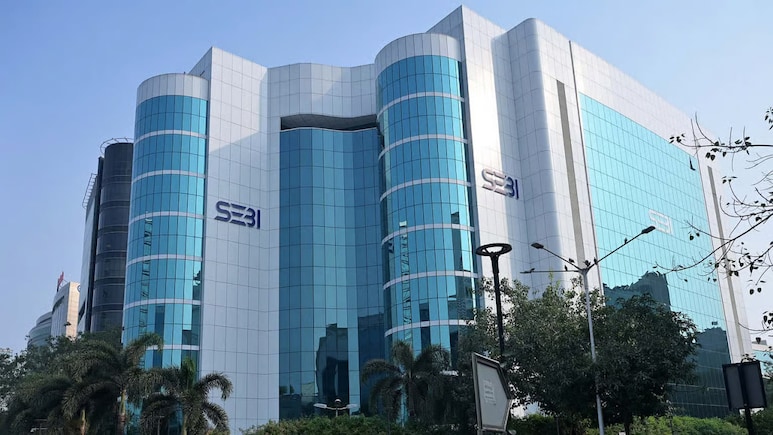
The Securities and Exchange Board of India's proposal to allow foreign portfolio investors to net their cash obligations arising from same-day buy and sell trades is being welcomed by market participants and legal experts, who say the move could reduce funding costs, improve liquidity and enhance overall market efficiency.
Under the current settlement system, the FPIs must fund their purchase obligations in full even if they have sold other securities on the same day. Sale proceeds are credited later, forcing investors to rely on separate borrowing lines. Experts say this creates unnecessary operational friction and increases funding costs.
Sunil Subramaniam, chief executive officer of Sense and Sensitivity, said the proposal could have a "huge impact" on how the FPIs manage their capital.
Also Read | Layoffs Are Rising In Tech, But These Skills Are Helping People Unlock Better Pay
"Today, if an FPI is buying stocks in one sector and selling in another on the same day, they cannot use the sale proceeds to fund the purchases. They need a separate borrowing line, which involves funding and rollover costs," he said. "When the sale proceeds come in later, that borrowing line gets reset. So there is a funding cost and a changeover cost, and it's huge."
Legal experts point out that the proposal is not just about convenience, but also about risk management and capital efficiency.
"The netting of funds serves to mitigate settlement and operational risks and facilitates more efficient utilization of capital, funding resources, and balance sheet capacity," said Yogesh Chande, partner at Shardul Amarchand Mangaldas & Co. "FPIs are, thereby, enabled to forecast and manage their cash flows with greater accuracy and certainty."
Chande added that the benefits extended to the broader financial ecosystem as well. "In the case of banks effecting fund transfers for FPIs, such netting reduces the volume of foreign exchange transactions by decreasing the number of underlying payment flows," he said.
Market experts pointed out the impact of fund netting was particularly significant during periods of heavy trading activity, such as index rebalancing days.
Subramaniam also explained that the daily FPI flow data often understates the actual scale of market activity. "In a typical week, gross FII sales could be around Rs 60,000–70,000 crore. Even if the net flow reported is just Rs 3,000 crore, all that buying still needs to be funded separately under the current system," he said.
He added that when indices like the NSE Nifty 50, BSE Sensex, MSCI or FTSE rebalance, passive funds are forced to buy and sell large volumes simultaneously. "There is massive parallel buying and selling, but the funding requirement is enormous," he said.
From a legal standpoint, while the underlying settlement obligations of the FPIs remain unchanged, the funding mechanics will shift from a gross to a net cash settlement model.
"FPIs would continue to bear responsibility for ensuring timely settlement of their net fund obligations," said Moin Ladha, partner at Khaitan & Co. "Custodians would assume an enhanced role in accurately computing net positions and facilitating operational readiness, while clearing corporations would need to recalibrate their settlement processes and risk management frameworks."
Ladha added that same-day netting generally reduces counterparty exposure by lowering gross settlement values and liquidity requirements, but also increases reliance on strong operational controls.
"Any slippage in timely trade confirmations or securities delivery could compress funding timelines and create settlement pressures," he said.
Experts believe the move could also improve market quality for retail investors, especially on index rebalancing days when bid-ask spreads tend to widen.
"With better liquidity, spreads should narrow and price discovery will be more stable," Subramaniam said.
However, safeguards have been built into the framework to prevent misuse. The FPIs will not be allowed to net buy and sell trades in the same stock.
"If you buy a stock in the morning and sell the same stock in the evening, you cannot use same-day netting. It only applies if you are selling Stock A and buying Stock B," Subramaniam said. "This prevents excessive intraday churn and market timing, which is healthy for the market."
Legal experts added that some regulatory and operational changes will be required before the new system can be implemented smoothly.
"Effective implementation would necessitate amendments to clearing corporation rules, along with detailed operational guidance from SEBI," Ladha said. "Custodial and settlement documentation will also need to be revisited to clearly define eligibility criteria, operational cut-offs, and risk allocation."
Chande added that custodians would need to upgrade their systems to allow confirmations based on netted obligations, but the overall transition is expected to be manageable.
In its consultation paper, SEBI clarified that the proposed netting framework is aimed at improving settlement efficiency and reducing funding pressure on the FPIs, while ensuring adequate risk controls remain in place. The regulator has invited feedback from market participants by Feb. 6 before finalising the rules, with implementation likely to follow after necessary changes to clearing and settlement systems.
Essential Business Intelligence, Sharp Market Insights, Practical Personal Finance Advice, Daily Fuel, Gold and Silver Prices and Latest Stories — On NDTV Profit.