Premier Energies IPO: All You Need To Know
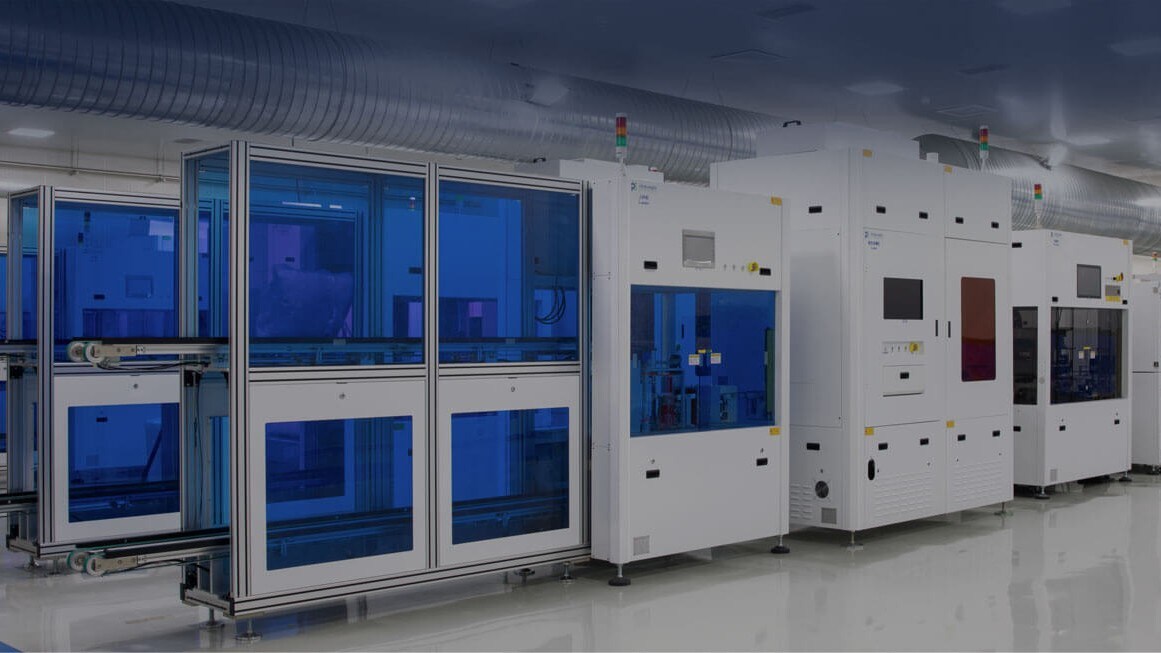
Premier Energies Ltd. plans to raise up to Rs 2,830.4 crore through an initial public offering, which is set to open on Aug. 27. The IPO consists of a fresh issue of 2.87 crore shares, totaling Rs 1,291.4 crore, and an offer for sale of 3.42 crore shares, aggregating Rs 1,539 crore.
The solar cell manufacturer has set a price band of Rs 427–450 per share with a face value of Re 1 each for the issue, which closes on Aug. 29. At the upper price band, the market cap of PEL stands at over Rs 20,200 crore, according to NDTV Profit's calculations.
The minimum lot size for retail investors is 33 shares, requiring an investment of at least Rs 14,850. For small non-institutional investors, the minimum lot size is 462, amounting to Rs 2.07 lakh. The minimum lot size for big non-institutional investors is 2,244, totaling over Rs 10 lakh, according to the red herring prospectus.
Issue Details
Issue opens: Aug. 27.
Issue closes: Aug. 29.
Issue price: Rs 427- 450 per share.
Total issue size: Rs 2,830.4 crore.
Fresh Issue: Rs 1,291.4 crore.
Offer for sale: Rs 1,539 crore.
Bid lot: 33 shares.
Listing: BSE and NSE.
Use Of Proceeds
The company plans to utilise the net proceeds for the following objects:
To invest in subsidiary Premier Energies Global Environment Pvt. for part-financing of the establishment of a 4-gigawatt solar PV TOPCon cell and 4 GW Solar PV TOPCon module manufacturing facility in Hyderabad.
General corporate purposes.
PEL plans to spend up to Rs 968.6 crore for the investment in its subsidiary. Around Rs 484.3 crore will be deployed in the current financial year, while Rs 484.3 crore will be deployed in the next fiscal.
Business
Founded in April 1995, PEL manufactures integrated solar cells and solar panels. The company is also the second-largest solar cell and module manufacturer in India as per capacity. As of March, it has 16.2% market share in the total solar cell-installed capacity in India
The company has five manufacturing units in Hyderabad. Its total annual installed capacity for solar cells stands at 2 GW, while its solar module production capacity is 4.13 GW.
Order Book
As of July 31, the company had a total order book of Rs 5,926.6 crore, out of which 25% are from the public sector undertakings and government entities, while the rest is from private players.
The order book includes orders for non-domestic content requirement solar modules, domestic content requirement solar modules, solar cells and EPC projects.
Shareholding Pattern
The total outstanding number of shares for PEL before the initial public offering stands at 42.2 crore. Promoter and promoter groups hold 72.23%, while 26.12% of equity is classified as public shareholding, which includes shares held by the firm's senior management, directors and other authorised representatives. The shareholding by employee trust stands at 1.65%.
Post the public offering, the promoter shareholding will decrease to 60.04% and public shareholding will expand to 38.41%, as per NDTV Profit calculations.
Financials
PEL revenue has grown a compounded annual growth rate of 106% over the last three years. The company has also seen a turnaround in terms of financials. In fiscal 2022, the company had posted a net loss of Rs 14.4 crore, while it posted a net profit of Rs 231.4 crore in the last fiscal.
The margin has also improved significantly over the last three years to 15.2% in 2023–24 from 3.9% in fiscal 2022.
Key Risks
The company's top 10 customers account for 66.2% of the total revenues. Loss of any key customers could impact business operations.
All of the company's manufacturing facilities are located in Telangana which exposes them to potential geographical concentration risks.
Under-utilisation of capacities and inability to expand can impact the business.
The company's operating markets are highly concentrated.
Company is dependent on projects awarded by government entities and public sector undertakings.

-
High US Salaries, No Green Card Certainty: The Financial Calculation Facing Indian H-1B Families

The suspension of PERM processing at eight technology employers does not cancel existing H-1B visas. What it does is force a question many Indian families have been avoiding: is the US salary worth tying your career and family plans to one employer?
-
Swiggy vs Eternal: Food Delivery's Two Rivals Are No Longer In The Same Race
Eternal is building a private AI assistant, dark.ai. Swiggy is still working out how to make Instamart pay, with an operating loss of Rs 895 crore in the July-September quarter while Blinkit stayed profitable.
-
Where You Live Shapes How You Get To Work | The Reason Why
Two-wheelers are the most popular way to get to work in India, accounting for nearly 43% of workplace commutes.
-
Unhedged Position: Can India See An Indonesia-Style Time Correction?
The Nifty is trading below levels it first clocked in 2024. Is there, then, as I have suggested in the headline, potential that the current time correction drags on painfully for the next three-five, even ten years?
-
Navigating Friction And Energy Realities: An Analysis Of Marco Rubio's October Visit To India
Occurring at a critical juncture marked by stalled trade negotiations and escalating geopolitical pressures over global energy supplies, the visit offers a profound window into modern US-India relations.
-
India Exports Capital. Why Not Export Trusteeship?
The big question, then, is whether India can build an institution that global borrowers, investors, banks, and lawyers can trust, even without an Indian connection.
-
France's Economy & Politics Are In Crisis | The Reason Why
Let's look at how the French economy and politics evolved under Nicolas Sarkozy, Franois Hollande and Emmanuel Macron.
-
You May Inherit The Business. You Must Earn Its Credibility.
Succession tests the founder's ability to share authority as much as it tests the next generation's readiness to assume it.
-
Signing Deals Is One Thing; Making Them Work Is Another | The Week In Whys
Sometimes, things don't turn out as planned. Indian companies have lost some bids to rivals, some projects won't produce until 2030.
-
FOMC Wall, PERM Suspension, Hospital Stocks | Talking Points This Week
A PERM suspension would directly affect green-card sponsorship rather than H-1B visas, so the near-term earnings impact could remain relatively limited. The key question is whether this marks a new phase in US scrutiny of Indian IT.









