Mining Royalty: Retrospective Application Will Bankrupt Firms, Centre Tells Supreme Court
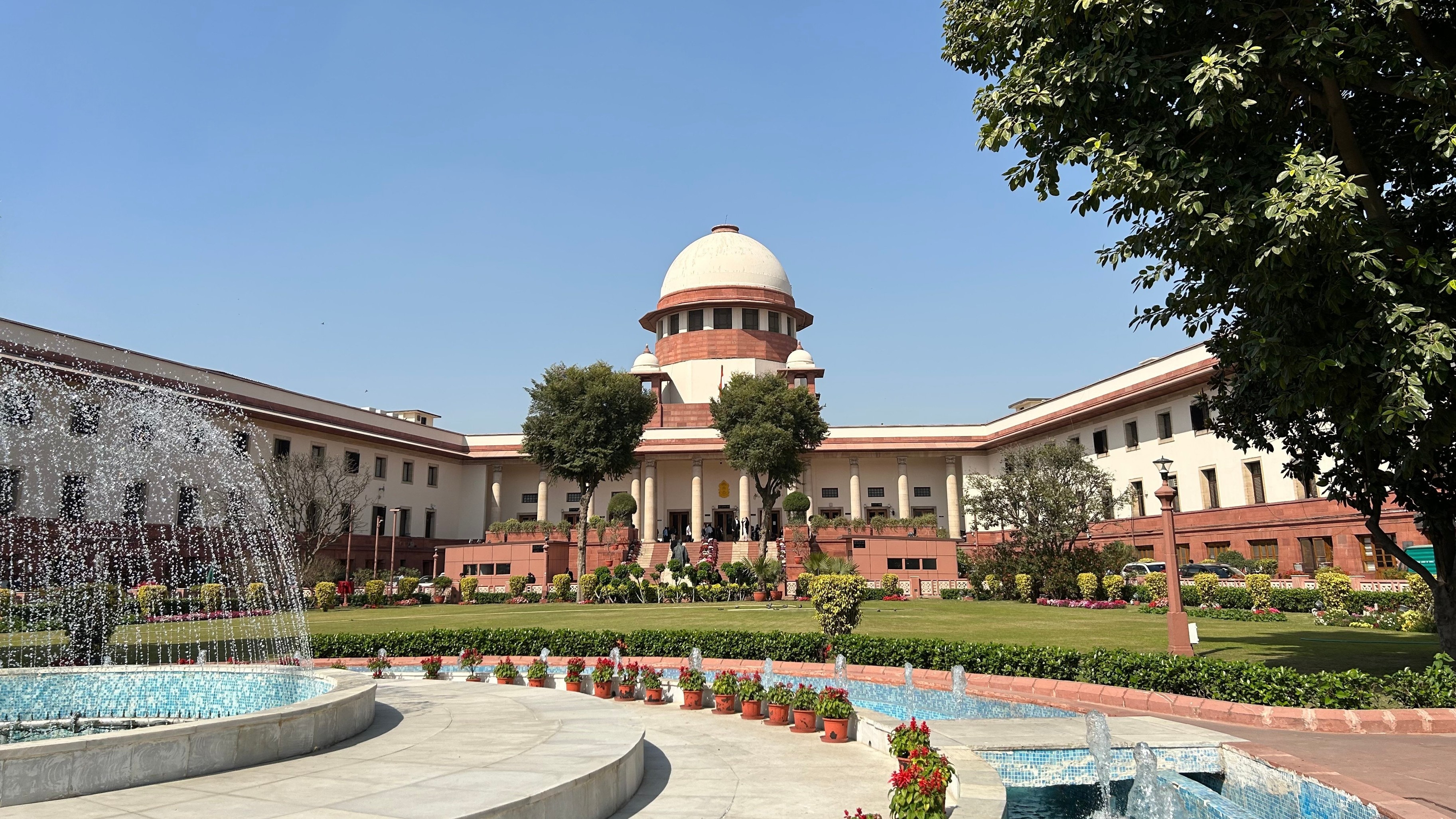
If the mining-royalty judgment is made applicable retrospectively, demands from various companies engaged in mining activities will be multiple times their net worth, the Union government told the Supreme Court on Wednesday.
Arguing for a prospective application of the nine-judge bench verdict that held royalty is not a tax, Solicitor General Tushar Mehta said if the verdict is made applicable retrospectively, the approximate demand that various public sector undertakings in the mining business were expecting would be in the range of Rs 70,000–80,000 crore.
As soon as the price of basic minerals such as coal, bauxite and iron ore is affected, the burden will eventually go to the common people, according to Mehta. Senior advocates Arvind Datar and Harish Salve made similar arguments.
Datar said the demand from private mining companies would be upwards of Rs 1 lakh crore. He added that after the 1989 ruling, which held royalty to be a tax, the quantum of royalties was substantially increased so that the state exchequers did not face any loss of revenue.
Salve said a retrospective applicability of the judgment would result in an "ugly spectacle" of seeing these companies "go belly up".
A Travesty Of Justice?
Arguing against prospective application, senior advocate Rakesh Dwivedi said the court must take a balanced approach in dealing with this conundrum and could make the judgment operate with full effect, meaning retrospectively, subject to some conditions.
There is no judgment of this court that results in the validation of an existing legislation and the court still says that do not collect past dues, Dwivedi asserted.
If the judgment is made applicable prospectively, then the court will have to say that even after holding that royalty is not a tax, the 1989 judgment that held royalty to be a tax would hold good up until the nine-judge bench judgment was delivered. This will be a travesty of justice.Senior Advocate Rakesh Dwivedi
Dwivedi suggested some conditions that the court can impose even while holding that the judgment will operate retrospectively. "One way is to stagger the payments that will be due. Another way is to modulate the interest component that will arise on the principal dues."
After hearing both the sides, the top court reserved its judgment in the matter and is expected to come out with a verdict very soon.
The Story So Far
In a landmark judgment delivered last week, a nine-judge bench of the top court ruled that royalty paid by a mining leaseholder to the lessor was not a tax but a contractual consideration for enjoyment of mineral rights. The court said the legislative power to tax mineral rights rested with state legislatures and the Parliament did not have the legislative competence to tax mineral rights.
The ruling put an end to a 35-year-old controversy regarding the nature of mining royalties paid by the leaseholders. However, as soon as the top court pronounced the judgment, the lawyers questioned the court regarding its applicability, meaning whether the judgment would be applied retrospectively or prospectively.
Since this issue is bound to have huge financial ramifications on mining companies, the apex court agreed to consider this aspect.

-
Talking Points This Week: Tech Nerves, FII Buying, And A Faraway Banking Shock

The global markets are not shining this Diwali. The exception in the large markets is, India.
-
Midterm Rally Lasted A Day. The Hard Reality Of A Divided US May Last Two Years | Opinion
Between a contested AI boom, a debt ceiling that arrives in 2027 and a president with every incentive to act alone, the next two years may prove more volatile than the first day's rally suggests.
-
Blue Wave Will Derail the AI Trade but Won't Dismantle the AI Era | Unhedged Position
The Democrats' sweep of the US Congress will see politics collide with economic forces both over the long and short term.
-
It's Time To Take The GST Council's Bet On Trust Global
Payment records can prove India's services exports, and clear, proportionate rules can bring foreign digital sellers into the tax net.
-
Opinion | India at 38: From Innovation Overperformer to Innovation Powerhouse
India now has 453 VC-backed deep science startups, 18 of them late-stage, after 117 percent growth since 2020. Laurus Labs, at USD 9.3 billion, is the most valuable deep science company in any middle-income economy outside China.
-
Navigating Energy Crossroads: S Jaishankar's Call For Diversified Supply Chains At G20 Ministerial Meeting
As geopolitical fault lines continue to test maritime trade routes and commodity flows, Jaishankar's message remains pertinent: true economic resilience requires open markets, protected transit lines, and a genuine commitment to multilateral cooperation rather than coercion.
-
Indians Are Travelling, But Not Every Journey Is A Holiday | The Week In Whys
Pilgrims, patients and working women are the real travellers, and the system hasn't quite caught up with them.
-
Getting To Work Costs Women More | The Reason Why
It is not just about women paying more than men. It is about women paying much more in cities than in villages.
-
AI Bias In Investing Cannot Be Eliminated, But It Can Be Governed
Framing is a particularly important example as identical financial information presented in terms of gains rather than losses can lead an LLM to reach a different assessment.









