Delhi Elections: AAP Aims For Hat-Trick Through Welfare As BJP Planks On Corruption Probes; Congress Wavers
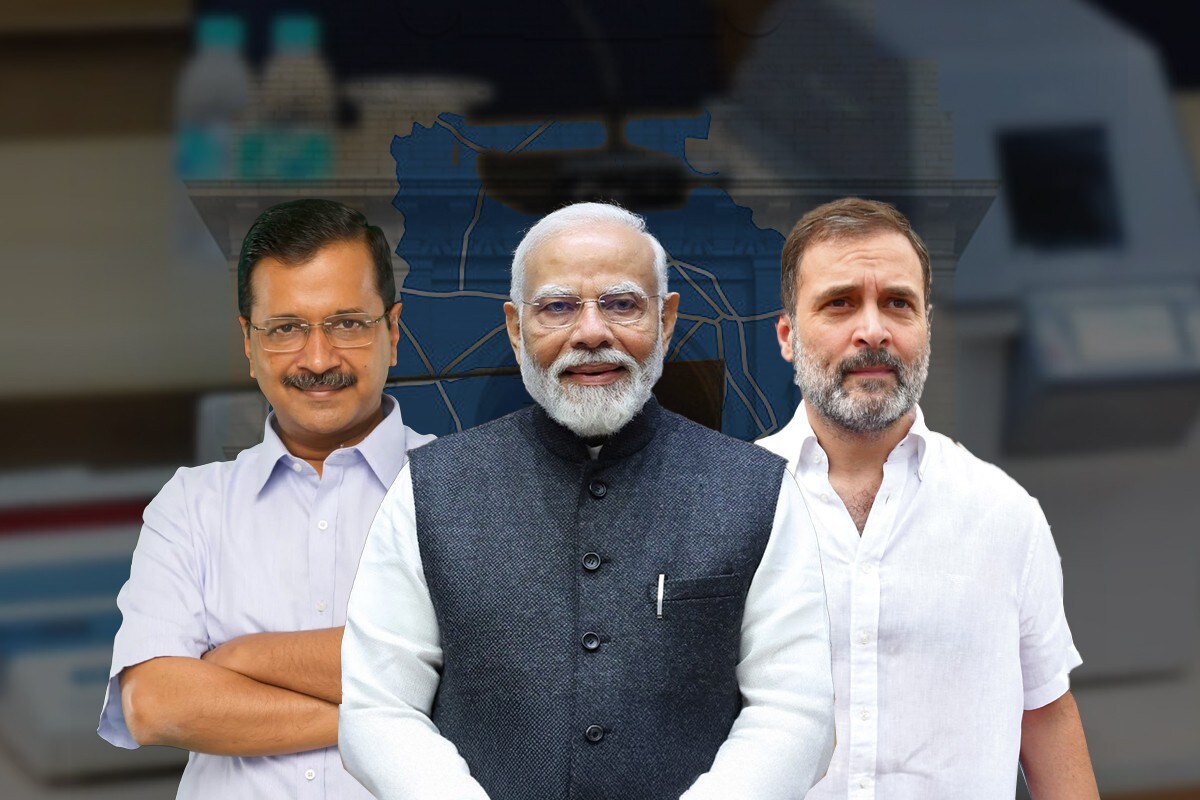
Campaigning for the Delhi assembly elections ended Monday evening. The ruling Aam Aadmi Party aims to return with another supersized majority and the Bharatiya Janata Party hopes to end its 26-year dry run, while the Congress struggles to hang around the margins.
Over 1.5 crore eligible voters in the national capital will head to polls on Wednesday to elect legislators for the 70-member assembly. The majority mark is 36.
Nearly 700 candidates are in the fray including 96 women.
Delhi Elections 2025: Parties In Fray
The BJP is contesting on 68 seats in Delhi. It has given one seat each to NDA allies Janata Dal (United) and Lok Janshakti Party (Ramvilas) of Union Minister Chirag Paswan. The idea behind the move is to appeal to Bihari voters in the national capital.
The AAP and the Congress — both part of the Opposition's INDIA bloc — will be facing off in all 70 seats. The two parties broke ties soon after unsuccessfully contesting the Lok Sabha elections in Delhi last year, where they drew a blank.
Notably, the AAP rose on the debris of the Congress in the national capital following Arvind Kejriwal's 'India Against Corruption' campaign in 2011. The agitation tarnished the Manmohan Singh-led second UPA government on graft charges, and boosted the anti-incumbency sentiment which was capitalised by the BJP to sweep the 2014 Lok Sabha elections.

The AAP rose on the debris of the Congress in the national capital following Arvind Kejriwal's 'India Against Corruption' campaign in 2011. (Photo source: X profile)
How Delhi Voted In Past Elections
2013
As a startup political party, the AAP debuted in the 2013 Delhi assembly polls with 28 wins and a vote share of 30%. BJP secured 31 seats and a vote share of 33%, while Congress bagged eight and 25% of the popular vote.
Kejriwal formed a minority government with outside support from the Congress, which eventually collapsed in less than two months over policy differences.
2014
In the Lok Sabha elections, the BJP swept all seven seats in Delhi during the first Modi wave.
2015
The AAP won with a landslide 67 seats and secured 54% vote share, followed by the BJP (three seats and 32% vote share). The Congress drew a blank.
2019
The BJP repeated its 2014 clean sweep with a majority of the votes.
2020
The AAP's fortune shined with victory on 62 seats and a static vote share. The BJP improved vote share to 39% but only bagged eight seats. The Congress faced another washout.
2024
The BJP retained all seven Lok Sabha seats in Delhi. If converted to assembly seats, the Modi-led party was ahead in 52 constituencies, followed by 10 for AAP and eight for Congress.
Delhi Election Issues
To start with, the AAP has pushed major welfare initiatives like cash handouts for youth and women — in a city whose per capita income of Rs 4.61 lakh is more than double the national average of Rs 2.12 lakh.
The party has been promoting the 'Delhi model' of governance since the last election — laying focus on improved public health and education services that are seen benefitting middle and lower income families.
The BJP has also promised a slew of welfare handouts for many socio-economic classes. But its sharpest political narrative has been allegations of corruption against senior AAP leaders like Kejriwal and Manish Sisodia, both of whom have spent jail time in the Delhi liquor policy case.
The Congress, struggling to stay relevant for the past decade following the end of its 15-year reign under former CM Sheila Dixit, has also raised the welfare flag with fiscally expensive promises. The party is seen to be lacking organisational muscle in Delhi.

BJP's sharpest political narrative has been allegations of corruption against senior AAP leaders. (Photo source: Delhi BJP/ X profile)
As per an analysis by the Association for Democratic Reforms, the BJP has fielded 61 candidates with a net worth of Rs 1 crore and above. The Congress has 59 such candidates in fray while the AAP has nominated 53.
When it comes to candidates with criminal cases, AAP has 44, Congress has 29 and BJP has 20.

-
A New Samvat Wishlist: Inclusive Prosperity And Human Development

India has strengthened its economic foundations through infrastructure, digital access and enterprise. Its next growth chapter must deepen productivity, create better livelihoods and widen participation in prosperity.
-
Love, Sex Aur Dhokha: The Audacious Plot To Spy On Jensen Huang
A Taipei dinner, a Singapore chip buyer and a suspected Chinese asset: inside the alleged spy operation that got close to NVIDIA's Jensen Huang.
-
Ten Things I Learnt This Samvat
Patience can be a trap. Cheap stocks can stay cheap. Leverage can wipe you out. What did Samvat 2082 teach us? Niraj Shah writes on 10 lessons from the year gone by.
-
Talking Points This Week: Tech Nerves, FII Buying, And A Faraway Banking Shock
The global markets are not shining this Diwali. The exception in the large markets is, India.
-
Midterm Rally Lasted A Day. The Hard Reality Of A Divided US May Last Two Years | Opinion
Between a contested AI boom, a debt ceiling that arrives in 2027 and a president with every incentive to act alone, the next two years may prove more volatile than the first day's rally suggests.
-
Blue Wave Will Derail the AI Trade but Won't Dismantle the AI Era | Unhedged Position
The Democrats' sweep of the US Congress will see politics collide with economic forces both over the long and short term.
-
It's Time To Take The GST Council's Bet On Trust Global
Payment records can prove India's services exports, and clear, proportionate rules can bring foreign digital sellers into the tax net.
-
Opinion | India at 38: From Innovation Overperformer to Innovation Powerhouse
India now has 453 VC-backed deep science startups, 18 of them late-stage, after 117 percent growth since 2020. Laurus Labs, at USD 9.3 billion, is the most valuable deep science company in any middle-income economy outside China.
-
Navigating Energy Crossroads: S Jaishankar's Call For Diversified Supply Chains At G20 Ministerial Meeting
As geopolitical fault lines continue to test maritime trade routes and commodity flows, Jaishankar's message remains pertinent: true economic resilience requires open markets, protected transit lines, and a genuine commitment to multilateral cooperation rather than coercion.









