Get App
Download App Scanner
Scan to Download
Advertisement
LIVE UPDATES

Lok Sabha Passes All Four Supporting GST Bills

Lok Sabha Passes All Four Supporting GST Bills
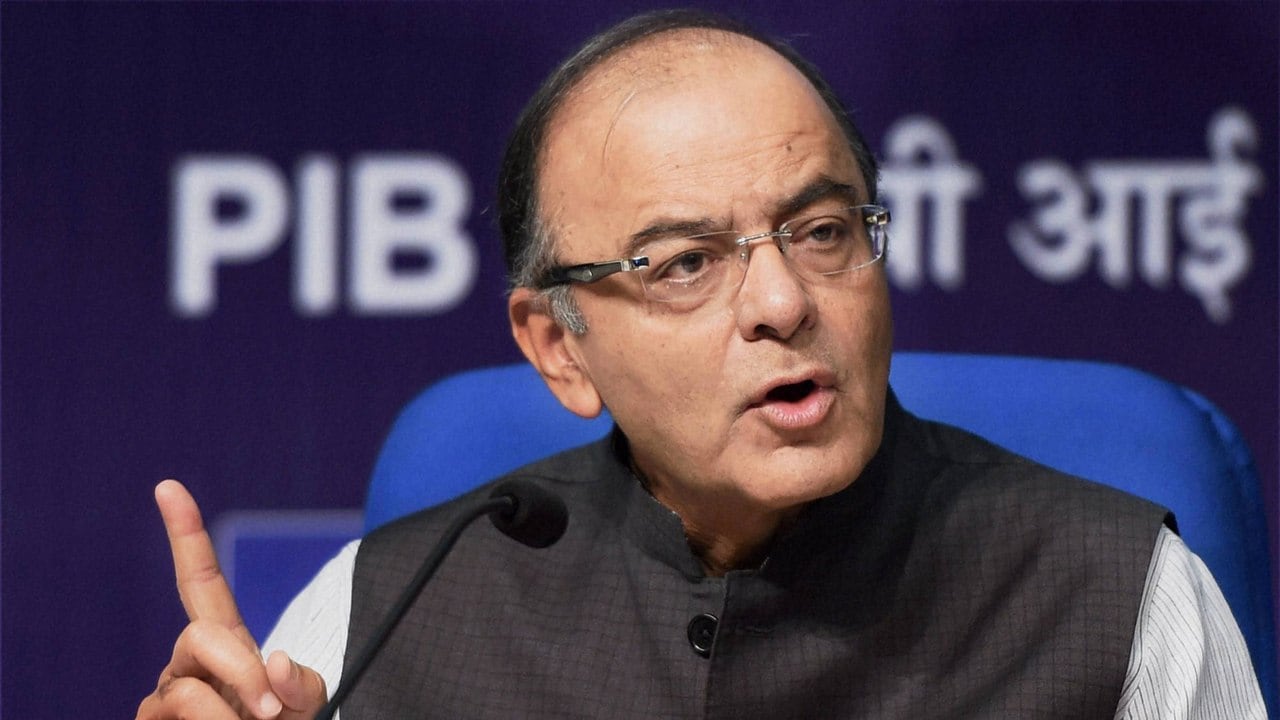
Finance Minister, Arun Jaitley (Photo: PTI)
9 years ago
Lok Sabha debates the GST Bill.

Soon after the four GST bills were approved by Lok Sabha Revenue Secretary Hasmukh Adhia told reporters that 18,000 man-hours were spent in designing the bills and that he hoped there would be no flaws in the implementation of GST.

Adhia said the government will seek the President's permission to table the bills in Rajya Sabha and a discussion on them in the upper house is likely next week.

The GST Council is expected to pass all nine sets of rules after its next meeting on March 31.

A GST rollout by July 1 is possible, Adhia added, assuring industry that it will be informed about the laws and rules three months prior to its implementation.

It is important for the Government to ensure that 18 percent is a general rate and exceptions, particularly those falling under 28 percent category are minimised. Prices of products and services under GST would largely be the function of rates and with the proposed anti profiteering provisions, businesses would expect that these are finalised latest by early May for them to take timely decisions.
Pratik Jain, Partner, PwC

The four bills are:

  • Central Goods and Services Tax Bill
  • State Goods and Services Tax Bill
  • Integrated Goods and Services Tax Bill
  • Union Territory Goods and Services Tax Bill

Consideration of the other two bills is underway.

GST framework will be more efficient, will have higher compliance, and would be difficult to breach, he added.

An independent from Idukki, Kerala, Joice George argued that the bill takes away the parliamentary privilege of deciding tax rates by giving that power to the GST Council.

We will not have any say on the taxes paid by people who have elected us, George said.

He also asked the government to clarify how cash crops will be treated in terms of taxation. He added that growers of crops like coffee, rubber, cotton, tea and cardamom will be affected adversely under GST.

Satao called the bill a beginning, rather than a game-changer.

All India Trinamool Congress member Professor Saugata Roy said that no political party is opposing the GST bill in principle thus the government should ensure that it is prepared completely before implementation.

He stated that the Goods and Services Tax Network is going to be the biggest network in the world but it is not ready yet. So a breakdown in the system would mean that the indirect tax regime would collapse.

Citing cases of Australia and Malaysia, he said that the two countries have faced problems with GST, while other leading world economies like China and the U.S. have chosen to not have such a regime.

Roy added that the Centre seems to be in a hurry, and in this rush basic tasks like fitting items in tax slabs have remained unresolved.

"There are over 4,000 items, even services", he said.

Supriya Sule, MP from Baramati, Maharashtra, asked the government to provide clarity on the precautionary measures taken to ensure that data would not leak from the Goods and Services Tax Network.

She stated that GSTN will be a private body with the government holding 49 percent stake. This would mean that critical data, related to businesses in all states, will uploaded on the network, and hence there needs to be checks for its protection.

Sule, daughter of NCP’s president Sharad Pawar, added GST implementation would require at least 36 registrations for business, hence compliance becomes challenging, especially for businesses that operate in multiple states.

While she was keen on the implementation of GST, she also questioned if just luxury goods will be able to compensate states, especially during economic crises like droughts, which her home state Maharashtra has been facing for over two years now.

Sule also talked about the risks involved in lending parliamentary powers to bodies like the GST council. She said while it would work fine now since the Bharaity Janata Party was in power in the centre, and majority of the states. However, it would become a problem when that is not the case.


Telangana Parliamentarian Konda Vishwera Reddy said that there is no need for an anti-profiteering authority to be established as it paves way for harrassment.

Reddy said this was a move meant for political appeasement.

He also urged the government to speed up the process of defining tax slabs for various goods and provide clarity on them. As an example, he said that coconut oil is an edible item in Kerala, while it is a hair oil in Rajasthan. “How will you tax it?,” Reddy asked.

Also Read: Black Money Rhetoric And Anti-Profiteering Action

He asked the finance minister, why private banks like ICICI Bank Ltd. have 30 percent shareholding in the special purpose vehicle (SPV) to be set for the Goods and Services Tax Network. He also questioned why any state bank was not given stake in the SPV.

Sole representative of the Biju Janata Dal party from Odisha Bhartruhari Mahtab called the GST bill "illusory", adding that its real impact will only be known one year after implementation.

He argued that while there have been tall claims surrounding the impact of GST, all that the common people wanted to know was if the prices will come down.

Also Read: GST To Have Minimal Impact On Inflation, Nomura Says

Mahtab also raised the concerns about Clause 171 subsection (2) of the bill, which provides for establishment of an anti-profiteering authority. He said it was a “retrograde” step, and that the Competition Law already exists to keep in check the abuse of dominant position.

The parliamentarian was particularly critical of the way agriculture was being taxed indirectly through the definition of an "agriculturist" in the bill. He also opposed bringing dairy farming and poultry farming under the ambit of taxation, since a lot of farm income is additionally supported by this.

Switching to a new taxation measure in the middle of the financial year will bring its own accounting complications. GST has been withdrawn from many countries due to anti-profiteering and its inflationary impact. I would hope that the same fate does not fall upon our country,
Veerappa Moily, Congress leader, Karnataka 

Jaitley invited recommendations during the discussion of the bill. However, he also asked for the "pooled sovereignty" between the centre and the states to be honored so that the agreement can be implemented.

Essential Business Intelligence, Continuous LIVE TV, Sharp Market Insights, Practical Personal Finance Advice and Latest Stories — On NDTV Profit.

Newsletters

Update Email
to get newsletters straight to your inbox
⚠️ Add your Email ID to receive Newsletters
Note: You will be signed up automatically after adding email

News for You

Set as Trusted Source
on Google Search