Trump's 'Liberation Day' Tariffs — Impact On India And Possible Response
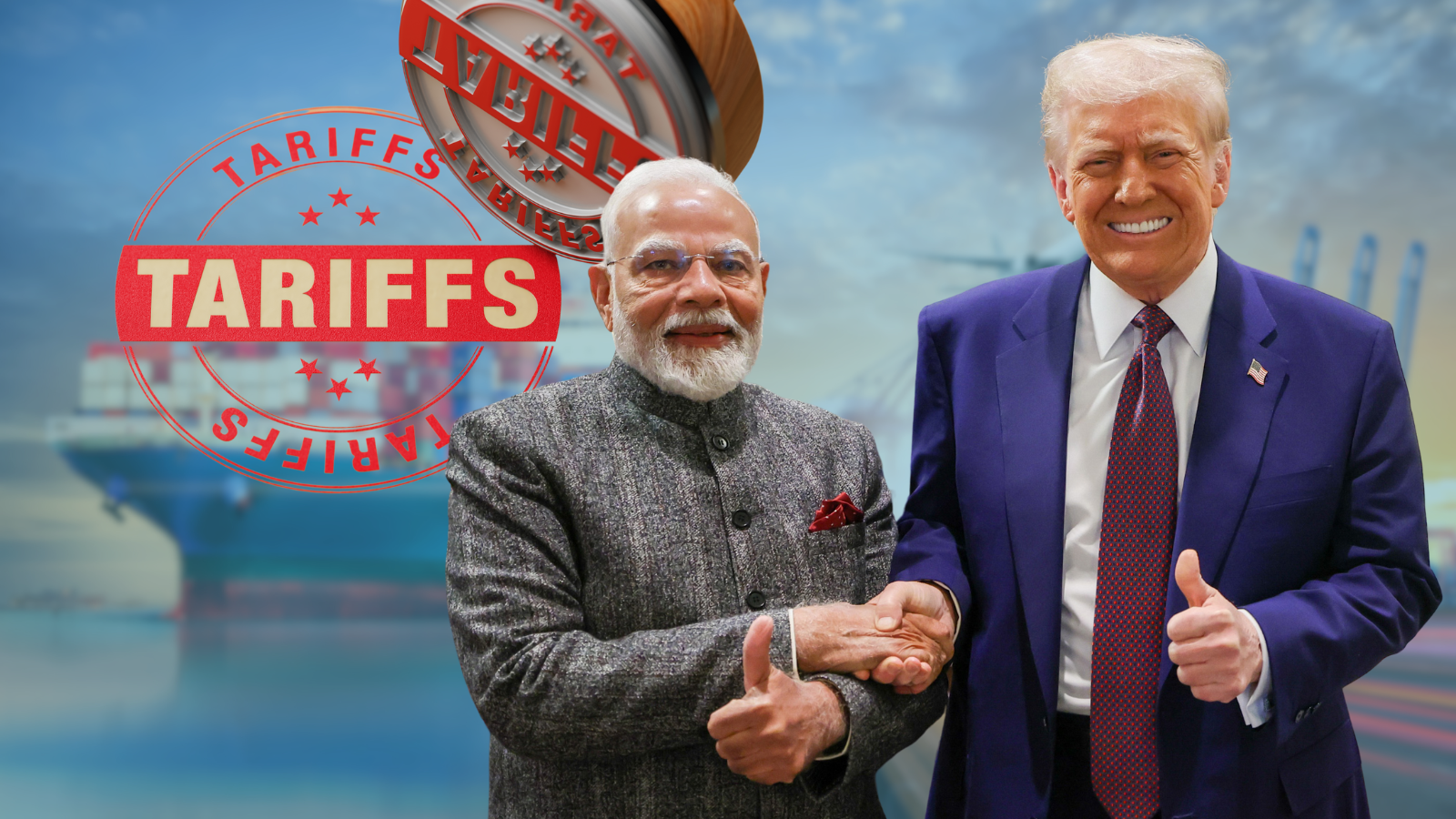
US President Donald Trump is set to announce a slew of tariff measures against trading partners on Thursday, as he seeks to reduce the country's ballooning deficit and reshore manufacturing.
The US is one of India's largest trading partners, and the balance is heavily tilted in our favour. India's exports to the US reached $81 billion in 2024, accounting for 17.7% of total outbound shipments.
That's a grouse Trump has held against India, labeling it the "tariff king" during his first term. Notably, India's weighted average tariff rate on American imports is 12%, compared to the US' 3% on Indian goods.
Besides, Prime Minister Narendra Modi and Trump in February agreed to target $500 billion in bilateral trade by 2030.
Tariff Difference
Given India's higher tariff rate on US imports, certain sectors are more shielded from American competition.
As the chart below shows, the difference between Indian and US tariffs on certain labour-intensive and MSME-focused sectors is wide. Notably, Indian levies on animal products — an industry which employs millions of rural labour— are 30 percentage points more than what the US charges.

Most Vulnerable Sectors
Based on many tariff differentials and India's export balance to the US, the chart below shows the most vulnerable sectors to Trump's tariff proposals.

In terms of value, electrical machinery may see the strongest hit. Electronics, particularly mobile phones like iPhones, dominate India's exports to the US. If the US were to impose reciprocal tariffs on India, it would likely increase iPhone prices for American consumers.
Notably, India currently imposes a 15% duty on fully assembled phone imports, whereas the US has zero tariffs on the same. With existing 40% tariffs on Chinese imports, Apple Inc. may be further incentivised to shift production to India.

India's Options To Respond
In response to Trump's tariff plans, India can increase the imports of oil and natural gas from the world's top energy producer. Trump has vowed to ramp up US energy production with his "drill baby drill" pledge.
During his first term, New Delhi sought to assuage the president's trade worries by purchasing more liquified natural gas — seen as a cleaner but pricier alternative to other fossil fuels. India already pledged to increase energy imports by $10 billion to $25 billion.
It can also increase imports of US defence equipment, reduce tariffs on certain agri and food commodities as well as electric vehicles.
Here's a snapshot of India's likely options:
Auto and ancillary
Reduce taxes on auto imports.
Two-wheeler and car import tariff differential at 67.5 percentage points.
However, high tariff could impact ancillary exports of over $2.1 billion.
Textiles and apparels
US accounted for 28% of India's textile exports.
Even with tariffs, India could remain competitive compared to China due to the 40% incremental tariffs. But it could lose market share to Vietnam and Bangladesh.
One of the ways of mitigating this would be to lower India's tariffs on US cotton imports.
More than half of textile and apparel imports in India are US cotton. Reducing that could equalise or lower differentials.
Pharma
Overall pharma and related imports are around $800 million.
The tariff differential is 7.6 percentage points.
India can lower tariffs.
Food and related commodities
High tariffs have been a barrier for protecting domestic production.
India can lower tariffs on alcohol, categories of prepared food and beverages that are currently more than 100%.
Steps India Can Take To Lower US Tariffs Impact | Watch

-
Ten Things I Learnt This Samvat

Patience can be a trap. Cheap stocks can stay cheap. Leverage can wipe you out. What did Samvat 2082 teach us? Niraj Shah writes on 10 lessons from the year gone by.
-
Talking Points This Week: Tech Nerves, FII Buying, And A Faraway Banking Shock
The global markets are not shining this Diwali. The exception in the large markets is, India.
-
Midterm Rally Lasted A Day. The Hard Reality Of A Divided US May Last Two Years | Opinion
Between a contested AI boom, a debt ceiling that arrives in 2027 and a president with every incentive to act alone, the next two years may prove more volatile than the first day's rally suggests.
-
Blue Wave Will Derail the AI Trade but Won't Dismantle the AI Era | Unhedged Position
The Democrats' sweep of the US Congress will see politics collide with economic forces both over the long and short term.
-
It's Time To Take The GST Council's Bet On Trust Global
Payment records can prove India's services exports, and clear, proportionate rules can bring foreign digital sellers into the tax net.
-
Opinion | India at 38: From Innovation Overperformer to Innovation Powerhouse
India now has 453 VC-backed deep science startups, 18 of them late-stage, after 117 percent growth since 2020. Laurus Labs, at USD 9.3 billion, is the most valuable deep science company in any middle-income economy outside China.
-
Navigating Energy Crossroads: S Jaishankar's Call For Diversified Supply Chains At G20 Ministerial Meeting
As geopolitical fault lines continue to test maritime trade routes and commodity flows, Jaishankar's message remains pertinent: true economic resilience requires open markets, protected transit lines, and a genuine commitment to multilateral cooperation rather than coercion.
-
Indians Are Travelling, But Not Every Journey Is A Holiday | The Week In Whys
Pilgrims, patients and working women are the real travellers, and the system hasn't quite caught up with them.
-
Getting To Work Costs Women More | The Reason Why
It is not just about women paying more than men. It is about women paying much more in cities than in villages.









