Navigating Friction And Energy Realities: An Analysis Of Marco Rubio's October Visit To India
Occurring at a critical juncture marked by stalled trade negotiations and escalating geopolitical pressures over global energy supplies, the visit offers a profound window into modern US-India relations.
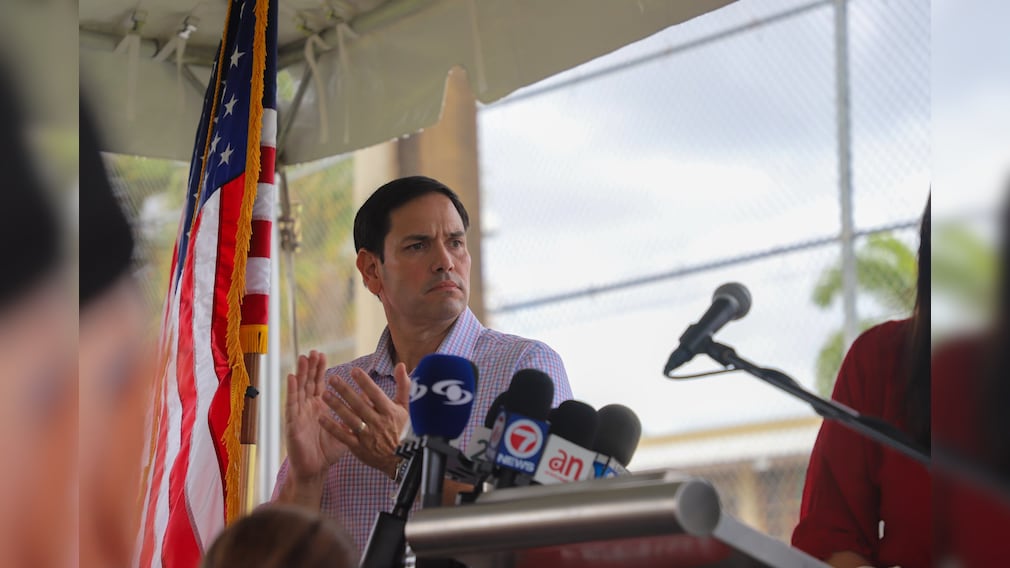
US Secretary of State Marco Rubio will embark on his second official visit to India this year from October 17 to 22, 2026. Part of a broader diplomatic tour that begins in Samarkand, Uzbekistan, Rubio's itinerary is notably unconventional: he is skipping the capital New Delhi entirely, choosing instead to focus his engagements in the financial hub of Mumbai and the energy center of Jamnagar, Gujarat.
This calculated geographic shift underscores the highly pragmatic, economic, and energy-focused nature of the modern India-US partnership. Occurring at a critical juncture marked by stalled trade negotiations and escalating geopolitical pressures over global energy supplies, the visit offers a profound window into modern Washington-New Delhi relations.
READ | Jaishankar Flags India's Concerns To Rubio Amid Proposed 100% Tariffs On Russian Oil Buyers
The Shift to Jamnagar: Energy Security and the Shadow of Sanctions
The inclusion of Jamnagar-home to Reliance Industries' massive oil-refining complex, the world's largest single-site refinery-serves as the primary anchor of the visit. According to US State Department announcements, the trip is explicitly aimed at expanding bilateral energy cooperation and commercial investments.
However, the visit occurs against a tense backdrop and coincides with an impending deadline regarding potential US penalties and trade barriers on countries procuring Russian energy.
India's imports of Russian crude oil have jumped substantially following the global supply shocks induced by the recent conflicts in the Middle East. Simultaneously, New Delhi remains deeply anxious about proposed US legislation that could allow the Trump administration to levy tariffs of up to 100% on nations purchasing Russian energy.
By visiting the very heart of India's refining sector, Rubio is executing a high-stakes balancing act: attempting to steer India toward Western energy alignments while navigating the hard economic realities of India's strategic autonomy.
READ | US-India Trade Deal 'Nearly Final'; Rubio Set For October Visit: Envoy Sergio Gor
Mumbai and Stalled Trade Deals: The Pursuit of Economic Resiliency
In Mumbai, Rubio is scheduled to meet with External Affairs Minister S. Jaishankar and key corporate captains. The meetings arrive at a fraught moment for the bilateral commercial architecture. Earlier this month, both sides indicated that long-running efforts to secure a final bilateral trade agreement have stalled once again over stubborn disputes regarding tariffs and market access.
Despite these setbacks, the engagement in Mumbai aims to inject fresh momentum into corporate collaborations. It also serves to advance high-tech integration. Ahead of Rubio's arrival, a high-level US National Security Council delegation landed in India to lay the groundwork for the TRUST initiative.
Originally launched in February 2025, the initiative focuses on building resilient supply chains in highly sensitive sectors like semiconductors, artificial intelligence, space, and biotechnology. By bypassing New Delhi's bureaucratic corridors to engage directly with Mumbai's financial leadership, the US top diplomat is signaling a desire to insulate long-term supply chain partnerships from immediate legislative roadblocks.
READ | US State Secretary Marco Rubio To Visit India: Date, Cities, And What's On Agenda
Strategic Implications and the Challenge of Transactional Diplomacy
From a broader geopolitical standpoint, Rubio's visit is very significant. For India, the trajectory of US foreign policy under the current administration has introduced an element of unpredictability. Reassurances regarding the Quad and maritime security in the Indo-Pacific are frequently juxtaposed against the US's transactional approach to tariffs and immigration.
The relationship has reached an economic plateau, demanding constant diplomatic management rather than assuming structural alignment. Furthermore, Rubio's broader itinerary-particularly his participation in the C5+1 Ministerial meeting in Central Asia alongside a 200-member commercial delegation-indicates a synchronized American push to counter Chinese and Russian influence across Eurasia.
A strong, economically stable partnership with India is central to this objective, even if the two capitals disagree on specific regional conflicts and electoral dynamics.
Conclusion
Marco Rubio's forthcoming visit to India illustrates the dual nature of contemporary Indo-US relations: structurally vital yet tactically complex. By anchoring his diplomacy in the boardrooms of Mumbai and the refineries of Jamnagar, Rubio is focusing directly on the tangible pillars of energy, advanced technology, and corporate enterprise.
While the trip may not immediately resolve deep-seated differences over Russian energy imports or protective tariffs, it serves as a crucial mechanism to keep the strategic partnership grounded in mutual economic necessity amidst an increasingly fragmented global order.
Disclaimer: The views expressed in this article are solely those of the author and do not necessarily reflect the opinion of NDTV Profit or its affiliates. Readers are advised to conduct their own research or consult a qualified professional before making any investment or business decisions. NDTV Profit does not guarantee the accuracy, completeness, or reliability of the information presented in this article
-
Ten Things I Learnt This Samvat

Patience can be a trap. Cheap stocks can stay cheap. Leverage can wipe you out. What did Samvat 2082 teach us? Niraj Shah writes on 10 lessons from the year gone by.
-
Talking Points This Week: Tech Nerves, FII Buying, And A Faraway Banking Shock
The global markets are not shining this Diwali. The exception in the large markets is, India.
-
Midterm Rally Lasted A Day. The Hard Reality Of A Divided US May Last Two Years | Opinion
Between a contested AI boom, a debt ceiling that arrives in 2027 and a president with every incentive to act alone, the next two years may prove more volatile than the first day's rally suggests.
-
Blue Wave Will Derail the AI Trade but Won't Dismantle the AI Era | Unhedged Position
The Democrats' sweep of the US Congress will see politics collide with economic forces both over the long and short term.
-
It's Time To Take The GST Council's Bet On Trust Global
Payment records can prove India's services exports, and clear, proportionate rules can bring foreign digital sellers into the tax net.
-
Opinion | India at 38: From Innovation Overperformer to Innovation Powerhouse
India now has 453 VC-backed deep science startups, 18 of them late-stage, after 117 percent growth since 2020. Laurus Labs, at USD 9.3 billion, is the most valuable deep science company in any middle-income economy outside China.
-
Navigating Energy Crossroads: S Jaishankar's Call For Diversified Supply Chains At G20 Ministerial Meeting
As geopolitical fault lines continue to test maritime trade routes and commodity flows, Jaishankar's message remains pertinent: true economic resilience requires open markets, protected transit lines, and a genuine commitment to multilateral cooperation rather than coercion.
-
Indians Are Travelling, But Not Every Journey Is A Holiday | The Week In Whys
Pilgrims, patients and working women are the real travellers, and the system hasn't quite caught up with them.
-
Getting To Work Costs Women More | The Reason Why
It is not just about women paying more than men. It is about women paying much more in cities than in villages.