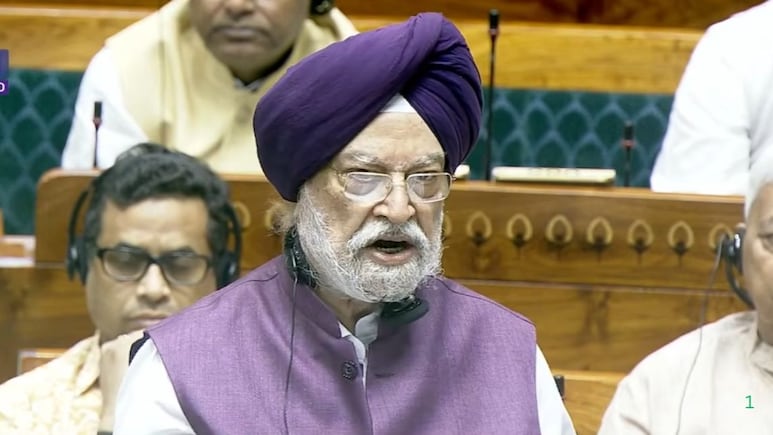
- Union Minister Hardeep Singh Puri will visit Qatar on April 9-10 to discuss LNG supply issues
- QatarEnergy declared force majeure on LNG contracts due to Iran war damage to export infrastructure
- Qatar plans to resume LNG production after ceasefire, following US-Iran truce
Union Petroleum and Natural Gas Minister Hardeep Singh Puri will visit Qatar on April 9 and 10 to discuss the supply of liquefied natural gas amid the disruption caused due to the Iran war. India has been forced to ration gas to keep households
State-run QatarEnergy last month declared force majeure on long-term LNG supply contracts for up to five years, impacting shipments to countries including Italy, Belgium, South Korea and China. Though India has not been mentioned in the statement, it is one of the large buyers of LNG from the Gulf country.
Iranian strikes on Qatar since the outbreak of the war late February have damaged infrastructure accounting for nearly 17% of the country's LNG export capacity, according to QatarEnergy CEO Saad al-Kaabi. The unprecedented attacks on two of Qatar's 14 LNG trains and one of its two gas-to-liquids (GTL) facilities have taken offline an estimated 12.8 million tonnes per year of LNG output. Repairs could take between three and five years, al-Kaabi said.
Also Read | Layoffs Are Rising In Tech, But These Skills Are Helping People Unlock Better Pay
The disruption is expected to cost Qatar roughly $20 billion in lost annual revenue and has heightened concerns over global energy security, particularly for key importers across Europe and Asia.
Last month, Prime Minister Narendra Modi spoke to Qatar Emir Sheikh Tamim bin Hamad Al Thani and expressed strong condemnation of the attacks on the region's energy infrastructure that have upended global supply. Both leaders affirmed their shared stance for safe and free navigation through the Strait of Hormuz, a statement said.
Indian firms have turned to alternate suppliers in the US, Australia and Russia for LNG mainly used for industrial purposes. The country imported around 25.5 million tonnes of the super-cooled gas in 2025. By 2030, the Modi government aims to increase the share of natural gas in the country's primary energy mix to 15%.
Qatar is mobilising engineers and workers with the aim of resuming production at Ras Laffan, the world's biggest LNG export plant, following a ceasefire in the war in the Middle East, Bloomberg News reported on Wednesday.
A day ago, US President Donald Trump announced a "double sided" ceasefire after a Pakistan-brokered arrangement with Tehran. The truce was contingent on Iran agreeing to reopen the Strait of Hormuz. The regime had said that it would stop "defensive" operations if attacks on the country were halted. Israel also reportedly agreed to the ceasefire.
ALSO READ: Trump Says US Forces To Remain Near Iran After Tehran Claims Truce Terms Breached
Essential Business Intelligence, Sharp Market Insights, Practical Personal Finance Advice, Daily Fuel, Gold and Silver Prices and Latest Stories — On NDTV Profit.