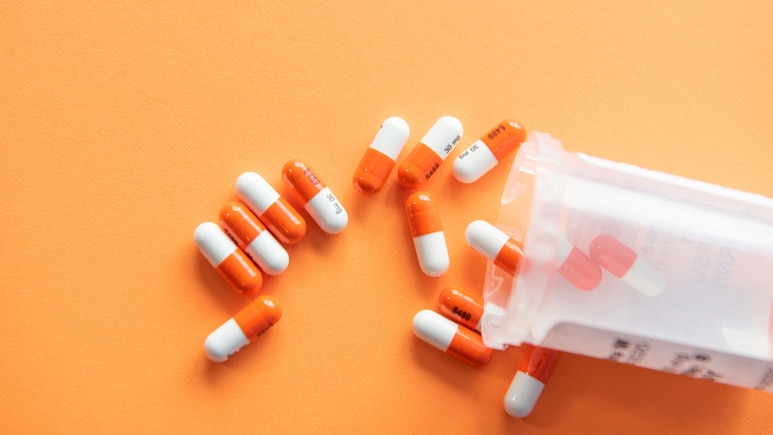
India's dependence on China for pharmaceutical raw materials remains entrenched, with official data showing that over 70% of critical drug ingredients are still imported from China.
The disclosure, shared by Minister of State for Chemicals and Fertilizers Anupriya Patel in a written reply in the Rajya Sabha on Tuesday, comes even as domestic capacity creation under the government's Production Linked Incentive (PLI) scheme gathers pace, pointing to a gap between policy intent and on‑ground supply displacement.
The data shows that imports of several Active Pharmaceutical Ingredients (APIs) continue to have China dependence levels of 70% and above, with many products seeing reliance of over 90% and, in some cases, complete dependence on China.
Also Read | Layoffs Are Rising In Tech, But These Skills Are Helping People Unlock Better Pay
High Dependence Persists Across Critical Drugs
Several products, including intermediates used for Rifampicin, a key tuberculosis drug, and Methyldopa, used in blood pressure management, show 100% dependence on China, indicating the absence of meaningful alternative supply sources or domestic production at scale.
A broader set of essential antibiotics and drug intermediates show China dependence levels exceeding 90%. These include Erythromycin, Gentamicin, Streptomycin, Tetracycline, and Norfloxacin, inputs that are widely used in hospital care, infectious disease treatment, and critical care settings.
The value of imports further highlights the scale of exposure. For 6‑APA, a crucial raw material for penicillin antibiotics, imports from China rose to $407.64 million in FY25 from $396.51 million in FY24, with dependence increasing to nearly 96%. Penicillin and their salts saw a sharp rise in China dependence as well, climbing to about 93% in FY25 from 77% a year earlier.
Similarly, Erythromycin imports showed rising dependence, increasing to nearly 98% in FY25 from about 93% in FY24. In several such cases, higher dependence in FY25 compared with FY24 suggests that domestic manufacturing has not yet displaced imports at a scale sufficient to reduce China's dominance in the supply chain.
Government Push
To address this vulnerability, the government has rolled out a Production-Linked Incentive (PLI) scheme for bulk drugs. Under the scheme, 41 critical APIs were identified, of which 33 have received industry participation. A total of 48 greenfield manufacturing projects have been approved, and 38 of these had been commissioned as of December 2025.
The scheme has led to the creation of approximately 56,800 metric tonnes per annum of domestic manufacturing capacity across 28 critical products. These include widely used drugs such as Penicillin G, Rifampicin, Aspirin, Diclofenac, Atorvastatin, Losartan, Telmisartan, and Valsartan.
Investment momentum under the scheme has exceeded initial commitments. While companies had committed to invest Rs 4,329.95 crore, actual investment had reached Rs 4,814.1 crore by December 2025. The government has so far disbursed Rs 54.81 crore as incentives.
Cumulative sales reported under the scheme stood at Rs 2,720 crore, including exports of Rs 527.96 crore. Importantly, the government estimates that imports worth Rs 2,192.04 crore have been avoided due to domestic production under the PLI framework, indicating early gains in import substitution.
ALSO READ: Cabinet Eases Curbs: Small-Ticket FDI From China, Other Neighbours Set For Automatic Approval
Essential Business Intelligence, Sharp Market Insights, Practical Personal Finance Advice, Daily Fuel, Gold and Silver Prices and Latest Stories — On NDTV Profit.