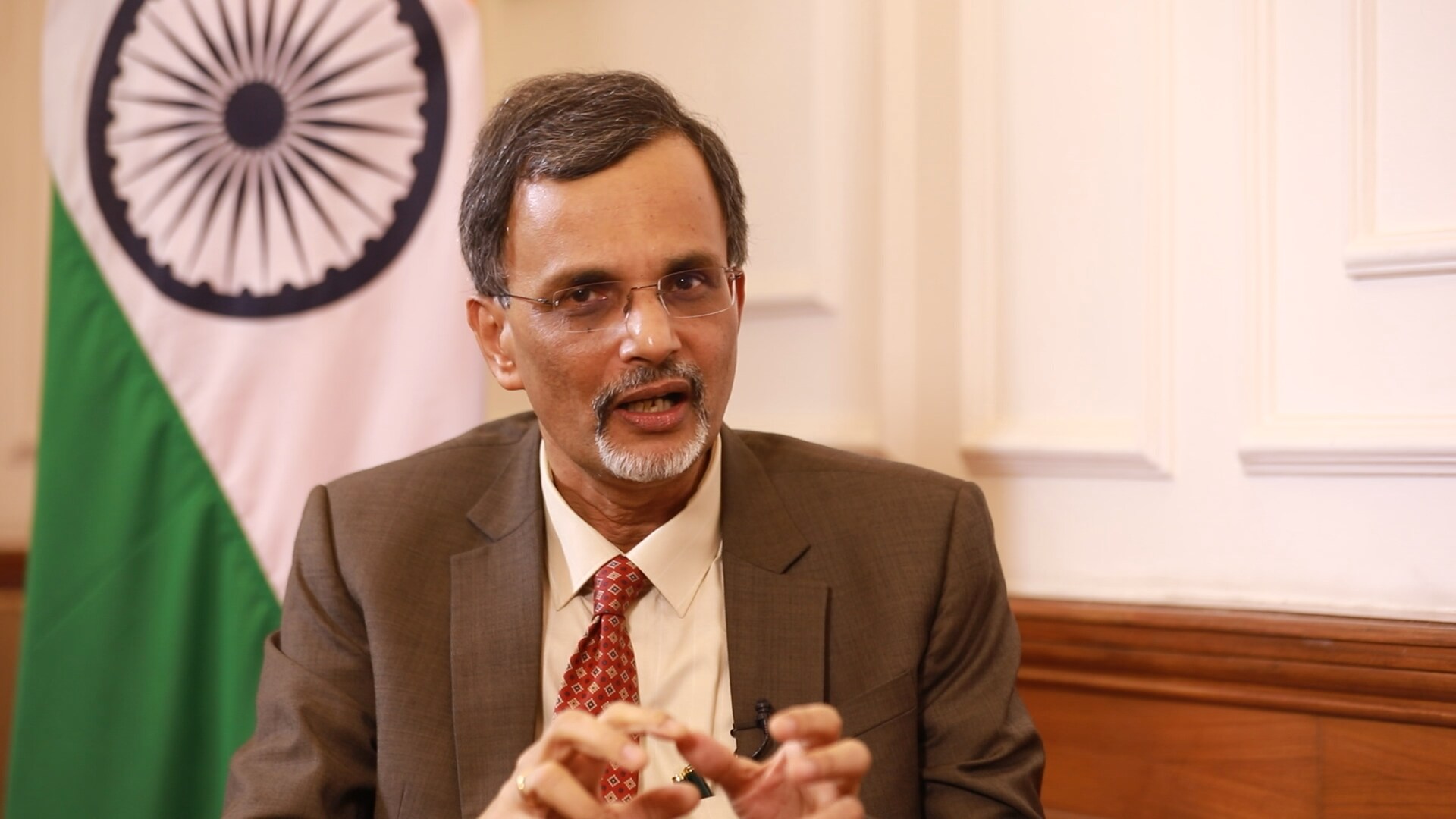
Both manufacturing and services have regained and even surpassed the activity levels of 2019-20, including contact based services, hospitality, tourism, civil aviation, domestic and international passenger traffic, according to V. Anantha Nageswaran, chief economic advisor to the government of India.
In some cases, such as, learning losses for instance, will probably be bridged over time, some people's health status may also be affected by long COVID, so, that will lead to some scarring, he told BQ Prime.
But from the macro economy perspective, sectors have reached or surpassed the levels from the financial year ending March 2020, he said.
"The reason why we have also said that recovery is complete is we have had two consecutive years of good growth," Nageswaran said.
"Of course, FY23 is not over yet and is estimated to see a growth rate of 7%. Therefore, our belief is that now we should look ahead rather than talking about a recovery from the pandemic or a pandemic response. We should look to the medium-term and see what would drive medium-term growth and what more can be done to enhance it."
Watch the full conversation here:
Edited excerpts of the interview:
Do you think the government will be able to spend the capex outlay of Rs 10 lakh crore, especially considering this year, we did see a little bit of a downward revision to the capex outlay.
V. Anantha Nageswaran: I think you are referring to the Rs 20,000 crore lower estimate in the revised estimates. That is coming primarily on account of some states not being able to use their full allowance of the 50-year interest free loan.
If you look at the union government in the last couple of years, including the ongoing financial year, they have been able to meet and spend their capital expenditure.
So, it's our belief that states also are ramping-up capacity and some states are doing better than even the union government in terms of utilising capital expenditure.
So, overall, we are confident that the budgeted capex of Rs 10 lakh crore between the union government predominantly of course, and the states will be utilised.
You have also expressed confidence that private capex should be able to see a revival soon, considering the efforts put in by the central government. But do you believe that global headwinds, and just continuing economic uncertainties mean that private capex might not see an immediate revival?
V. Anantha Nageswaran: If there are global headwinds of considerable strength, of course, whatever we assume, will not necessarily play out and that's exactly how things have happened in the last several years.
There are certain assumptions made. Nobody pencils in a geopolitical conflict that erupted in Europe last year, which has obviously had a big impact on prices of commodities, and naturally, that leads to some caution on the part of private sector to invest.
So, almost all statements, when it comes to economics and public matters are conditional statements. They are conditional on a particular set of assumptions as to how the world will evolve. If there are geopolitical geoeconomic headwinds, then to that extent, the expectations will be impacted, but what we have seen is that financial year despite all the headwinds, the private sector has invested based on bottom-up earnings data that they provide.
According to data collated by Axis Bank, Rs 3.3 lakh crore of private capex has taken place, just in the first half of the year and that is more than Rs 2.4 lakh crore that was spent in the previous financial year between April to September.
We believe that this trend will continue and gather momentum.
The MGNREGA saw a cut in outlay though of course, other schemes such as the Awas Yojana has seen higher outlay. Do you believe that you might have to over the year, once again increase outlay on schemes such as MGNREGA?
V. Anantha Nageswaran: The reason why the MGNREGA budget allocation is lower is explained by the fact that the outlay for the PM Awas Yojana has gone up by 172%, along with the Jal Jivan Mission allocation going up from Rs 60,000 to 70,000 crore.
So, both these things put together will lead to higher spending and hiring as well. So, I mean you cannot construct homes without labour and therefore, much of the labour that may be utilising the Rural Employment Guarantee programme will be utilised in the construction activity for PM Awas Yojana and also in the implementation of Jal Jivan Mission.
The second reason behind the lower allocation is that as the recovery gathers strength and longevity, there will be a greater absorption of rural youth and rural labour force into the overall employment and that could also result in a lower demand for MGNREGA.
In spite of that, if it turns out that the Rural Employment Guarantee demands are higher, then they will be met, as they have been met in the previous years.
Do you think that in the next year things might play out a little differently and we might see some impact of higher interest rates kick in and maybe deter consumption to some extent or deter capex?
V. Anantha Nageswaran: Should the global economy actually experience a softer landing or even continued growth, then it might result in higher interest rates continuing even further or getting extended for a longer period, and it might also result in higher crude oil demand.
So, in that sense, we have mentioned specifically that while our base case is 6.5%, we do see the downside risk slightly higher than the upside. That is why the range is 6 to 6.8%, and we didn't pick the midpoint. There is a difference.
The census has been delayed and and there are concerns that the absence of a census being rolled out is beginning to adversely affect data quality, for instance, inflation basket, and other such things. Any comments on that?
V. Anantha Nageswaran: I understand that the surveys have been initiated, and these things don't get completed, given the size of the country within a short period, but I understand that the surveys have been initiated already.
Essential Business Intelligence, Sharp Market Insights, Practical Personal Finance Advice, Daily Fuel, Gold and Silver Prices and Latest Stories — On NDTV Profit.