“You can please some of the people all of the time, you can please all of the people some of the time, but you can't please all of the people all of the time.”
This frequently repeated comment from poet John Lyndgate is certainly true for the annual Union Budget presentation, when it is near impossible for the finance minister to please all of the people, in every budget.
If, however, the finance minister was trying to present a budget that would keep economists happy, what would that budget contain? A sub 3 percent fiscal deficit with money spent on bank recapitalisation, infrastructure and sectors that generate employment would make the list.
Also Read | Layoffs Are Rising In Tech, But These Skills Are Helping People Unlock Better Pay
The Magic Number 3
The existing Fiscal Responsibility and Budget Management (FRBM) Act requires that the government bring down its fiscal deficit to 3 percent of the Gross Domestic Product (GDP) in fiscal 2018. Many economists have given up hope of that happening. A fiscal review committee may have given the government room to maintain a higher fiscal deficit and so economists are resigned to a higher number closer to 3.2-3.3 percent of GDP.
Some, however, say that a prudent government might choose to contain the deficit at 3 percent. Such fiscal restraint would be cheered not only by economists but also by global investors and rating agencies. The likes of Standard and Poor's along with peers Moody's and Fitch have refused to upgrade India's rating despite a strong pitch made by the government. A high general deficit, which combines centre and state deficits, continues to be cited as one reason.
By exercising fiscal discipline, the government could nudge rating agencies one more time.
But how will the government manage to maintain a 3 percent deficit in a year when revenue collections could turn volatile due to demonetisation and the likely implementation of the Goods and Services Tax (GST)? One way, suggested Pranjul Bhandari, HSBC's chief economist for India, is to target a 3 percent deficit with an “escape clause.”
Globally, well-defined “escape clauses” are acceptable, provided they are tightly defined. Ifdefined appropriately, we believe pegging the fiscal deficit at 3 percent plus up to 0.3 percent of GDP forGST compensation to states can be the prudent fine line.Pranjul Bhandari, Chief India Economist, HSBC (Report Dated January 23)
Another important reason for the central government to keep its deficit under control is to be able to compensate for higher state deficits. The government would do well to keep a wary eye on state finances while planning its own.
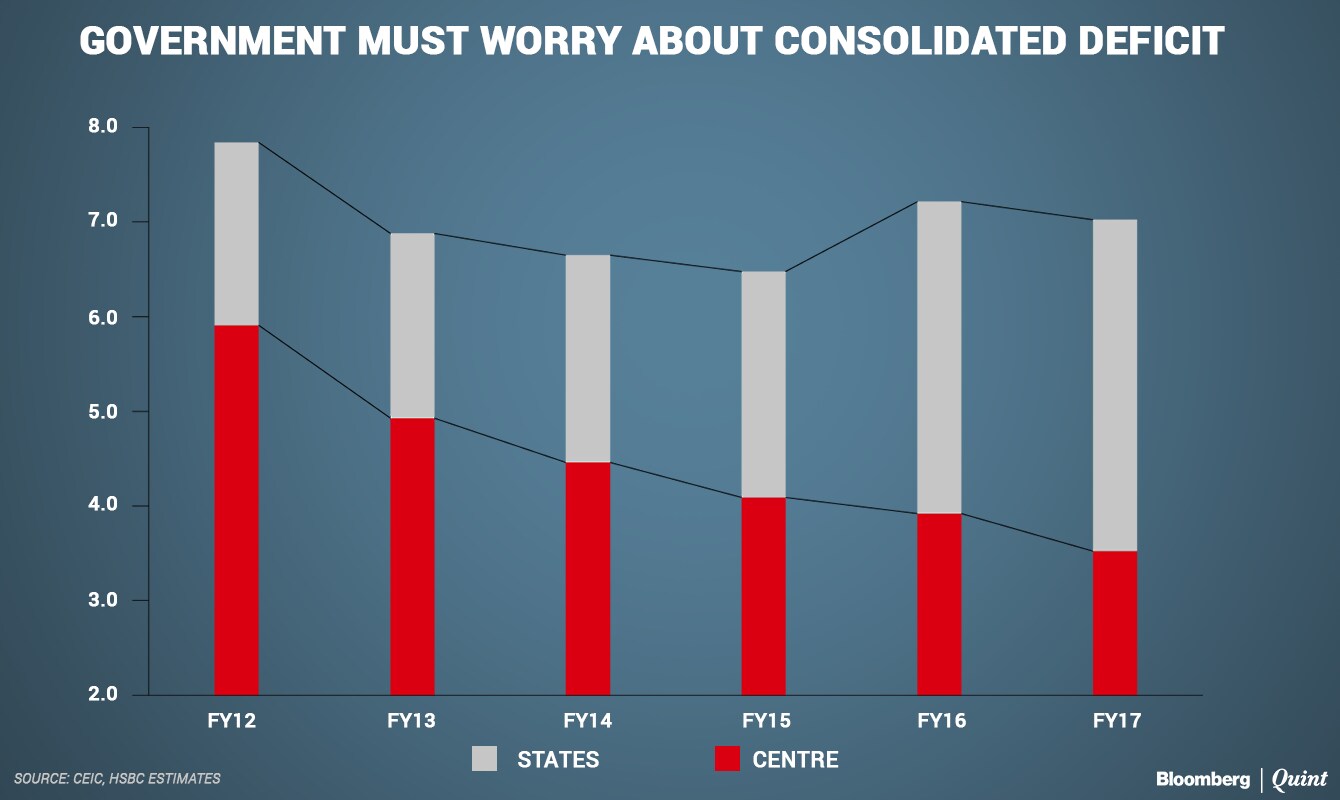
A contained fiscal deficit will also help keep government borrowings in check. Economists are penciling in a net borrowing of close to Rs 4.3 lakh crore for the next fiscal. Gross borrowings are expected to be close to Rs 6.5 lakh crore.
Also Read: Budget 2017: Will A 3% Fiscal Deficit Remain Elusive?
Spend Right; Push Capex
The next big debate is what the government's expenditure priorities should be. Until November, when the consumption economy was in fine fettle, the answer to that question was clear. Spend on public capex which was needed to compensate for weak private investment, was the advice from all economists.
The choice may be tougher now with consumption likely to be atleast temporarily impacted due to decision to withdraw Rs 500 and Rs 1,000 notes. The government may look for ways to support consumption through expansion of disposable income via reduction in tax rates and/or rise in exemptions, wrote Shubhada Rao, chief economist at Yes Bank in a report dated January 23. However, Rao, like many other economists, suggests that the government remain focused on capital expenditure.
Rao, in fact, points out that even in the current year, capital spending has fallen below budget estimates, which needs to be reversed in the coming year when private capex is expected to remain slow.
.png "Source: Yes Bank")
The budget will be focusing on reviving capital expenditure through on and off budget capital expenditure. Crowding-in of private sector capex remains critical for a full-fledged capex recovery as the private corporate sector and households account for almost 80 percent of investment.Shubhada Rao, Chief Economist, Yes Bank
Recapitalise Your Banks
There are some who would argue that the main priority for the government should be to recapitalise state owned banks.
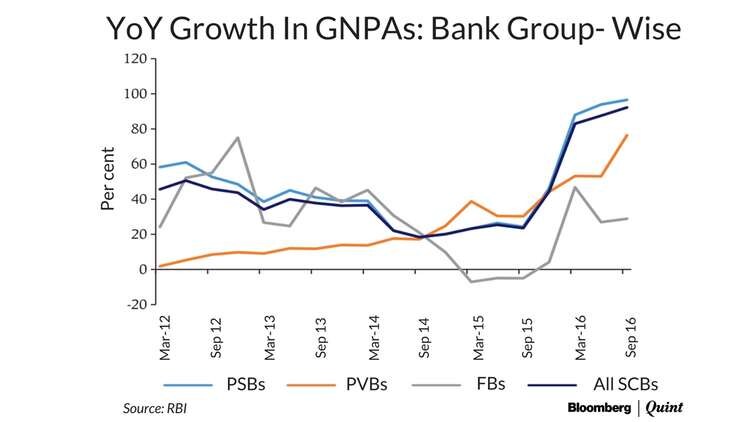
Gross non performing assets (GNPAs) of Indian banks have continued to rise. In its December Financial Stability Report, the Reserve Bank of India (RBI) warned that bad loans may rise to above 10 percent by March 2018.
To adequately provide for these bad loans, public sector banks will need capital. As of September 2016, the capital adequacy ratio of the banking sector was at 13.3 percent, according to the RBI report. While this is above the regulatory minimum, it is no where near enough to bullet proof bank balance sheets against likely defaults. Weakly capitalised banks may also be reluctant lenders, which, in turn, could hurt the economy.
Given the higher levels of impairment, SCBs (scheduled commercial banks) may remain risk averse in the near future as they clean up their balance sheets and their capital position may remain insufficient to support higher credit growth.RBI's Financial Stability Report (December 2016)
In August 2015, the government said it would infuse Rs 70,000 crore into public sector banks over a four year period. Under the original roadmap, Rs 25,000 crore was to injected into banks in fiscal 2016 and fiscal 2017. Over the next two years (fiscal 2018 and fiscal 2019) another Rs 10,000 crore each was to be allocated to bank recapitalisation.
This, however, is seen as inadequate with credit rating agencies pegging the need for capital at much higher levels. In a July 2016 report, rating agency Fitch pegged the need for capital at $90 billion (over Rs 6 lakh crore at the current exchange rate) by fiscal year 2019.
Economists and investors would cheer an additional allocation for bank recapitalisation provided the resources are raised in a sensible way. A dramatic move, such as the idea of a bad bank, which has been discussed by the government, would be best avoided.
Also Read: Budget 2017: Ten Measures The Banking Sector Will Track
Focus On Creating Jobs
A slightly longer term concern for the economist fraternity is the inability of the economy to generate enough jobs.
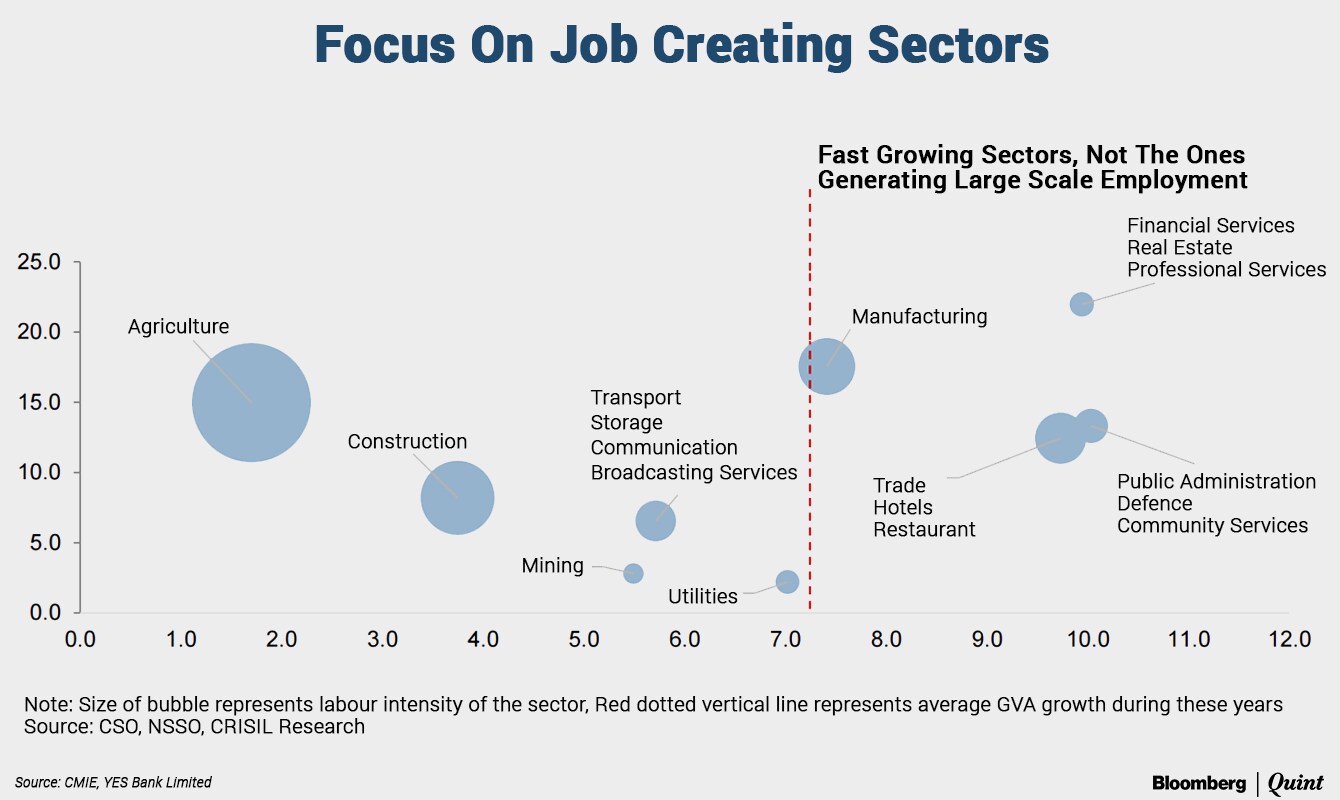
Data compiled by BloombergQuint showed that across eight key employment generating sectors, only 1.35 lakh jobs were added in 2015. The data was based on the quarterly employment surveys conducted by the labour bureau. Job creation has steadily fallen from a high of 9.3 lakh jobs created in 2011, shows the data. The poor track record on job creation is despite a relatively strong rate of economic growth, which suggests that growth is coming from sectors that may not absorb India's large and growing workforce.
“The last three years have seen a slow-but-steady uptick in economic growth, but it is likely that this hasn't been accompanied by commensurate job increase in employment. The sectors that grew fast have low labour intensity and share in overall output,” wrote DK Joshi, chief economist at CRISIL in a note released on January 27.
At current levels, job creation is inadequate to absorb the nearly 1.5 million workers entering the labour force every month, said Joshi while adding that the government also needs to worry about the impact of rapid adoption of technology, which could worsen the problem.
Policies will, therefore, have to support sectors with large job growth potential such that, despite slipping labour intensity, absolute employment continues to increase.Additionally, the policy focus should also be in preparing the youth for new job opportunities.DK Joshi, Chief Economist, CRISIL
Also Read: Budget 2017: The Need To Skill Workers At India's Construction Sites
Essential Business Intelligence, Sharp Market Insights, Practical Personal Finance Advice, Daily Fuel, Gold and Silver Prices and Latest Stories — On NDTV Profit.