New GST Rates Explained In Charts — What Gets Cheaper, What Gets Costlier From September 22
A major overhaul of the goods and services tax (GST) system comes into force from today, Sept. 22. The new GST rate changes, cleared by the GST Council earlier this month, will alter the tax burden across a wide range of items used every day.
Finance Minister Nirmala Sitharaman said the Council decided to move away from the earlier four-slab structure of 5%, 12%, 18% and 28%, opting instead for a simpler two-rate system of 5% and 18%. A higher rate of 40% has been reserved for certain categories such as high-end vehicles, tobacco and sin goods.
The new GST rates and structure is expected to ease costs on several household essentials while raising levies on discretionary and luxury products. Everyday items such as food staples, toiletries and footwear will see a reduction, while services like business-class air travel and products like gaming and caffeinated drinks will attract higher tax.
See which products are getting cheaper and which are becoming more expensive under GST.
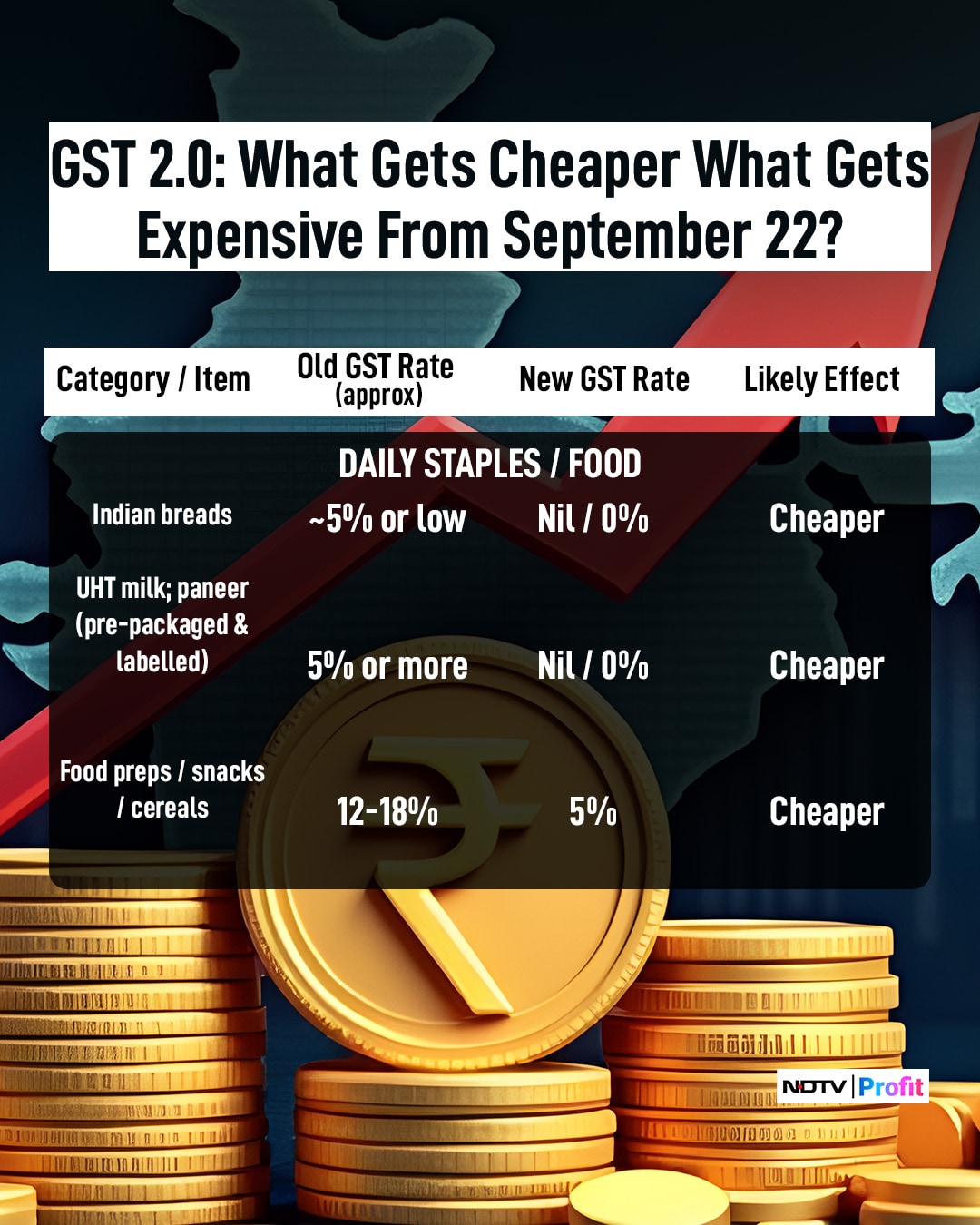
Daily Staples And Food
Indian breads, UHT milk and packaged paneer, which earlier carried a 5% levy, are now free of GST. Cereals and ready-to-eat snacks fall sharply, with rates dropping from 12–18% to 5%.
Also Read: Full List Of Scooters, Bikes, Motorcycles That Get Cheaper Under GST 2.0
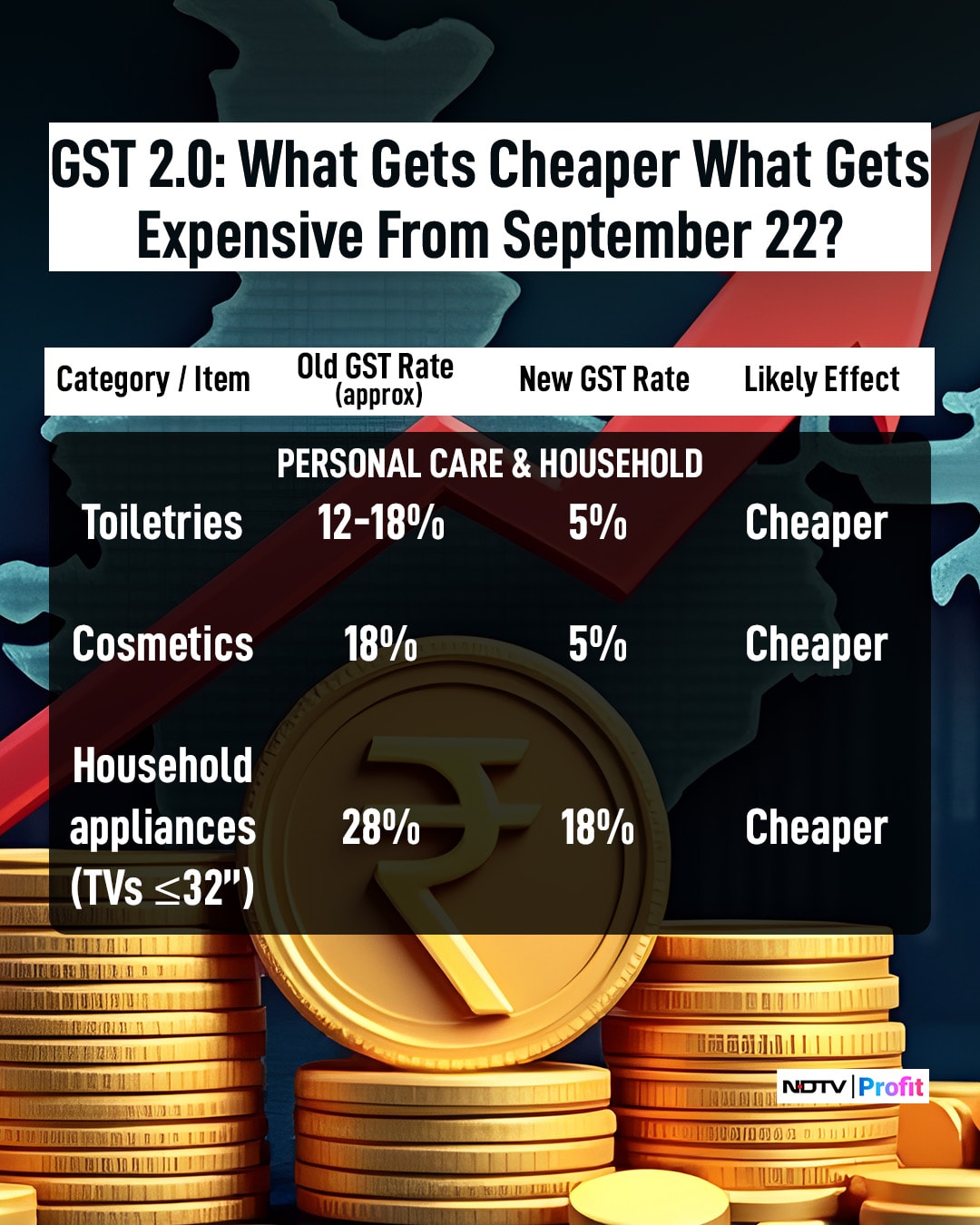
Personal Care And Household
Hair oil, soaps and cosmetics, once taxed at 12–18%, will now be charged only 5%. Televisions under 32 inches shift to 18% from 28%, offering relief for small-screen buyers.
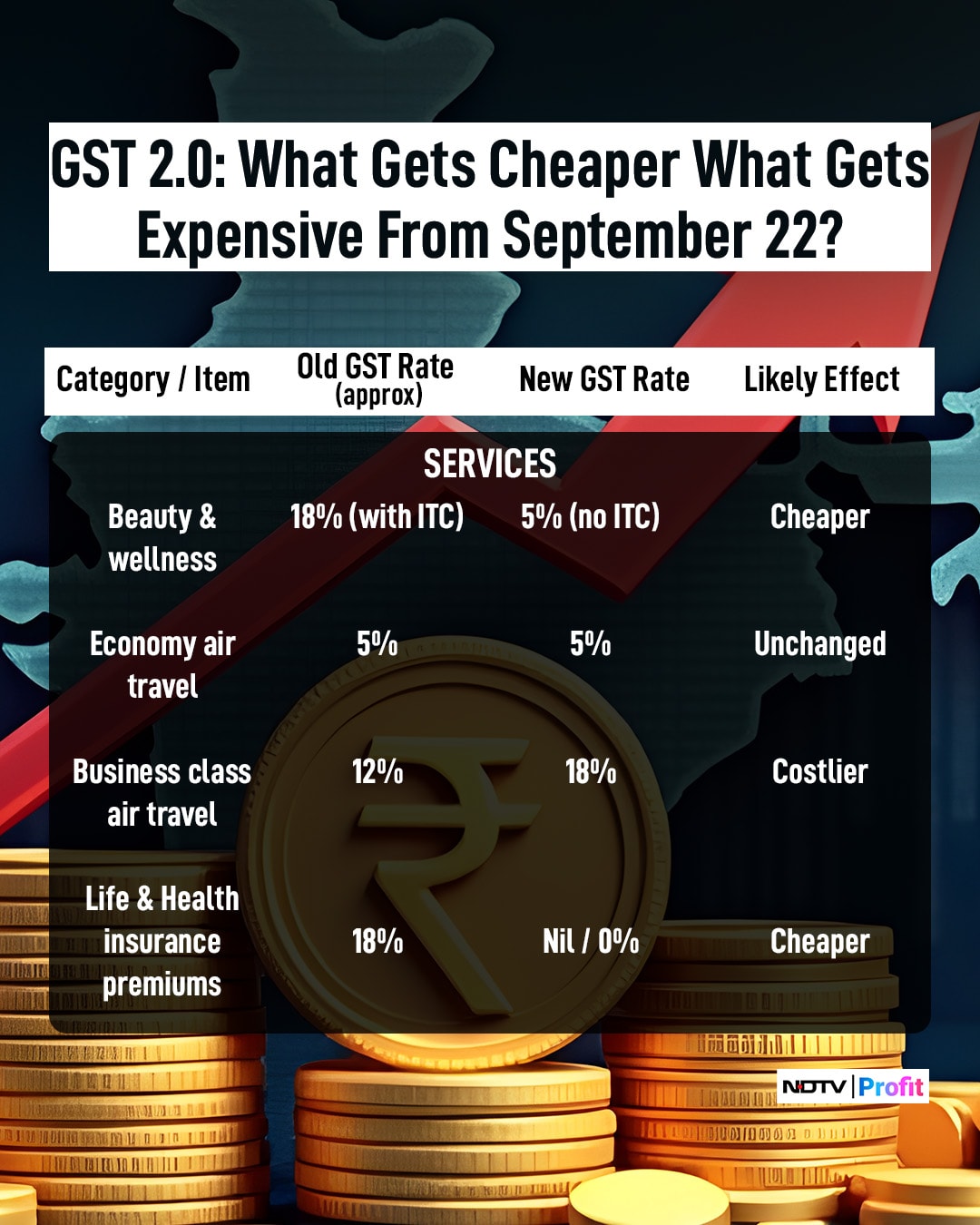
Beauty, Wellness And Travel
Beauty and wellness offerings fall from 18% with input tax credit to 5% without credit. Economy fares stay at 5%, while business class tickets rise from 12% to 18%.
Besides, Individual health and life insurance premiums, earlier taxed at 18%, are now exempt.
Also Read: Full List Of Cars That Get Cheaper Under GST 2.0
Hotels, Apparel And Footwear
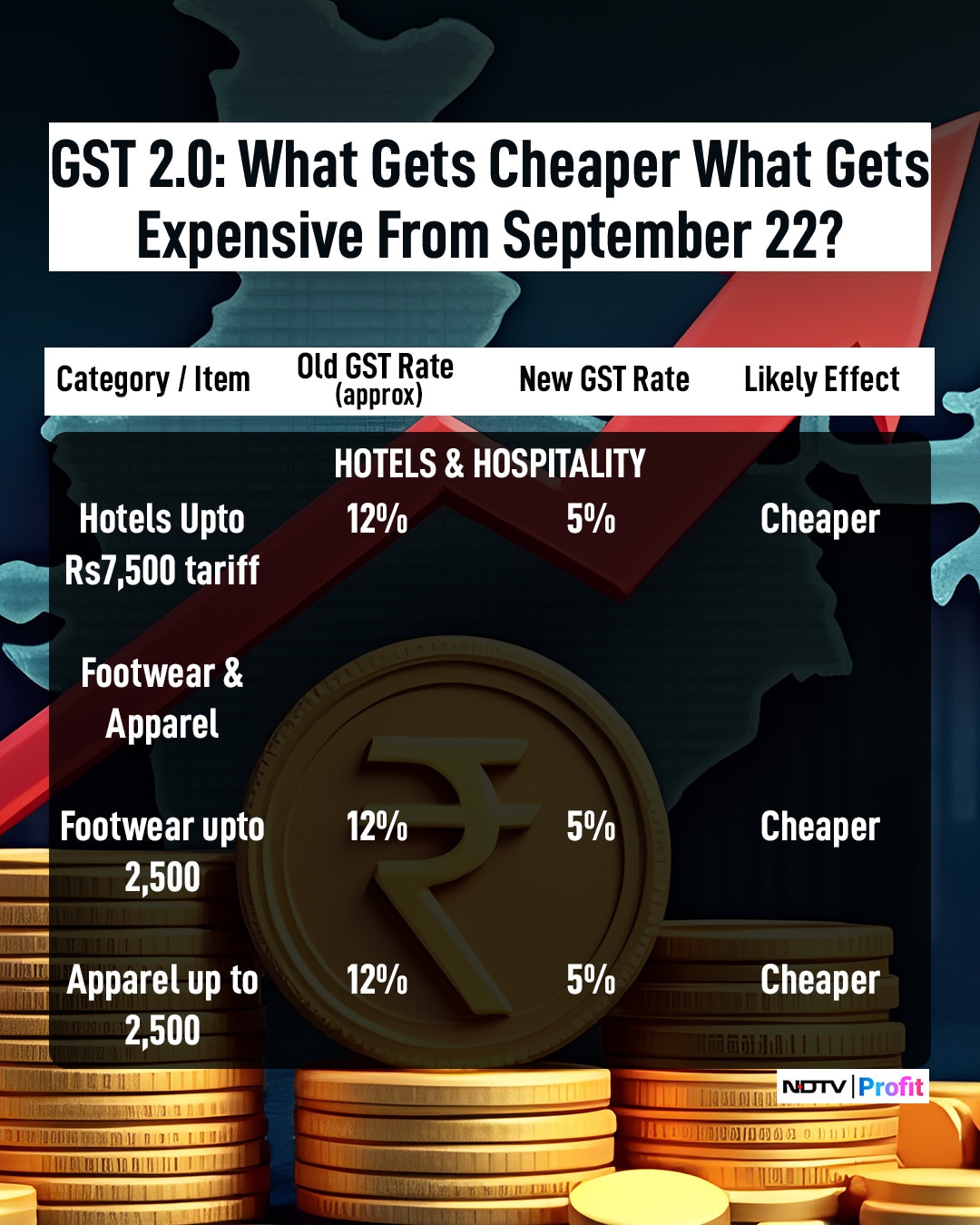
Hotel stays priced up to Rs 7,500 a night drop from 12% GST to 5%. Footwear and clothing up to Rs 2,500, earlier in the 12% bracket, now fall under 5%.
Medicines, Construction And Automobiles
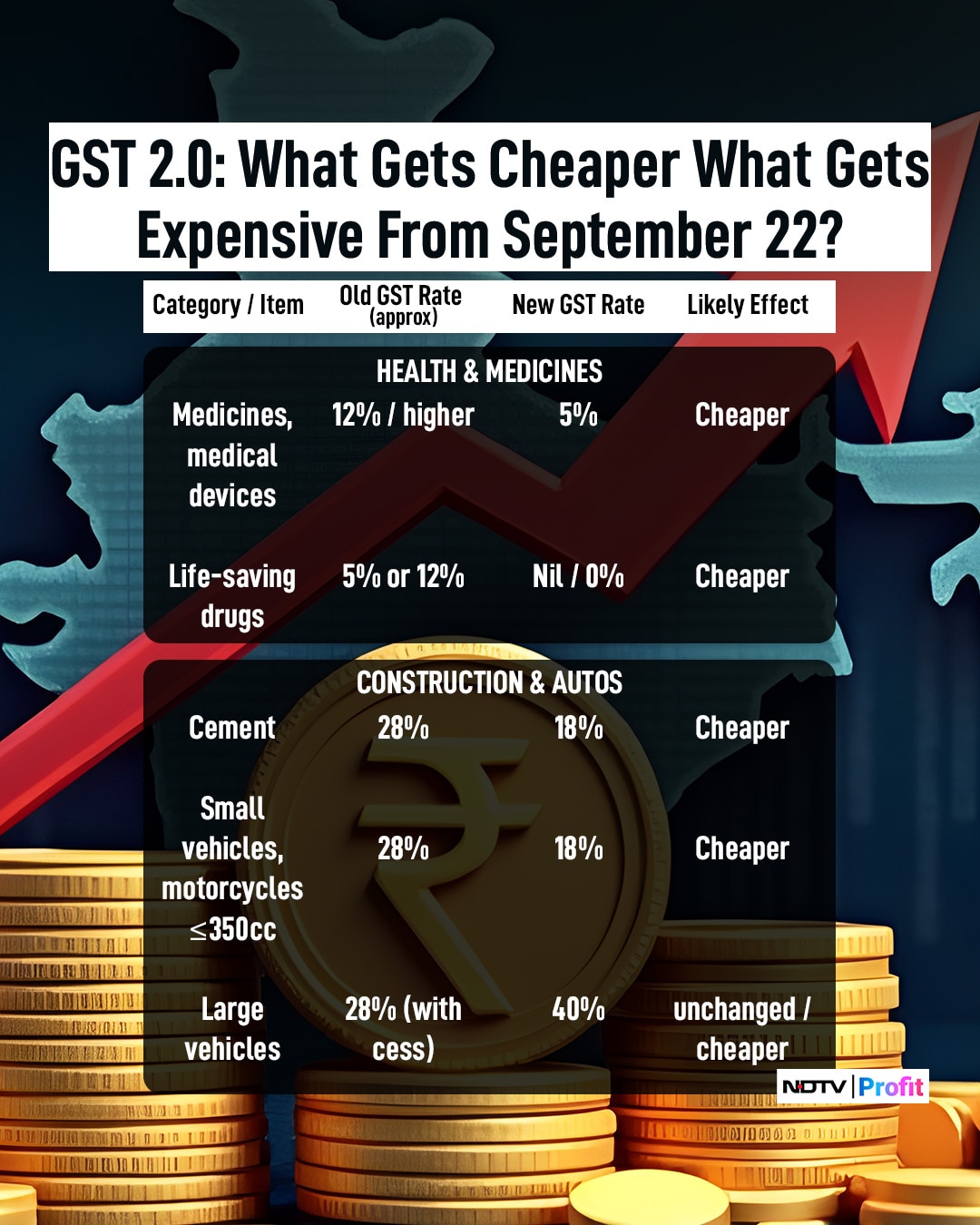
Medical devices fall to 5%, while certain life-saving drugs become tax-free, down from 5–12%, while cement moves from 28% to 18%. Two-wheelers below 350cc drop from 28% to 18%. Larger vehicles remain in the 40% bracket, unchanged.
Sin Goods And Others
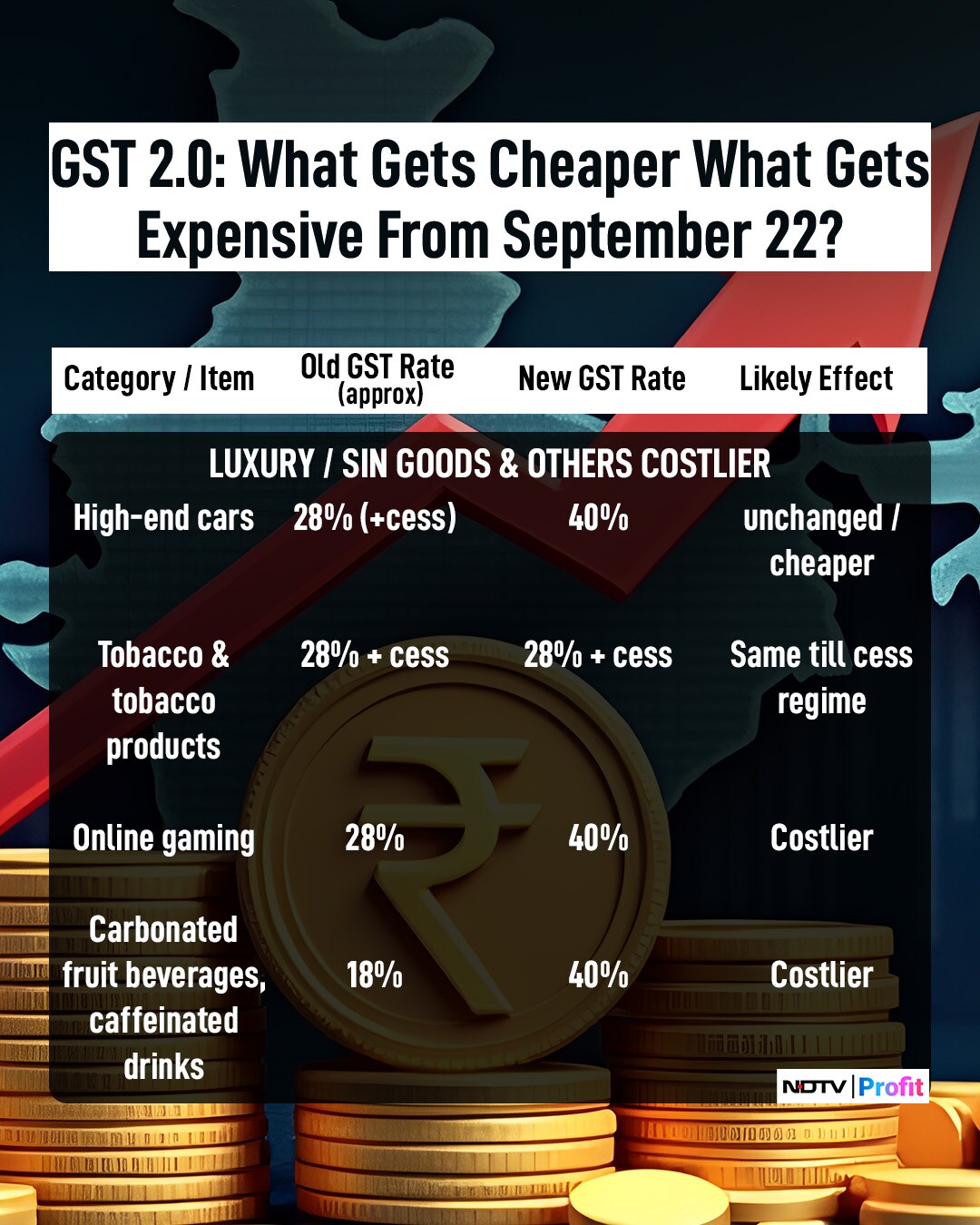
Online gaming now attracts 40%, up from 28%. Carbonated fruit beverages and caffeinated drinks jump from 18% to 40%.
Tobacco products continue under 28% GST along with cess.

-
Signature Play: The Classic Cocktail Is Dead. Or Is It?

Classic cocktails are disappearing from India's cocktail menus. But they're still being ordered, taught to bartenders and borrowed from. So, who's really having the last drink?
-
A New Samvat Wishlist: Inclusive Prosperity And Human Development
India has strengthened its economic foundations through infrastructure, digital access and enterprise. Its next growth chapter must deepen productivity, create better livelihoods and widen participation in prosperity.
-
Love, Sex Aur Dhokha: The Audacious Plot To Spy On Jensen Huang
A Taipei dinner, a Singapore chip buyer and a suspected Chinese asset: inside the alleged spy operation that got close to NVIDIA's Jensen Huang.
-
Ten Things I Learnt This Samvat
Patience can be a trap. Cheap stocks can stay cheap. Leverage can wipe you out. What did Samvat 2082 teach us? Niraj Shah writes on 10 lessons from the year gone by.
-
Talking Points This Week: Tech Nerves, FII Buying, And A Faraway Banking Shock
The global markets are not shining this Diwali. The exception in the large markets is, India.
-
Midterm Rally Lasted A Day. The Hard Reality Of A Divided US May Last Two Years | Opinion
Between a contested AI boom, a debt ceiling that arrives in 2027 and a president with every incentive to act alone, the next two years may prove more volatile than the first day's rally suggests.
-
Blue Wave Will Derail the AI Trade but Won't Dismantle the AI Era | Unhedged Position
The Democrats' sweep of the US Congress will see politics collide with economic forces both over the long and short term.
-
It's Time To Take The GST Council's Bet On Trust Global
Payment records can prove India's services exports, and clear, proportionate rules can bring foreign digital sellers into the tax net.
-
Opinion | India at 38: From Innovation Overperformer to Innovation Powerhouse
India now has 453 VC-backed deep science startups, 18 of them late-stage, after 117 percent growth since 2020. Laurus Labs, at USD 9.3 billion, is the most valuable deep science company in any middle-income economy outside China.









