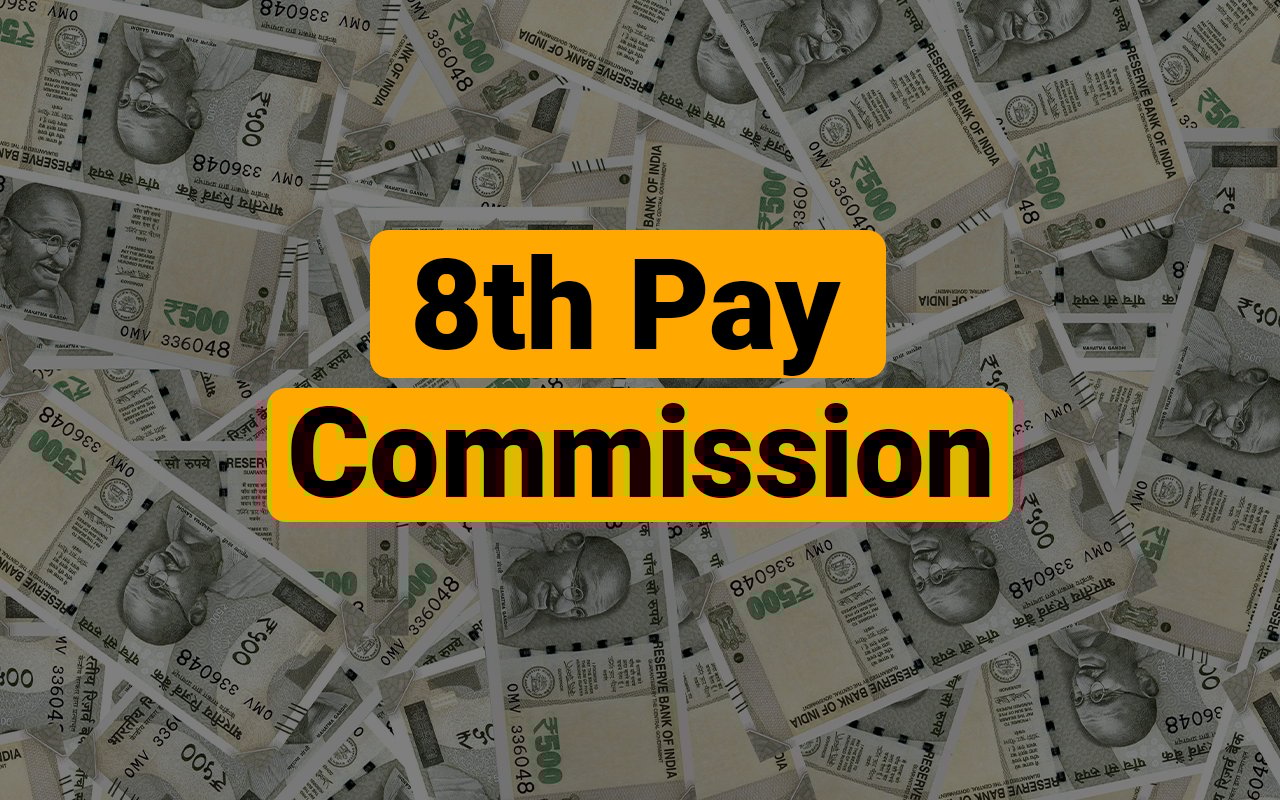
Around a month after the 8th Pay Commission was formally constituted, the government shared key updates related to the salary and pension overhaul.
While replying to a written question in the Lok Sabha on Monday, Minister of State for Finance Pankaj Chaudhary said the total count of central government employees presently stands at 50.14 lakh, and pensioners add up to approximately 69 lakh.
The government was also asked about the allocation of funds for the 8th Pay Commission. In his response, the MoS Finance said the timing of implementation and the required funding will be determined later.
“The government will make appropriate provision of funds for implementing the accepted recommendations of the 8th CPC. It will devise methodology and procedure for formulating its recommendations," he said.
The minister, earlier, clarified that the 8th Pay Commission has already been constituted, and its Terms of Reference (ToR) were officially notified on November 3, 2025, through a resolution by the Ministry of Finance.
Who Stands To Benefit From 8th CPC?
The comprehensive list of beneficiaries, as outlined in the commission's notified ToR and presented to Parliament, spans various sectors, including:
Central Government Employees (industrial and non-industrial)
All India Services Personnel
Defence Forces Personnel
Union Territory Employees
Indian Audit and Accounts Department staff
Regulatory Body Officers (excluding RBI)
Supreme Court Employees
High Court Staff in Union Territories
Judicial Officers of subordinate courts in Union Territories
Commission's Mandate And Focus
The 8th CPC has been tasked to examine and recommend changes across various emoluments, including pay, allowances, pensions, gratuity, and bonuses.
The government resolution mandates that the commission adhere to principles of fiscal prudence and economic conditions. Specific considerations include:
The need for fiscal prudence and availability of resources for developmental and welfare expenditure.
The unfunded cost of non-contributory pension schemes.
The likely impact on State government finances.
Prevailing pay in central Public Sector Undertakings (PSUs) and the private sector.
The commission will also specifically review the Death-cum-Retirement Gratuity and pension structures, encompassing those under the National Pension System (NPS) and the Unified Pension Scheme.
Regarding the consultation process, the government informed the Lok Sabha that the 8th CPC is empowered to devise its own methodology and procedure for formulating recommendations.
The commission has the authority to appoint advisors, institutional consultants, and experts, and to seek necessary information and evidence from relevant ministries, departments, and other stakeholders.
When Will New Salaries Be Disbursed
The rollout of revised salaries is not expected before at least mid-2027, as the 8th Pay Commission has been given an 18-month timeline to submit its recommendations. The suggestions would subsequently be reviewed by the Centre, a process that may span a few months.
However, speculations are rife that the 8th Pay Commission will be effective from Jan. 1, 2026, which means that the employees and pensioners could be paid arrears.
"Usually, the recommendations of the pay commissions are implemented after a gap of every ten years. Going by this trend, the effect of the 8th Central Pay Commission recommendations would normally be expected from 01.01.2026 (Jan. 1, 2026)," the government had said in an official release issued on Oct. 28.
Essential Business Intelligence, Sharp Market Insights, Practical Personal Finance Advice, Daily Fuel, Gold and Silver Prices and Latest Stories — On NDTV Profit.