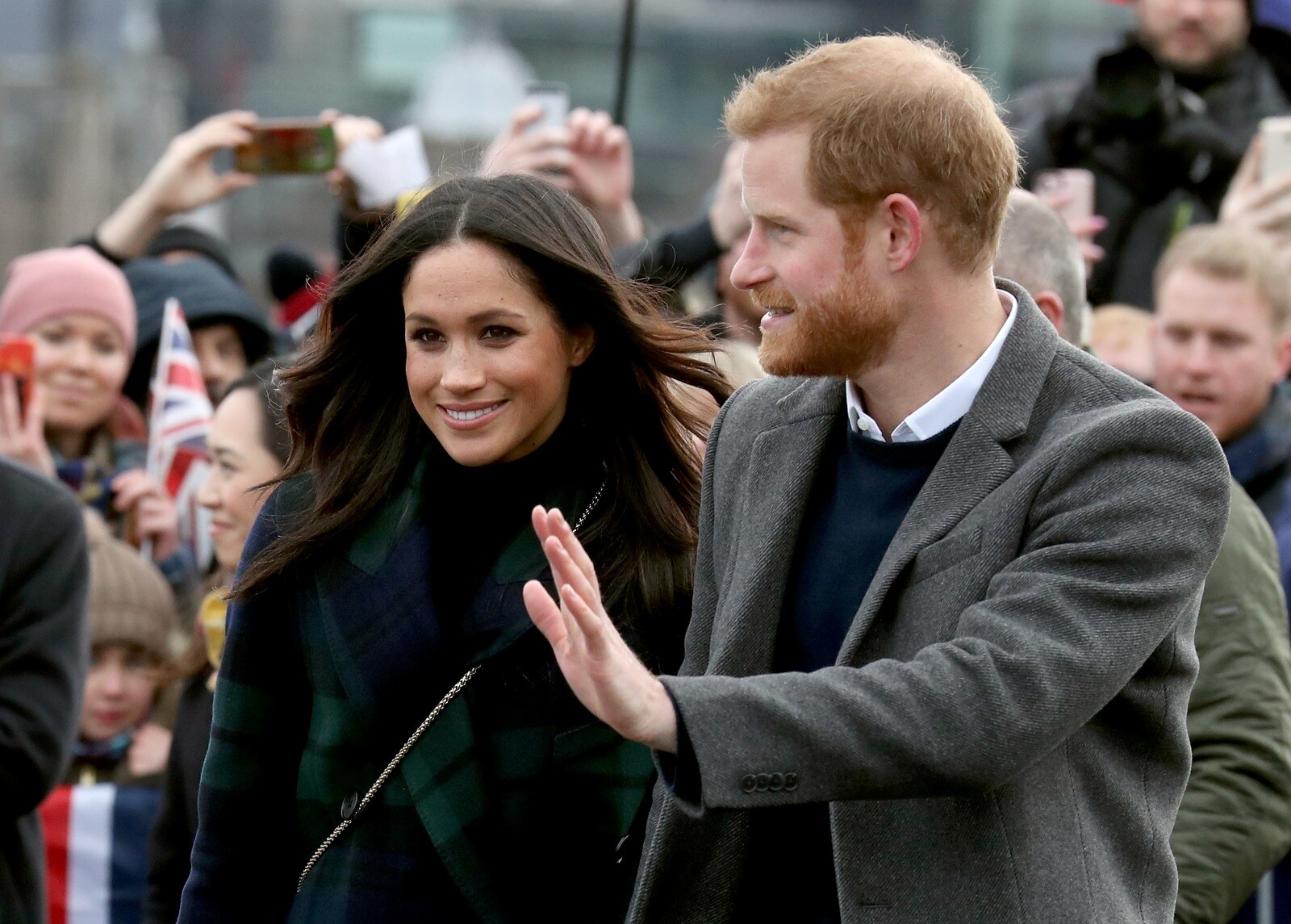
(Bloomberg Opinion) -- The doomed hero who struggles vainly against the fate preordained for him is an archetype of human drama stretching from Greek mythology to Kendall Roy of Succession. Prince Harry has long chafed against the fetters of his privileged existence. The self-exiled younger son of King Charles III has made no secret of his animosity toward Britain's famously intrusive and amoral tabloid press. Yet the full extent of his ambition to remake the contours of the politico-media complex has only just become apparent.
Testifying in a civil lawsuit against the publishers of the Mirror group of newspapers this week, the prince cast himself as a protector of the weak and defender of democracy. Both the press and the government are at “rock bottom,” he told the High Court in London. Harry had already broken precedent by becoming the first member of the royal family in 130 years to give evidence at trial. In directly criticizing the government, the 38-year-old prince trampled another convention.
“Democracy fails when your press fails to scrutinize and hold the government accountable, and instead chooses to get into bed with them so they can ensure the status quo,” he said in a 55-page witness statement. Media companies had hijacked journalistic privileges for their own personal gain and agenda, and their power had become so great that governments were scared of alienating them. As a member of the royal family and a soldier, he felt a responsibility to expose “criminal activity” in the name of the public interest.
There are elements of the quixotic about the prince's crusade. Some of his evidence appeared only tangentially connected to the issue of whether MGN Ltd., publisher of the Daily Mirror, Sunday Mirror and The Sunday People, engaged in unlawful information gathering, principally what has become known popularly as phone hacking. Shares of Reach Plc, the publicly traded parent of MGN, rose 2% in London on the first day of Harry's testimony, so investors at least didn't see his appearance as a threat.
Much of the prince's statement reads like a diatribe against the unfairness of life. The Duke of Sussex, as he is also known, resents the constant media attention that disrupted his childhood and caused havoc in his relationships — blaming it for his mother's death, after all. This level of scrutiny was always inevitable given his position, though.
More importantly, he is fighting yesterday's battle. The phone-hacking dragon was already slain more than a decade ago by someone else: the campaigning journalist Nick Davies, who toiled for years amid general indifference to expose unlawful activity in the tabloid press. The dam finally broke in 2011 when Davies reported that Rupert Murdoch's News of the World had hacked the voicemail of a murdered teenager, triggering a wave of public revulsion. It led to the closure of the newspaper, Britain's biggest-selling Sunday title, and a yearlong public inquiry that overhauled UK press regulation. That reform is incomplete and arguably inadequate, but it isn't obvious that the issue needs a fresh champion.
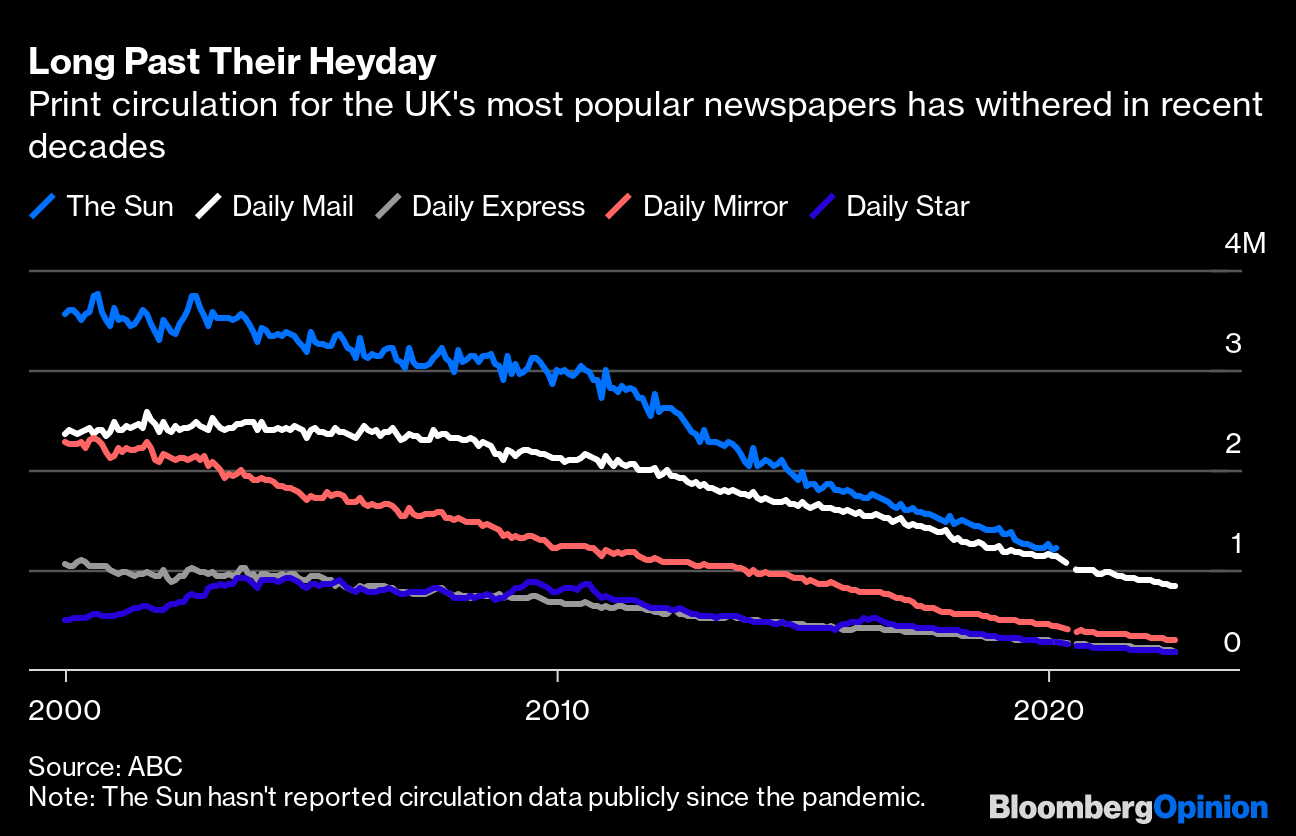
That's because the world has moved on. Voicemail and phone hacking are anachronisms by now. Meanwhile, the sense of impunity that allowed criminal activity to proliferate within the tabloid industry was a reflection of the newspapers' market power. While the political heft of the popular press remains significant, print circulation has been declining for decades. Consumption of news continues to shift online, often to social media channels that didn't exist when the tabloids were in their heyday. Democracy faces more insidious threats these days than reporters prying into the private lives of celebrities.
Harry, meanwhile, displays a less than complete understanding of how the press works. It's most unlikely that Big Media ever hatched a grand plan to present the prince in a certain light, either positive or negative. The tabloid press is a voracious machine driven by print sales (or eyeballs): It will use for fuel anything that serves that purpose. The process is less coordinated than he appears to believe. Neither does Harry show any awareness of the irony of a public figure like himself, with such advantages, presenting a story of such relentless victimhood.
The prince isn't just tilting at windmills, though. To begin with, he does have a legitimate grievance. His was a life of entitlement, it is true, but this came with obligations. The British monarchy is funded from the public purse, and the unwritten price is that its members will provide fodder for the media. Prince Harry is right to point out that he was born without choice into this contractual relationship. Moreover, his mother, Princess Diana, was a victim of media manipulation and died in 1997 at age 36 while being pursued by photographers. No amount of privilege can make up for that loss. Many will not envy him.
The prince is also correct in observing an overly cozy relationship between government and the tabloids, and a consequent reluctance to tackle media abuses. The scorn poured on his testimony in the popular press and even some broadsheets (in contrast to generally positive reviews of his performance by the BBC, for example) appears de facto evidence of this. Nothing enrages the tabloid press like suggestions its power ought to be curbed.
Even so, the impression persists that this week's spectacle has as much to do with Harry's personal psychodrama as anything else. Harry has rejected the life he was born into and now seeks to rewrite the rules of the game. This often doesn't work. Oedipus kills his father, the servant flees to Samarra only to find Death waiting for him, Kendall (spoiler alert!) will never wear the crown. If Prince Harry really wanted to escape his fate, maybe he should have become an aid worker in an obscure sub-Saharan village. Instead, he married an American actress and lives in California, making Netflix documentaries and writing books about his personal traumas. At least it's the life he chose.
More From Bloomberg Opinion:
- Prince Harry's Tabloid Feud Is Very British: Matthew Brooker
- When Heir and Spare Don't Care for Each Other: Martin Ivens
- Harry & Meghan Chase Reveals a Fading Business: Allison Schrager
(Corrects Diana's age in ninth paragraph.)
This column does not necessarily reflect the opinion of the editorial board or Bloomberg LP and its owners.
Matthew Brooker is a Bloomberg Opinion columnist covering business and infrastructure out of London. A former editor and bureau chief for Bloomberg News and deputy business editor for the South China Morning Post, he is a CFA charterholder.
More stories like this are available on bloomberg.com/opinion
©2023 Bloomberg L.P.
Essential Business Intelligence, Continuous LIVE TV, Sharp Market Insights, Practical Personal Finance Advice and Latest Stories — On NDTV Profit.